Russia, China, Crimea, Xinjiang and Putin’s Risky Gambit

Photo credit – www.kremlin.ru under Creative Commons licence.

Crossposted at Slugger O’Toole with a few amendments of no particular significance to improve the readability…

A friend on Facebook led me to this Ambrose Evans-Pritchard article in the Telegraph on the possible impact of Putin’s Crimea gambit on Sino-Russian relations. Pritchard has his own prejudices, of course, and the headline is terrible – there is no Sino-American diplomatic co-ordination to effect a ‘double pincer’ but – the article is worth reading. China’s failure to back Russia at the UN Security Council was significant, but not surprising.

It’s a useful corrective on a UK mainstream media narrative dominated by commentators telling us the West has miscalculated in doing anything other than patting Russia on the back over the past month, as it is claimed that Russia will simply reorient itself towards China in the event of any sanctions.

Let’s start with the idea that Russia will reorient towards China. China is, of course, a rapidly growing market for both energy and commodities. There is, however, no gas pipeline between Russia and China. China already sources a huge amount of energy from Central Asia and the Middle East (never forget that 90% of Gulf oil flows east). Why should China buy Russian gas and not Kazakh or Turkmen gas through an already existing pipe? Evans-Pritchard correctly points out that China is an assertive player in the New Great Game taking place in Central Asia over gas and much else.
Read more

No Simple Answers for Christians in Politics

I’ve enjoyed the series of posts hosted by Gillan on God and Politics UK, where guest bloggers associated with the three main GB political parties, as well as the Greens and UKIP, say they support their particular party from a Christian perspective. Two final articles are from someone saying he finds it hard to vote, and someone who says voting is a Christian duty.

I was a member of both the Liberal Democrats for many years and was heavily involved in the Alliance Party of Northern Ireland for a long time. I’m not a member of any political party at the moment. Given the events of the past 16 months in Northern Ireland, I doubt I could vote for anyone other than Alliance just now, but I’m living in Wiltshire and I don’t know who to vote for in Great Britain. Not voting at all is certainly an option, although one I’d take only with great reluctance. I might return to how all that fits with being a Christian in a later blog post, but just for now I thought I’d ask a few questions of the philosophy behind the series.

It seems to have been taken as a given by all the posters except Frank Cranmer, who isn’t voting, that it is a good thing that Christians are involved in politics; and that the world would be a better place if more of them were. Indeed, Daniel Stafford argues very directly that Christians should get involved both in the party which most closely reflects their beliefs, and that party’s internal Christian grouping. This view is a common assumption in British Christianity, indeed an unusual case of an assumption that cuts right across Evangelicalism, Roman Catholicism and Liberal Christianity. How valid is it?

Read more

Anna Lo, and the Myth that Northern Ireland Politics is about the Border

Cross-posted at Slugger O’Toole

I very much doubt Anna Lo’s Irish News interview was in the Alliance Party’s 2014 elections gameplan. While almost all members of the party will remain loyal to her in public, I have equally little doubt that a number are privately fuming. Even some of them will have little problem with what she said, rather with its timing two months before local elections and little over a year before Naomi Long has to defend East Belfast. Others will regard it as a genuinely positive step, creating space for Alliance to expand beyond Belfast suburbia.

All political parties have internal ideological faultlines. Nearly twenty years ago, Nicholas Whyte identified Alliance’s primary faultline as being between the Liberal Unionists and the Liberal Liberals. I think that was spot on back then, although there were always a few Liberal Nationalists in Alliance – remember that one of Alliance’s first Stormont representatives was the Tyrone Nationalist MP Tom Gormley.

Read more

Some Thoughts on Tony Benn

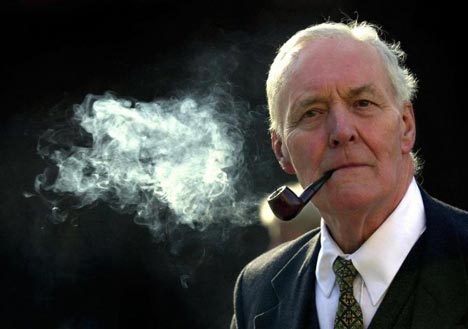
TonyBennTony Benn was a lovely guy. I once got chatting to him on the Circle Line going home from work: I got on at St. James’ Park and said “Hey, you’re Tony Benn!”, and we chatted until he got off at Notting Hill Gate. He was just like that. Great company, totally unspun, absolutely principled. And, even better, he wore tweed jackets and smoked a pipe.

Unfortunately, he was a bloody awful cabinet minister, and the government he last served ultimately tested beyond destruction the post-war consensus, paving the way for Thatcher and all that came with her. He was one of the prime reasons for that. In the mid 1970s Britain was a more economically equal country than it has been before or since; there was never a better time for a young adult from a poor background to come of age. It was rapidly on the way to becoming a more inclusive society of minorities as well. EEC membership was helping British industry discover new markets, and Britain was finally catching up with the rest of Western Europe on living standards after a lost generation.

Read more

Categories UK