Where is Your Faith?: Sermon Preached at St John’s, Devizes, Sunday 20th February 2022 (The 2nd Sunday before Lent)

Readings – Revelation 4; Luke 8:22–25

‘Where is your faith?’

I think we all know by now that the world’s Number 1 tennis player, Novak Djokovic, refuses to take a coronavirus vaccine. For many weeks now, this has been one of the most reported news stories all over the world. What I find odd is that nobody asks why his views seem to matter so much. He’s a great tennis player, but not exactly one of our era’s great minds. So why do we care what he thinks about any subject not related to a tennis court?

2022: Behold Your Idols!

The Church is considered irrelevant. More than that, Church is deeply insecure about its supposed lack of relevance, and spends a huge amount of time desperately trying to be relevant, sometimes making itself look stupid in the process. Yet, is it the Church that has a problem, or is it a wider society that turns professional sportspeople into oracles of wisdom on every subject?

Now, let me read you an excerpt from the work of another prominent figure in the debate about coronavirus vaccines:

“Shorty I’mma only tell you this once, you the illest
And for your loving I’mma die hard like Bruce Willis
You got spark, you, you got spunk
You, you got something all the girls want
You’re like a candy store
And I’m a toddler”

This is the lyrical genius of the rapper Nicki Minaj, one of the world’s most successful musicians. Last September, Minaj tweeted to her 24 million followers that her cousin’s friend became impotent as a result of the vaccine. Since then her ever shifting views on vaccination have been the subject of endless media debate. The same society that considers the Church irrelevant obsesses about what vapid celebrities think about matters of medical science.

None of this is to excuse the Church’s self-importance. It has been the architect of many of its own problems. This week, I read news reports of another disastrously managed safeguarding case of the period between 1960s and the 1990s. I can see why people lost faith in the Church. But where did their faith go?

Once people had faith in political leaders, or in trade unionists or captains of industry, or in thinkers and self-help gurus. All of these people squandered people’s faith as determinedly as the Church did.

At the moment, the professional upper-middle-classes still seem to have faith in one thing: science and scientists. Indeed the dominant religion of the English bourgeoisie has shifted from the Church of England to the church of experts. That doesn’t, however, translate into the rest of society. If anything, the way in which questioning anything presented in scientific terms is treated as ridiculous and laughable by the best off and best educated seems to provoke a backlash from other sections of society, as the rise of anti-vaccine sentiment shows.

While social media and fragmentation of the mass media doubtless play a role, the crisis in faith in science has deeper causes. We, the public, are another contributor to the problem, by asking too much of science, asking it to answer questions that are matters of ethics or political philosophy. Scientists themselves have, however, often colluded in the politicisation of their profession, something social media has made clear as scientists argue among themselves in full public view. It has become too easy to guess a scientist’s position on the left-right spectrum from the way they speak about their field of expertise.

With the last pillar of traditional authority crumbling, it seems the only people left with any moral authority in Western societies are stars of sport and entertainment, the Novaks and the Nickis. God help us all.

Read more

New Life After A Sojourn in the Wilderness

This article first appeared in the March 2021 edition of the parish magazine of St John with St Mary, Devizes.

Although summer remains far away and we could yet be overtaken by a genuinely cold snap or even snow, the signs of new life are all around us at present. The snowdrops are magnificent, especially in our local woodlands, and the days are getting rapidly longer: each day currently gives us an extra four minutes of daylight. It soon builds up.

We trust and pray we are also seeing signs of new life after the pandemic. The number of new Covid-19 cases in the UK is decreasing at some speed, the horrifying daily death toll is also mercifully falling rapidly, the number of people vaccinated is going up, and the government has presented its roadmap out of lockdown, promising an end to restrictions by late June. As ordinary citizens, we can do little but trust and pray that our scientists and statisticians have done their modelling correctly and that this will indeed be our last lockdown.

In that light, after discussions at the Parochial Church Council, we are planning a return to services in church on Sundays. There has, however, been a recent and fairly significant outbreak in Devizes, with local infection rates running at 2½ times the average for England. This has gone almost unreported in the local press, but is a reality. Responsibility demands we wait for that to subside before bringing people back into church, other recent local outbreaks indicate we can expect this to happen quickly under lockdown conditions. The PCC has delegated the decision on a date of return to the churchwardens, who will review the situation every week. We will not delay any longer than necessary, and barring truly exceptional circumstances envisage being back in church by Holy Week and possibly some time before. We will contact people by e-mail, or by telephone for those without access to the Internet, on the Monday before any Sunday return.

Read more

Building A Country Fit for Pandemic Heroes

This article first appeared in the February 2021 edition of the parish magazine of St John with St Mary, Devizes.

This time of the year always provides a strange intermezzo in the Church’s liturgical cycle. The long forty days of Christmas seem out of sync with the secular world, perhaps starting to drag a little at the point when they are rescued by the season’s culminating exclamation point of Candlemas. Then we have the briefest of spells of Ordinary Time, its only appearance between December and June, before the privations of Lent begin. In the cycle of the natural seasons, the days are mercifully starting to stretch but are often viciously cold. It is a time of being neither one thing nor the other.

So it is with the pandemic. Having not always managed Covid-19 well, as I write the UK has made a bright start to the vaccination process. At this point, it has vaccinated the fourth highest proportion of its population in the world, behind only three Middle Eastern countries: Israel, the UAE, and Bahrain. I have no idea whether that will remain the case by the time you read this, but the local vaccine rollout in Wiltshire seems to have been extremely impressive, with many of you in the highest priority bands having told me that you have had one or even two jabs already. If the scientists are right, the appalling death rate should start to come down quite rapidly as people are being vaccinated, quite rightly, in order of risk to life, along with our frontline health and social care workers.

The rest of us will have to wait, and so the pandemic is far from over, and healthy people in their thirties and forties, who rarely die of Covid-19 but can end up desperately ill in hospital before fighting it off, are probably still many, many, months from vaccination. The UK is unlikely to reach the fabled herd immunity threshold until late summer or even autumn. We will still be living with the tedious restrictions of distancing and isolation for at least the first half of 2021, although probably in an increasingly attenuated form as time goes on. 

Read more

“Out of Our Depth”: Sermon Preached at St John’s, Devizes on Sunday 9 August 2020 (the 9th Sunday After Trinity)

Readings – 1 Kings 9:9-18, Matthew 14:22-33

But when he noticed the strong wind, he became frightened, and beginning to sink, he cried out, ‘Lord, save me!’ Jesus immediately reached out his hand and caught him, saying to him, ‘You of little faith, why did you doubt?’

May I speak in the name of God who is Father, Son, and Holy Spirit.

Have you ever found yourself out of your depth and almost embarrassed that you were driven to ask for God’s help to get you out of the consequences of your own stupidity?

I certainly have!

I suspect I’m not the only one who used the lockdown as an excuse to get fitter. Do you know the start of the hundred and twenty-first psalm? “I will lift up mine eyes unto the hills, from whence cometh my help. My help cometh even from the Lord.” Well, that was my motto of the lockdown; in a small terraced house in Belfast’s inner-city with my parents, it was a case of either turning to the hills that surround the city or turning to drink. If the truth be told, there might have been a bit of both.

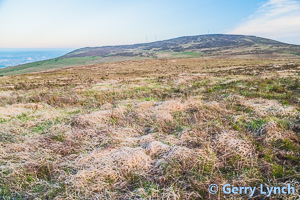
Divis from Wollfhill 20 May 2020 © Gerry Lynch
Divis from Wollfhill, 20 May 2020, © Gerry Lynch.

Still, on the first Saturday of the lockdown I surprised myself by tackling the highest of the Belfast Hills, a four hundred and eighty metre monster called Divis, in one go, six miles walk from home which is near the docklands and sea level. I was very proud of myself. But I hadn’t really got my mountain legs at this point, and I didn’t relish the circuitous walk back down. A quick scan of aerial photos on Google Maps showed that at one point it was barely four hundred metres from a formal path to the tarmacked city streets below, from where it would be an easy three mile stroll back. I knew the hill was steep at this point, as its slopes are visible across the city, but from below it always looked like a manageable scramble across some very pretty, gorse-bedecked, fields. My father, who grew up in the estate immediately below that hill, has long regaled me with stories of a childhood spent playing up on that mountain. When I clambered naughtily over the fence to start my short-cut, I had to admit it looked steeper than it seemed from a distance. Much steeper. But you know, four hundred metres, four football fields, how hard could it be?

Read more

Cassettes, Communion, and Guardians of the Galaxy: Online Worship isn’t the Answer to Everything

Hooked on a feeling, I'm high on believing.

Young people these days are a rum lot! I’ve recently discovered that they’re getting into cassette tapes in a big way. I understood when people got back into vinyl again, that made perfect sense; analogue audio just sounds better than its digital counterpart, and there is something magical about the gentle crackle of a needle amplified by a good set of speakers. For the same reason, as a keen digital photographer, I understand why some of my snap-happy brethren are rediscovering film, even I have no desire to go to the trouble of setting up a darkroom myself.

But tapes? We lived off cassettes in the 1980s; we would make compilations by recording scratchy radio stations, sometimes Radio Luxembourg on Medium Wave, barely audible before sunset and full of fading after it in far-off Belfast. I remember how prone to breaking they were, always getting tangled up on the heads of the tape player, having to be straightened out and wound back on with a pencil, usually damaging the sound quality, even when they didn’t break altogether. Who in their right mind wants to use tapes?

Hooked on a feeling, I'm high on believing.
♪ Hooked on a feeling, I’m high on believing, but just not via Zoom ♫

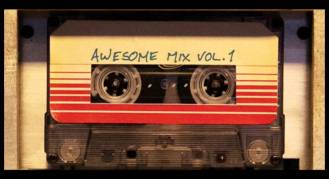
A clerical colleague, who has the advantage of having teenage children, explained to me that it all started with Guardians of the Galaxy. And I can see why. Rarely has anything been more aptly named than Awesome Mix Vol. 1. My coleague’s son had recently given his girlfriend a mixtape for her birthday – they use that ugly Americanism (ugh!) rather than ‘compilation’, apparently. A question formed in my mind: but surely he could just make her a playlist on Spotify? The answer was so obvious I never even uttered the words. A compilation would always be a physical token of their love – in a sense, a sacrament. An outward and visible sign of an inward and spiritual grace.

Maybe the young people aren’t so rum after all.

Read more

Let’s Worship Outside

The News Letter later asked me to turn this blog into a newspaper article which you can read here.

Worshipping outside in happier times in South Dorset. Photo © Diocese of Salisbury/Gerry Lynch.

The dreadful news that more than a hundred people were infected with coronavirus at a single, legally permitted, church service in Germany earlier this month should make it transparent that we are unlikely any time soon to be returning to church worship as we hitherto understood it.

In this time of fear and death, I feel deeply deprived of connection with God. I have not received communion in more than two months; I have no idea when I might do so again. I cannot even spend time in a church praying in the presence of the reserved sacrament. I cannot kneel in any of my familiar haunts for prayer, nor can I discover new ones. A computer screen in my parents’ box room has proven a distracting and sensory-deprived locus for prayer. In my case, as a very definite extrovert, prayer is very much an externally contextualised physical process as well as an interior mental and psychological one. Prayer involves the placing of the earthly into the loving care of the heavenly, and is thus intimately bound up with place, physicality, community and body.

Worship via videoconference involves deprivation of the senses. It only involves sight and hearing; never smell, taste, or touch. The aural and visual, already overprivileged in technological societies, are mediated through a screen and a speaker, usually with poor audio and video quality. That is not to dismiss its value – certainly some people seem to have reconnected or newly connected with Christian worship via online means during the pandemic. But it can never involve the smell of incense, the taste of sacramental wine, the heat of a ray of sunshine streaming through a window, a hug, or noticing that a much loved elderly parishioner’s gait has suddenly become laboured.

Are there other ways to worship safely in the era of coronavirus?

Read more