Persistence: Sermon Preached on 19th October 2025 (Eighteenth Sunday After Trinity)

Preached at Holy Cross, Seend

2 Timothy 3.14 – 4.5; Luke 18.1–8

“Preach the word… in season, out of season”

Do you want to be a record breaker? For me, it all depends what sort of record I might be breaking. I wouldn’t to be like former Nottingham Forest manager Ange Postecoglou, sacked yesterday just 39 days after being appointed, and setting a new record for brevity of managerial tenure in the English Premier League.

Perhaps Mr Postecoglou might take comfort from the fact that he is probably the victim of forces well beyond his own control—a short-termist mentality that demands instant results, which has been produced by a culture that promises instant gratification, as long as we have the money to pay for it.

A classical painting depicting an elderly woman dressed in a dark robe and white headscarf, sitting and holding a young child who is nestled against her. The child, wearing a golden robe, is reading or holding a small book. The background is dark and muted, with warm lighting highlighting the figures' faces and clothing.
William Drost, Timothy With His Grandmother, Lois (early 1650s). hangs in the Hermitage, St Petersburg.

Today’s readings, although different in terms of form and style, both commend to us a different approach to life—one of constancy and persistence, especially when it comes to our Christian Faith.

Paul’s Second Letter to Timothy is written in the style of an old man, realising he is nearing the end of his life, giving advice to a younger protégé. Timothy has clearly been earmarked by Paul as a future Church leader, and his background contrasts dramatically with the first generation of Christian leaders, who all started following Christ as adults, many of them literally following Jesus Christ around the Holy Land while he walked the Earth. Timothy, in contrast, was born into a Christian family, and Paul seems to think His backbone needs a little stiffening.

We see another change—the earliest Christians expected Jesus to return and enact the Last Judgement very soon; in this passage, we get signs that they are starting to realise this Christianity business is for the long haul.

So Paul writes: “Preach the word; be instant in season, out of season”. ‘Instant’ in the language of the Authorised Version means persistent; Timothy is to be persistent in preaching the Gospel even when it feels like he isn’t getting anywhere, and even when people who had been faithful Christians get distracted and drift into believing myths that seem to be Christian on the surface but lose the true essence of the Faith at their core.

Read more

Prayer, Persistence, and Peace: Sermon Preached on 27th July 2025 (Sixth Sunday After Trinity)

Preached at St Peter’s, Poulshot and St Mary’s, Potterne

Colossians 1. 15-28; Luke 11. 1-13

“…everyone who asks receives, and everyone who searches finds…” `

A painting depicting a central figure in a white robe standing on a hill with arms raised, addressing a group of people seated around him. The background features a cityscape with ancient buildings and a golden sky, suggesting a sunset or sunrise. The people, dressed in robes and headscarves, appear to be listening attentively, with some raising their hands. The scene is set on a grassy hill with a distant view of mountains and a walled city.
James Tissot, The Lord’s Prayer (1886-96), hangs in the Brooklyn Museum.

I always enjoy Matthew Syed’s programme on Radio 4 called Sideways, which often gives quirky, unusual, perspectives on quirky, interesting issues. It is currently running a three-part mini-series on ‘Chasing Peace’. Exploring different approaches to peace-making and peace-building, it doesn’t shy away from hard questions about human nature, and whether we are hard-wired for war.

I listened to the dedicated peacemakers he interviewed, some of whom had taken enormous risks with their personal safety in very dangerous environments to end conflicts, and I was full of admiration. Some interviewees also said things like that to prevent war we needed to train people to be more emotionally literate, I found myself muttering, “Good luck with that!”

Over this last decade or so, many of the things we’d previously taken for granted about the direction of humanity have broken down, and the idea of progress which animated us for so long has stalled. We seem a long way, for example, from the days when people really believed that the United Nations might ultimately bring an end to war.

One of the lessons I’ve learned from these years of gathering crisis is that too many of those dreams of progress thought they could change human nature, or flew entirely in the face of it. At their worst, especially in the darkest days of the Communist world, it was precisely the possibility of building a perfect society in the future that allowed people to justify to themselves their barbaric behaviour in the present.

Indeed, if we look at the world through the lens of Faith, then we know this world can never be made perfect, and that none of us can ever be all that good for all that long, or otherwise Jesus would not have needed to die on the Cross.

Read more

Have Mercy On Me: Sermon Preached at Holy Cross, Ramsbury, Sunday 24th October 2021 (The Twenty-First Sunday after Trinity)

Winter afternoon sunlight on the lovely chancel at Holy Cross, Ramsbury. © Gerry Lynch, 22 February 2018.

“…he cried out even more loudly, ‘Son of David, have mercy on me!’” 

In the name of the Father, and of the Son, and of the Holy Spirit. Amen.

This morning’s readings can be great sources of hope for us, but they can also be disturbing. It all depends what mood or what set of experiences we approach them from. In their very different ways, both Job and Blind Bartimaeus have been dealt a rough hand by God, and have suffered for years. Then, in response to prayer, God fixes each of their problems in a trice. The second part of their lives will be so wonderful they could hardly have dared wish it for themselves. The readings can also be disturbing, however, because God does not do this for everyone, not even for many people who pray faithfully. 

An exterior shot of Holy Cross, Ramsbury, in the Diocese of Salisbury in golden February light.
The preacher was “playing an away match” at Holy Cross, Ramsbury. © 22 February, 2018.

I read an article in Church Times a few weeks ago about a brilliant young academic, who met the love of his life when they were both reading for their doctorates. He had been brought up outside the Church, but thanks to his fiancée, he came to faith in Christ for the first time. The he was struck by what seemed at first to be a routine viral infection, but this left him with a crippling post-viral syndrome which has now lasted for many decades. He has lived in almost permanent exhaustion and pain. His career went nowhere, and his condition placed enormous burdens of caring on that young girlfriend who became his wife. Decades of faithful prayer for healing were met only with occasional false dawns; after so many years, the answer to his prayers was, finally, a sense of peace with his illness, with God, and with the world. 

Where, one asks, is the justice in all that? If we accept that God does at times answer prayer in miraculous ways – and I do accept that – it leaves us wondering why He doesn’t do it more often. 

Read more

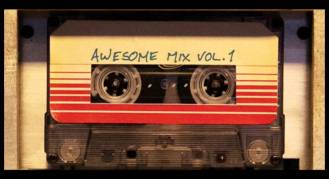
Cassettes, Communion, and Guardians of the Galaxy: Online Worship isn’t the Answer to Everything

Hooked on a feeling, I'm high on believing.

Young people these days are a rum lot! I’ve recently discovered that they’re getting into cassette tapes in a big way. I understood when people got back into vinyl again, that made perfect sense; analogue audio just sounds better than its digital counterpart, and there is something magical about the gentle crackle of a needle amplified by a good set of speakers. For the same reason, as a keen digital photographer, I understand why some of my snap-happy brethren are rediscovering film, even I have no desire to go to the trouble of setting up a darkroom myself.

But tapes? We lived off cassettes in the 1980s; we would make compilations by recording scratchy radio stations, sometimes Radio Luxembourg on Medium Wave, barely audible before sunset and full of fading after it in far-off Belfast. I remember how prone to breaking they were, always getting tangled up on the heads of the tape player, having to be straightened out and wound back on with a pencil, usually damaging the sound quality, even when they didn’t break altogether. Who in their right mind wants to use tapes?

Hooked on a feeling, I'm high on believing.
♪ Hooked on a feeling, I’m high on believing, but just not via Zoom ♫

A clerical colleague, who has the advantage of having teenage children, explained to me that it all started with Guardians of the Galaxy. And I can see why. Rarely has anything been more aptly named than Awesome Mix Vol. 1. My coleague’s son had recently given his girlfriend a mixtape for her birthday – they use that ugly Americanism (ugh!) rather than ‘compilation’, apparently. A question formed in my mind: but surely he could just make her a playlist on Spotify? The answer was so obvious I never even uttered the words. A compilation would always be a physical token of their love – in a sense, a sacrament. An outward and visible sign of an inward and spiritual grace.

Maybe the young people aren’t so rum after all.

Read more

Let’s Worship Outside

The News Letter later asked me to turn this blog into a newspaper article which you can read here.

Worshipping outside in happier times in South Dorset. Photo © Diocese of Salisbury/Gerry Lynch.

The dreadful news that more than a hundred people were infected with coronavirus at a single, legally permitted, church service in Germany earlier this month should make it transparent that we are unlikely any time soon to be returning to church worship as we hitherto understood it.

In this time of fear and death, I feel deeply deprived of connection with God. I have not received communion in more than two months; I have no idea when I might do so again. I cannot even spend time in a church praying in the presence of the reserved sacrament. I cannot kneel in any of my familiar haunts for prayer, nor can I discover new ones. A computer screen in my parents’ box room has proven a distracting and sensory-deprived locus for prayer. In my case, as a very definite extrovert, prayer is very much an externally contextualised physical process as well as an interior mental and psychological one. Prayer involves the placing of the earthly into the loving care of the heavenly, and is thus intimately bound up with place, physicality, community and body.

Worship via videoconference involves deprivation of the senses. It only involves sight and hearing; never smell, taste, or touch. The aural and visual, already overprivileged in technological societies, are mediated through a screen and a speaker, usually with poor audio and video quality. That is not to dismiss its value – certainly some people seem to have reconnected or newly connected with Christian worship via online means during the pandemic. But it can never involve the smell of incense, the taste of sacramental wine, the heat of a ray of sunshine streaming through a window, a hug, or noticing that a much loved elderly parishioner’s gait has suddenly become laboured.

Are there other ways to worship safely in the era of coronavirus?

Read more

Blogging Staggers Day One: Praying With the Lepers

The Bartlemas Chapel – a name that sounds like something out of Dickens, and the chapel felt like something from a disappeared world as well. A few hundred metres down a laneway from the noise and bustle of the Cowley Road lies a former leper chapel, feeling as if it were behind a portal to … Read more