A Devouring Minotaur – Enver Hoxha: Twentieth-Century Tyrant

Some notes after reading Enver Hoxha: Twentieth-Century Tyrant by Robert C. Austin and Artan R. Hoxha (London: Reaktion Books, 2026).

Book cover, duotone red, for "Enver Hoxha: Twentieth-Century Tyrant" by Robert C. Austin and Artan R. Hoxha. Hoxha in a coat and trilby, mid-wave with one hand raised, against a background of the letter Z repeated in a fence-like pattern.

“After Nixon’s visit to China, a group of disappointed radical Marxists from Washington state hung a banner in downtown Seattle reading: ‘Defend Albania, Marxism’s last hope’.”[1]

Despite its diminutive scale and its poverty, Albania in the latter decades of the Cold War retained a wider importance to cognoscenti on the Far Left worldwide because of its unflinching and unembarrassed Stalinism. This was the product of the unflinching and unembarrassed tyrant who ruled the Balkan country for forty of its forty-seven years of Communist rule, Enver Hoxha, most of it as a minotaur defending his maze. With perfect timing, Hoxha died exactly one month after Mikhail Gorbachev assumed power in the USSR in early 1985 – granting the world just the tiniest sliver of overlap between the last holdout of Communism’s murderous but potent heyday in the aftermath of the Second World War, and the man who would inadvertently dismantle the structures that allowed the system to remain rigid despite its increasingly obvious contradictions.

Hoxha thought he and his régime were of global importance every bit as much as his more enthusiastic overseas admirers. In my latter primary school years, those immediately after Hoxha’s death, Radio Tirana, at some financial cost to this small and impoverished country, dominated the shortwaves with its portentous, somewhat sinister, interval signal introducing programmes in twenty languages, aiming to export Albania’s vision of revolution. I doubt programming in other languages was any less tedious than that in English, which was soporifically dry and always delivered in a halting, heavily accented monotone, bemoaning the machinations of “American imperialists” and “Soviet socialist imperialists”.

Read more

Politicians are Scared of Calling Out Muslim Homophobia

Three people embracing in a close group hug at an outdoor event, seen from behind, with the Brandenburg Gate visible in the background under a bright sky. A rainbow pride flag is partially visible at the edge of the frame.

My thanks to Unherd for running my short piece on the comments of Sir Chris Bryant MP, Secretary of State for Northern Ireland, on the attack on the Christopher Street Day LGBT+ parade in Berlin last weekend. Sir Chris refused to acknowledge that the attacker was an Islamist even after the German Interior Minister publicly stated that to be the case.

Sir Chris was “ordained as a priest in the Church of England before he first left active ministry and later Anglicanism entirely because he couldn’t reconcile his homosexuality with his Church’s treatment of gay relationships. Naming Christian homophobia is considered laudable in his own support base.

“But naming Muslim homophobia? This, in contrast, threatens the unofficial British state settlement around crimes which undercut the narrative that multiculturalism only has benefits and never brings new problems. The most obvious case is of nationwide grooming gangs. But there has been a constant drumbeat of lesser yet still serious incidents, from the reaction to Salman Rushdie’s The Satanic Verses in 1988 to the Wakefield woman forced to go to the local mosque to plead for her son’s life in 2023 after he damaged a Quran.”

Read more

Life Punishes the Late—Adapt or Die

A close-up photograph focusing on the eyes, eyebrows, and ears of an older man with light-colorued, receding hair. The man's expression appears serious, with deep-set blue eyes and furrowed brows. Part of a red background, possibly an American flag, is visible on the left side, suggesting a political or patriotic context. The man is Donald Trump.

This article was originally posted on Slugger O’Toole…

A large, cracked globe depicting a world map, resting on a pile of rubble and broken stones, symbolizing the breakdown of the old world order. The globe, shown in shades of blue with visible continents and grid lines, has multiple deep fissures running across its surface. In the background, shattered ruins of buildings are visible, set against a dramatic blood-red sky with hints of gray and purple, evoking urgency and turmoil.

This will be the first of many shattering weeks in 2025. Even the cleverest members of the establishment that is being routed have started to acknowledge publicly that the old order is dead. This isn’t a matter of a change in the personnel in charge, or even of long-standing diplomatic alliances, but of suddenly finding that the assumptions that most of us shared about how the world functions and how it should function are no longer correct. To think through what we might be about to experience, it might be useful to briefly explore the last time a world-historical shift of similar speed and scale took place.

On 7 October 1989, Soviet leader Mikhail Gorchbachëv visited East Berlin to help the incompetent geriatrics who ran the misnamed German Democratic Republic celebrate the 40th anniversary of their state. Although he was the leader of what was supposed to be their closest ally, East German security forces blocked streets to prevent their citizens from greeting the world’s most senior Communist—only vetted members of front organisations on planned demonstrationswere allowed near his cavalcade. Extra barricades were erected at Checkpoint Charlie, and day-trippers from West Berlin, normally welcomed for the hard Deutschmarks they spent in eastern shops and cafés, were turned away.

Nonetheless, a few East Berliners managed to find their way to vantage points overlooking the route, shouting “Gorbi help us!” in front of the world’s cameras. In private, away from the media, Gorbachëv warned Erich Honecker and his colleagues in the SED ruling party, bitter opponents of his economic and political liberalisation, that the USSR would not intervene to preserve their rule if their own people turned against them.

In October, power in the country still seemed to rest with its fearsome secret services, especially the widely-despised Stasi, far more competent than the SED’s gerontocracy. Many wondered if the Stasi would start shooting at the weekly Monday night demonstrations in the second city of Leipzig which grew into the tens of thousands after Gorbachëv’s visit. In the weeks that followed, events moved with such speed they were almost impossible to process at the time. By December, with the Berlin Wall open and the SED negotiating with the opposition, people wondered if the crowds that stormed Stasi regional headquarters across the country to prevent them shredding evidence of their crimes would lynch the occupants (they didn’t). A montage of West German TV evening news reports from the last three months of 1989 captures the blistering and often bewildering pace of events.

The situation was frequently misread as it developed, especially by the many in West Germany who, while despising the brutality of the SED and its secret police, saw at least some features of the Communist economic and cultural order as being superior to Western capitalism.

Very rarely has a video clip profoundly influenced me; an exception is a panel discussion on West German TV the night after the Wall fell on 9 November, which discussed the extraordinary events of the previous 24 hours. The right-wing journalist Gerhard Löwenthal, long a figure of ridicule on the Left for his televised rants about ‘Linksextremiste’, confidently predicted that reunification would soon follow. In Left-leaning West Berlin, his fellow panellists talked down to him and rolled their eyes; there had been no evidence over weeks of demonstrations, they told him, that East Germans wanted reunification rather than reform.

By February, the only question was how quickly the two Germanies would reunify. It was estimated that around 90% of East Germans favoured reunification. During the campaign for East Germany’s first and only free elections, centre-right parties led by Helmut Kohl’s CDU offered rapid reunification, the centre-left SPD offered reunification at more measured pace, and a slow reunification was proposed, ironically, by both the newly renamed former ruling party and the human rights activists who were the first to raise their heads above the parapet in early 1989 as a potential opposition. Commentators on both sides of the border expected the SPD to top the poll—surely, with democracy secure, East Germans would want to take the time to preserve the redeeming features of state socialism, it was reckoned, especially in this heavily working-class region. They were badly wrong. Kohl’s allies swept to victory, and by the first anniversary of Gorbachëv’s visit, the German Democratic Republic had ceased to exist.

2025—The End of an Era

February 2025 lies at the beginning of a period of destruction of existing structures, but more than that, the destruction of previously reliable political and even psychological assumptions about the way the world works. Trump is ripping up Europe’s post-1990 security architecture, as he promised in his successful election campaign. He is also ripping up the American domestic settlement on identity and race, also as he promised in his successful election campaign.

Read more

Requiem for a Dream

Also posted at Slugger O’Toole

European flag carpet, Gift from the Republic of Azerbaijan. World Forum for Democracy 2016, Strasbourg, France. © Northern Ireland Foundation

Today, the Netherlands reinstituted border checks with Germany and Belgium. The new policy, which will initially run for six months, aims “to combat migration and human-trafficking”. According to the EU, fourteen of the twenty-nine members of the Schengen passport-free travel area currently have some form of “temporary” border control; of these all but Malta’s relating to a major international conference feel at least semi-permanent, with Russian sabotage efforts and “risk of violent actions against Israeli citizens” cited by some countries along with irregular migration and organised crime.

This hits me particularly hard because of the ten summers in a row between the mid-1980s and mid-1990s I travelled by buses and ferries from Northern Ireland to Germany – in the early years to West Germany – via Belgium and the Netherlands to spend the summer with a German family. I remember the infrastructure on the Dutch-German border being dismantled in the early 1990s; most traffic was waved through before that, although a differently coloured passport could occasionally attract attention from a bored border guard. But on the Antwerp to Eindhoven motorway, even in the 1980s, I can only ever remember a few trucks being parked up in service areas waiting for a customs inspection. Otherwise there was nobody around to check passports and not even a little booth to house them. I had to Google when was the last time private citizens last faced checks on the Dutch-Belgian border; it turns out to be 1947!

Those of us who have believed in the vision of a united Europe and saw it start to blossom in our lifetimes are watching our dream dying. There are plenty of shrilly self-deluding voices screaming that it has been betrayed by populists and jingoists and paid shills for Putin. The harsh reality, however, is that it is dying because it hasn’t survived contact with reality; and more specifically, it hasn’t survived contact with Europe’s reality of the 2020s being very different from what anyone imagined in 1992, let alone 1947.

We could summarise the history of the European Union over the last 35 years in a rock lyric: “You reached for the secret too soon, you cried for the Moon.

Read more

Strange outbreaks of positivity over Northern Ireland

I was published in Unherd over the strange emergence of good vibes about breaking the EU-UK bad blood over the Northern Ireland Protocol.

Headline in Unherd from Gerry Lynch's article on the Northern Ireland Protocol

“After nearly two years of ugly in-fighting over the Northern Ireland Protocol, there has been a sudden outbreak of positivity from key players in London, Dublin, and Brussels about the possibility of a deal to amend or replace it. Even self-styled “Brexit hard man” Steve Baker, now a UK government minister in the Northern Ireland Office, told Tory conference-goers he was “sorry” his behaviour had weakened Anglo-Irish relations. He later asserted to BBC Radio Ulster his willingness “to eat a bit of humble pie” to achieve a deal.

[…]

“Although real gaps remain to be bridged, most parties have an interest in a deal being done. Above all, it would remove the risk of a UK-EU trade war erupting during a winter where it would be of primary benefit to Vladimir Putin. More subtly, it would be of assistance to both London and Brussels in the war of values, hard evidence that free democracies are better than autocrats at finding solutions in messy territorial and ethnic disputes. An agreed and flourishing post-Brexit Ulster would be a fine counter-blast to the hell Moscow has made of the Donbas.”

To read the rest, please click through to Unherd – it’s free.

Read more

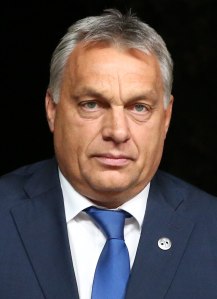
Orbán, Trianon, and the Rebirth of Nationalism

orban
Photo of Viktor Orbán © The Estonian EU Presidency 2017 and used courtesy of CC 2.0.

It is well worth reading Viktor Orbán’s speech on the 100th anniversary of the Treaty of Trianon, which was last Thursday and I didn’t even notice until it passed. Let’s start with this passage towards the end, which needs little comment.

“The world is changing. The changes are tectonic. The United States is no longer alone on the throne of the world, Eurasia is rebuilding with full throttle, the frames of our European Union are crackling, and now it hopes to save itself with a salto mortale. The ground is trembling under the feet of our eastern neighbour. The Balkans is also full of questions to be answered.

“A new order is being born. In our world, in our lives as well, great changes are banging on our gates.”

The Treaty of Trianon was one of the Paris Peace Conference treaties with the defeated Central Powers after World War One, which included the famous Treaty of Versailles, but also the treaties of Neuilly (with Bulgaria), St Germain (with German Austria), and Sevres (with Ottoman Turkey but ripped up by Atatürk by force of arms). Hungary lots two-thirds of its territory, nearly all of which had an ethnic majority of another nationality; but it also lost about three million Hungarians.

Hungary has lost another million in the since 1980 through a collapsed birth rate and high emigration; it is not hard to see the desperate desire for a bout of natalism that young Hungarian women seem reluctant to supply.

“At times they gave soldiers to defend the nation, at other times they gave armies of nation-building craftsmen to the country.”

This is contentious language even within Hungary. But the Hungarian liberal-left cannot simply wish its way out of dealing with the great national disaster that was Trianon. Budapest’s Mayor, Gergely Karácsony, the nearest thing to a credible rival that Orbán possesses, ordered a minute’s silence last Thursday. He spoke of the fate of his mother, trapped in what was now Romania in 1920 with his elderly great-grandparents, after his grandparents fled to the newly shrunken core Hungary. The elders, despite caring for a small child, were put to forced labour. Hungary is full of such stories and such myths, not only of the time after 1920 but the time after 1945.

But the silences are as revealing as the topics for comment, for Horthy’s regency is swept under the carpet, neither glorified nor condemned but simply not discussed; unmentioned too are the five months of murderous madness under the Arrow Cross Party. For others must always be the architects of Hungary’s problems.

Read more

The Mosque of Bohoniki

The Mosque of Bohoniki, South West ElevationThe mosque at Bohoniki is one of the last places of worship of the Lipka Tatar community which still survives as it has since the late 14th Century in what are now the borderlands Poland, Lithuania, and Belarus.

The mosque was built at the turn of the 19th and the 20th centuries, probably in 1873 to replace an earlier mosque destroyed in a fire. During World War II, the mosque was destroyed by the Nazis, who organised a field hospital on the site. After 1945, the mosque underwent several renovations several times. In 2003, the roof was renovated; the tin roof was changed to shingle roof. In 2005 a general renovation was carried out.

It is a simple wooden building built on a rectangular plan with dimensions of 11.49 m × 8.03 m. It has been restored with the help of the Polish and Turkish governments and the European Union.

Bohoniki Mosque - Minbar

This is the minbar, a pulpit in any mosque, where the imam stands to deliver sermons, as well as delivering a wider range of readings and prayers.

Read more

St Pancratius, ‘s-Heerenberg, and the ‘Gestapo Window’

St Pancratius, 's-Heerenberg, North Elevation

St Pancratius (de Pancratiuskerk) in the little Dutch market town of ‘s-Heerenberg (population 8,000) and literally a ten minute stroll from the German border.

At first blush – another pretty, ornate, but unexceptional post-Vatican I church in the south eastern Netherlands, a sign of a long suppressed community bursting into both prosperity and political power. Inevitably designed by the Albert Tepe, a prolific architect of Dutch neogothic… and then…

In the north aisle a unusual piece of stained glass catches the eye – is that a Gestapo man in stained glass?

St Pancratius, 's-Heerenberg, Close Up of ‘Gestapo Window’

Yes, it is. And so one learns of the story of Frs. Galama and van Rooijen, parish priest and curate respectively, arrested in 1941 after preaching against the Dutch Nazi Party, the NSB, who were deported to Dachau where both died in 1942. The scene of the Judas kiss immediately above makes clear the bitter but rarely mentioned memories of collaboration and betrayal that must have haunted communities like this for decades after the war.

Read more