A Devouring Minotaur – Enver Hoxha: Twentieth-Century Tyrant

Some notes after reading Enver Hoxha: Twentieth-Century Tyrant by Robert C. Austin and Artan R. Hoxha (London: Reaktion Books, 2026).

Book cover, duotone red, for "Enver Hoxha: Twentieth-Century Tyrant" by Robert C. Austin and Artan R. Hoxha. Hoxha in a coat and trilby, mid-wave with one hand raised, against a background of the letter Z repeated in a fence-like pattern.

“After Nixon’s visit to China, a group of disappointed radical Marxists from Washington state hung a banner in downtown Seattle reading: ‘Defend Albania, Marxism’s last hope’.”[1]

Despite its diminutive scale and its poverty, Albania in the latter decades of the Cold War retained a wider importance to cognoscenti on the Far Left worldwide because of its unflinching and unembarrassed Stalinism. This was the product of the unflinching and unembarrassed tyrant who ruled the Balkan country for forty of its forty-seven years of Communist rule, Enver Hoxha, most of it as a minotaur defending his maze. With perfect timing, Hoxha died exactly one month after Mikhail Gorbachev assumed power in the USSR in early 1985 – granting the world just the tiniest sliver of overlap between the last holdout of Communism’s murderous but potent heyday in the aftermath of the Second World War, and the man who would inadvertently dismantle the structures that allowed the system to remain rigid despite its increasingly obvious contradictions.

Hoxha thought he and his régime were of global importance every bit as much as his more enthusiastic overseas admirers. In my latter primary school years, those immediately after Hoxha’s death, Radio Tirana, at some financial cost to this small and impoverished country, dominated the shortwaves with its portentous, somewhat sinister, interval signal introducing programmes in twenty languages, aiming to export Albania’s vision of revolution. I doubt programming in other languages was any less tedious than that in English, which was soporifically dry and always delivered in a halting, heavily accented monotone, bemoaning the machinations of “American imperialists” and “Soviet socialist imperialists”.

Read more

Dream the Impossible – Sermon Preached on 24th May 2026 (Pentecost)

Preached at St Peter’s, Poulshot and St Mary’s, Potterne

Acts 2.1-21; John 20.19-23

“…your young men shall see visions, and your old men shall dream dreams…”

A stylised illustration depicting the Portuguese Carnation Revolution of 25 April 1974. Three smiling soldiers in olive green uniforms and berets stand in the foreground, holding rifles adorned with red carnations. A woman embraces one of the soldiers joyfully. Jubilant crowds surround them, some holding carnations, others waving Portuguese flags and signs reading "Viva a Revolução" (Long live the Revolution), "Democracia" (Democracy), and "Liberdade" (Freedom). The setting is a recognisable Lisbon street scene, with terracotta-roofed buildings, balconies decorated with flowers and flags, a yellow tram marked No. 28, the Elevador de Santa Justa visible in the background, and shop signs for a café, livraria (bookshop), and sapataria (shoe shop).

An old friend of mine back in Belfast, who died some years ago, had a girlfriend in the 1950s, when he was young. She was his first serious love, until she dumped him – for an Englishman! – a schoolmaster, who taught overseas in schools for British expatriates. She soon married the schoolmaster and accompanied him to his next job, in Lisbon.

Despite being jilted, my friend remained good platonic friends with his ex, and they corresponded for some years. To keep her in touch with her home town, my pal sent her copies of the Belfast Telegraph. Portugal had by then been under the grip of an authoritarian dictatorship for a quarter of a century, the Estado Novo of António Salazar. While it avoided the worst aspects of fascism and certainly couldn’t be compared with Nazism, it was hostile to free expression, and its secret police, experts in the use of psychological torture, suppressed anything and anyone that smacked of liberalism, socialism, or secularism.

Now, the 1950s Belfast Telegraph, the paper of the Ulster Unionist establishment, wasn’t exactly a well of liberalism, socialism, secularism, or any other form of racy radicalism. Still, my friend’s ex-girlfriend would receive her copies of the Belfast Telegraph with many holes cut in them, stories Salazar’s secret police would rather the Portuguese didn’t know about.

By the 1970s, Portugal was caught up in a quartet of bloody end-of-empire wars in Africa and its main export was its people, yet the Estado Novo continued, seemingly secure, just like Franco in next-door Spain. Then one April night in 1974, a group of army officers, fed up with sending young men die in unwinnable and cruel wars, launched a coup. The radio told people to stay at home, but instead they came out onto the streets to celebrate with the soldiers, pushing carnations into the barrels of their guns. The Estado Novo fell without a shot. Portugal then had a bumpy spell of brawls and even riots between socialists and conservatives, but eventually left-leaning and right-leaning parties found enough common ground to manage a transition to a free democracy, and eventually to prosperity. And nobody saw it coming – not the experts and not anyone else.

We never really know what is around the corner. I could have told a similar story about the fall of the Berlin Wall and the end of Soviet domination in Eastern Europe. Less positively, we could all share recollections of the way that coronavirus crept into our news bulletins and then crashed into our lives in the first months of 2020. But there are always plenty of people telling us to worry about the ways our lives and the state of the world might change for the worse. We sometimes forget that things do often get better, in dramatic ways that nobody predicted, often when things seem to be at their darkest.

Pentecost is the feast of things getting better in dramatic and unforeseen ways. Pentecost is a story about two things – about the Church, and about God.

Read more

Out With A Bang: Sermon Preached on 16th November 2025 (Second Sunday Before Advent)

A screenshot from a video conference displayed on a large screen, showing a multi-participant virtual briefing in a command center setting. The main view is split into several feeds:Top left: A control panel interface with labels including "STRATCOM" (green status), "FEMA", "CENTCOM", "Chief of Staff", "SECDEF", "DNI/CIA", and various status indicators. Top center: A live feed from a military operations room labeled "STRATCOM - GEN Brady". A Caucasian male general in camouflage uniform (Gen Brady) stands at a podium with a microphone, speaking seriously. Behind him are personnel at workstations, including a seated woman and others monitoring screens. An American flag is visible. Top right: A feed labeled "NORTHCOM - GEN Longmen". A Caucasian female general in camouflage uniform (Gen Longmen) sits at a desk with papers, looking forward intently. Behind her is the U.S. Northern Command seal on the wall and an American flag. Bottom left: A close-up feed of a man with short dark hair, viewed from below in a dimly lit room, looking upward with a serious expression. Bottom right: An empty or dimly lit office-like feed with ceiling lights and indistinct objects. The overall scene has a tense, high-stakes atmosphere typical of a fictional emergency response or military strategy session, reminiscent of a movie or TV show.

Preached at Christ Church, Worton and Holy Cross, Seend

2 Thessalonians 3.6–13; Luke 21.5–19

‘When you hear of wars and insurrections, do not be terrified; for these things must take place first, but the end will not follow immediately.’

A black-and-white photograph shows a middle-aged man with a mustache, wearing a leather aviator jacket, scarf, and cowboy hat, perched triumphantly atop a large black-and-white checkered spherical object. He leans forward with intense energy, one hand gripping the sphere for balance while the other waves his hat high in the air. His mouth is open wide in a shout of exhilaration or defiance. Behind him, a dramatic mountainous landscape with snow-covered peaks and a winding road stretches into the distance under a dark, moody sky.
Slim Pickens goes out with a bang in Dr. Strangelove (1964).

The other night, I watched a Netflix blockbuster, released last month, named A House of Dynamite. (Trailer) In it, the American military detects an inbound object streaking across the Pacific towards the United States. It is soon confirmed as a missile headed straight for Chicago and its nine million-odd people, due to impact in just 18 minutes. Nobody knows who fired the object – it could be North Korea, or China, or Russia. Nobody even knows if there is a nuclear warhead attached to it at all. The President must make perhaps the most fateful decision in history in the face of conflicting suggestions from his top advisors—fail to respond, and they could invite further catastrophic attacks on American cities; respond, and they could trigger nuclear apocalypse.

One thing that comes across is the chaos as decision-makers are pulled from their daily routine to try to make an impossible decision on a group video call, in a matter of minutes. And that, potentially, is the sort of frayed thread by which the fate of the world could hang. For real.

We have lived, now for 80 years, with the possibility that the human race might wipe itself out in a nuclear war. For everyone here today, it is a possibility that we have lived with every day at least since childhood, in most cases for our entire lives. My primary school years took place during one of the most intense periods of nuclear fear, the 1980s, when the Greenham Common women were on the news every night and genuinely frightening movies like Threads, which depicted the effects of a nuclear strike on Sheffield, were prime time fare.

The depressing world situation we face at present brings those fears back. Two nuclear powers – Israel and Russia – have now been involved in years’ long wars on their own borders. As science advances, we read worrying stories about new possibilities of self-inflicted extinction, from genetic modification and artificial intelligence

“When you hear of wars and insurrections, do not be terrified.” None of us know what might be coming around the corner, for us and for the world. When Jesus taught at the great Temple in Jerusalem, those who heard Him had no idea that He was in the last week of His earthly life. Yet, behind the scenes, the clerical leaders of the Temple, fearing the wrath of the Romans, were plotting that it might be expedient for one man to die for the people.

Read more

Faith in a Geopolitical Wilderness: Sermon Preached on 9th March 2025 (First Sunday in Lent)

A wide desert landscape under a clear blue sky, with scattered dry, golden-brown shrubs dotting the sandy terrain. In the background, a range of rugged, brown mountains stretches across the horizon, creating a stark contrast with the flat, arid foreground.

Preached at St Peter’s, Poulshot and Christ Church, Bulkington

Romans 10. 8b-13; Luke 4. 1-13     

“Jesus… was led by the Spirit in the wilderness, where for forty days he was tempted by the devil.”

In the wilderness, the rules and habits that helped us to flourish in civilised life no longer work; in fact, they can be a hindrance to survival. In the wilderness, we are thrown back entirely on our own resources. There is nobody to help us—except, of course, for God. The wilderness can kill us—or we can use it to allow our illusions about ourselves and the world to die. We can use it to teach us to trust in God, and God alone.

A barren desert landscape featuring a twisted, leafless tree with sprawling branches in the foreground. The ground is covered with dry, sparse vegetation and sandy soil. In the background, rugged, layered mountains rise under a vibrant blue sky with wispy, streaked clouds.

Explain desert ecosystems

Discuss desert photography
In the wilderness, Tankwa Karoo National Park, South Africa © Gerry Lynch, 27 January 2025

“We now live in a geopolitical wilderness where the post-Cold War order has collapsed.” I last used that phrase in a sermon three years and three days ago, on the First Sunday in Lent 2022, when we last had this pair of readings set for us. That was less than a fortnight after Russia launched its massive invasion of Ukraine. It is even more obvious today that the assumptions most of us held about the nature of the 21st Century world have turned out to be illusions.

We hear that frightening geopolitical wilderness reported every day in the news bulletins, so let us keep it in mind as we turn to today’s Gospel reading, for its detail is easy to overlook. 

Christ is challenged with three very specific temptations: the temptation to put worldly comfort before the Mission given to Him by His Father, symbolised by turning stones into bread; the temptation to take no responsibility for His own wellbeing, abusing God’s care for Him, symbolised by throwing Himself from a building and trusting in angels to catch Him; and the temptation to take power Himself as the solution for all the world’s problems, at the price of worshipping Satan.

These events take place immediately after Jesus was baptised by John, and immediately before He began His ministry of healing and teaching in Galilee. It is seems Christ, truly human as well as truly God, had to confront these temptations before He could brave the crowds who would for a time cheer Him as a wonder-worker, crowds who would try to seize him by force and make Him king.

Christian leaders in every age must confront these three temptations: the temptation to use the Faith as a means of obtaining worldly comfort; the temptation to hide behind the Faith as a means of avoiding personal responsibility; and the temptation to see the Faith as a means of solving the world’s problems.

Read more

Life Punishes the Late—Adapt or Die

A close-up photograph focusing on the eyes, eyebrows, and ears of an older man with light-colorued, receding hair. The man's expression appears serious, with deep-set blue eyes and furrowed brows. Part of a red background, possibly an American flag, is visible on the left side, suggesting a political or patriotic context. The man is Donald Trump.

This article was originally posted on Slugger O’Toole…

A large, cracked globe depicting a world map, resting on a pile of rubble and broken stones, symbolizing the breakdown of the old world order. The globe, shown in shades of blue with visible continents and grid lines, has multiple deep fissures running across its surface. In the background, shattered ruins of buildings are visible, set against a dramatic blood-red sky with hints of gray and purple, evoking urgency and turmoil.

This will be the first of many shattering weeks in 2025. Even the cleverest members of the establishment that is being routed have started to acknowledge publicly that the old order is dead. This isn’t a matter of a change in the personnel in charge, or even of long-standing diplomatic alliances, but of suddenly finding that the assumptions that most of us shared about how the world functions and how it should function are no longer correct. To think through what we might be about to experience, it might be useful to briefly explore the last time a world-historical shift of similar speed and scale took place.

On 7 October 1989, Soviet leader Mikhail Gorchbachëv visited East Berlin to help the incompetent geriatrics who ran the misnamed German Democratic Republic celebrate the 40th anniversary of their state. Although he was the leader of what was supposed to be their closest ally, East German security forces blocked streets to prevent their citizens from greeting the world’s most senior Communist—only vetted members of front organisations on planned demonstrationswere allowed near his cavalcade. Extra barricades were erected at Checkpoint Charlie, and day-trippers from West Berlin, normally welcomed for the hard Deutschmarks they spent in eastern shops and cafés, were turned away.

Nonetheless, a few East Berliners managed to find their way to vantage points overlooking the route, shouting “Gorbi help us!” in front of the world’s cameras. In private, away from the media, Gorbachëv warned Erich Honecker and his colleagues in the SED ruling party, bitter opponents of his economic and political liberalisation, that the USSR would not intervene to preserve their rule if their own people turned against them.

In October, power in the country still seemed to rest with its fearsome secret services, especially the widely-despised Stasi, far more competent than the SED’s gerontocracy. Many wondered if the Stasi would start shooting at the weekly Monday night demonstrations in the second city of Leipzig which grew into the tens of thousands after Gorbachëv’s visit. In the weeks that followed, events moved with such speed they were almost impossible to process at the time. By December, with the Berlin Wall open and the SED negotiating with the opposition, people wondered if the crowds that stormed Stasi regional headquarters across the country to prevent them shredding evidence of their crimes would lynch the occupants (they didn’t). A montage of West German TV evening news reports from the last three months of 1989 captures the blistering and often bewildering pace of events.

The situation was frequently misread as it developed, especially by the many in West Germany who, while despising the brutality of the SED and its secret police, saw at least some features of the Communist economic and cultural order as being superior to Western capitalism.

Very rarely has a video clip profoundly influenced me; an exception is a panel discussion on West German TV the night after the Wall fell on 9 November, which discussed the extraordinary events of the previous 24 hours. The right-wing journalist Gerhard Löwenthal, long a figure of ridicule on the Left for his televised rants about ‘Linksextremiste’, confidently predicted that reunification would soon follow. In Left-leaning West Berlin, his fellow panellists talked down to him and rolled their eyes; there had been no evidence over weeks of demonstrations, they told him, that East Germans wanted reunification rather than reform.

By February, the only question was how quickly the two Germanies would reunify. It was estimated that around 90% of East Germans favoured reunification. During the campaign for East Germany’s first and only free elections, centre-right parties led by Helmut Kohl’s CDU offered rapid reunification, the centre-left SPD offered reunification at more measured pace, and a slow reunification was proposed, ironically, by both the newly renamed former ruling party and the human rights activists who were the first to raise their heads above the parapet in early 1989 as a potential opposition. Commentators on both sides of the border expected the SPD to top the poll—surely, with democracy secure, East Germans would want to take the time to preserve the redeeming features of state socialism, it was reckoned, especially in this heavily working-class region. They were badly wrong. Kohl’s allies swept to victory, and by the first anniversary of Gorbachëv’s visit, the German Democratic Republic had ceased to exist.

2025—The End of an Era

February 2025 lies at the beginning of a period of destruction of existing structures, but more than that, the destruction of previously reliable political and even psychological assumptions about the way the world works. Trump is ripping up Europe’s post-1990 security architecture, as he promised in his successful election campaign. He is also ripping up the American domestic settlement on identity and race, also as he promised in his successful election campaign.

Read more

Wilderness and the Garden: Sermon Preached on 31st March 2024 (Easter Day)

Preached at St Peter’s, Poulshot and Holy Cross, Seend

Readings – Acts 10: 34-43; John 20: 1-18

Jesus said to her, ‘Mary!’ She turned and said to him in Hebrew, ‘Rabbouni!’ (which means Teacher).”

When we get to the end of a journey, it’s sometimes helpful to remind ourselves where it started.

Painting of a garden, in which Mary Magdalen, in a red dress and bending down, is trying to touch Jesus cloak - he is walking away from her, but looking back at her, and putting his palm out in admonishment.
Fra Angelico, Noli Me Tangere (1440-2), in the Basilica di San Marco, Florence.

Jesus’ public ministry started with His baptism by John the Baptist, then immediately being taken out into the wilderness for forty days. His public ministry ended with His crucifixion, or so it seemed. Because on the first Easter morning, a few of His closest followers encountered Him risen from the dead. They were the first witnesses to the Resurrection.

The season of Lent consists of forty days of fasting that are intentionally modelled on Jesus’ forty days in the wilderness. Lent also ends on Easter morning—in other words, it too ends in Resurrection.

So travelling through the wilderness seems to be an essential part of experiencing Resurrection. In the wilderness we are confronted by the sheer scale of God’s creation, and how much of that creation lies outside our normal day-to-day experience. In the wilderness, our illusions of being in control die, and we learn just how limited the power of human beings is.

It seems to me that the Western world is entering a wilderness. The financial crisis of 2008, and the very slow recovery from it, was perhaps first warning signthat the existing political and economic order might be in trouble. Other signs include the ever widening gap between the rich and the rest, the fact that it’s often easier to make money by speculation than doing something worthwhile, and the increasing difficulties even relatively well-off young people have in finding security. All these have been warning signs, throughout history, of civilisations in trouble.

A gathering sense of crisis became acute after the Russian invasion of Ukraine. One thing the two years since have told us is that the Western world is weaker than is thought by our pundits, our politicians, and the lobbyists and campaignerswho try to influence them. Western attempts to hobble the Russian economy through sanctions have, regrettably, been at best partially effective, and have been ignored by the rising powers of Africa, Asia, and Latin America. Western fantasies of power and control lie in tatters, and we seem to have entered a geopolitical wilderness.

Read more

View from Yerevan in The Tablet

It’s good to be in print in this week’s The Tablet (11 August 2022 edition) with a “View from Yerevan” – a piece about beautiful town planning, the revival and the absence of churches, losing a war, refugees from far away, and having one of the world’s most difficult geopolitical positions. It’s easy enough to … Read more

Afghanistan Exposes the West’s Crisis as it did the Soviets’

This post originally appeared on Slugger O’Toole

The Soviet Empire was undone by three things – firstly, overstretching itself, especially through the acquisition of a series of Global South satrapies from Nicaragua through Ethiopia to Vietnam in the 1970s and 1980s; secondly, misrepresenting realities to itself so as to fit Marxist-Leninist orthodoxy; thirdly, because its leaders no longer believed in that political religion even as they presided over a system that permitted no alternative.

Mohammad Najibullah’s government hung on in Kabul for three years after Soviet troops were withdrawn from Afghanistan in 1989; Ashraf Ghani’s kleptostate didn’t even survive until America’s withdrawal date. US and other Western experts were more wrong about Afghan society than the famously self-deluding late Soviet Union; in terms of plain logistics, the US executed a shockingly less competent withdrawal than a USSR on the brink of collapse; and in the shape of Ghani and before him Karzai, it backed rulers so monumentally corrupt that they seem to have been less palatable to devout Afghan Muslims than actual godless Communists.

In the dying days of 1979, Yuri Andropov, then head of the KGB, fought an initially successful internal battle against Soviet intervention in the country after the Communist coup, convinced that invading Afghanistan would end up in failure; it was feuding between Afghan Communist factions once in power that dragged the USSR in, and fear of losing face in the propaganda game of the late Cold War that kept it there for a while. But it only took the Soviets seven years to realise they weren’t actually being welcomed as defenders of material progress and women’s rights against religious obscurantism, and they were gone in nine. America took twenty.

Soviet APCs depart Afghanistan as part of the first phase of troop withdrawal in 1986.
Soviet APCs depart Afghanistan as part of the first phase of troop withdrawal in 1986. © RIA Novosti archive/ Yuriy Somov. Used under CC-BY-SA 3.0.

Yet all the while, the people directing the war in DC knew it was going badly and simply lied, as the Washington Post exposed in 2019 when it got access to the US government’s own report on its failures in Afghanistan. The Bush, Obama, and Trump administrations all lied, knowingly, not just to the public but much of the time to themselves; they couldn’t have sustained this war for 20 years otherwise. Countless experts colluded in the lies, spending time and money to create analyses to fit a consciously deceitful official narrative, nodding along because dissenting voices find their careers limited while nodding dogs get to bill four-figure daily rates.

Governments lying to themselves with the encouragement of experts well-paid to silence truth-tellers is a pattern of behaviour familiar from the story of toxic mortgage bonds and the 2008 financial crisis; something similar will probably turn out to surround the pandemic’s origins and how influential Western medics helped Beijing cover them up. This is not just an American problem. Lying is just as embedded, for example, in the UK, where the political class and punditocracy spent yesterday arguing about the ways in which Britain could have saved Kabul from the Taliban when the same people know British combat troops left Afghanistan in 2014.

Truth is now entirely subject to political ideology in the West, but being liberal democracies rather than a single-ideology state, various nexuses of deceit sell different sets of lies to their own groups of followers. The progressive/left take is that jihadism only exists because of colonialism and White supremacy with British Labour MP Richard Burgon even demanding reparations be paid to the Taliban. The soi disant sensible centre-left-to-mainstream-right were the actual architects of the Afghan disaster, with neocons and hawkish liberals like Blair inventing for themselves an Islamic world crying out to be bombed from the air so they could be free. And, of course, the post-Trump GOP is so far down the rabbit-hole of QAnon-lizardmen-paedo-pizza conspiracy that it doesn’t worry that its lies sound like they come from the secure wing of the local asylum.

Read more

Orbán, Trianon, and the Rebirth of Nationalism

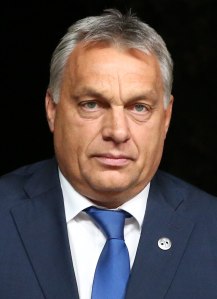
orban
Photo of Viktor Orbán © The Estonian EU Presidency 2017 and used courtesy of CC 2.0.

It is well worth reading Viktor Orbán’s speech on the 100th anniversary of the Treaty of Trianon, which was last Thursday and I didn’t even notice until it passed. Let’s start with this passage towards the end, which needs little comment.

“The world is changing. The changes are tectonic. The United States is no longer alone on the throne of the world, Eurasia is rebuilding with full throttle, the frames of our European Union are crackling, and now it hopes to save itself with a salto mortale. The ground is trembling under the feet of our eastern neighbour. The Balkans is also full of questions to be answered.

“A new order is being born. In our world, in our lives as well, great changes are banging on our gates.”

The Treaty of Trianon was one of the Paris Peace Conference treaties with the defeated Central Powers after World War One, which included the famous Treaty of Versailles, but also the treaties of Neuilly (with Bulgaria), St Germain (with German Austria), and Sevres (with Ottoman Turkey but ripped up by Atatürk by force of arms). Hungary lots two-thirds of its territory, nearly all of which had an ethnic majority of another nationality; but it also lost about three million Hungarians.

Hungary has lost another million in the since 1980 through a collapsed birth rate and high emigration; it is not hard to see the desperate desire for a bout of natalism that young Hungarian women seem reluctant to supply.

“At times they gave soldiers to defend the nation, at other times they gave armies of nation-building craftsmen to the country.”

This is contentious language even within Hungary. But the Hungarian liberal-left cannot simply wish its way out of dealing with the great national disaster that was Trianon. Budapest’s Mayor, Gergely Karácsony, the nearest thing to a credible rival that Orbán possesses, ordered a minute’s silence last Thursday. He spoke of the fate of his mother, trapped in what was now Romania in 1920 with his elderly great-grandparents, after his grandparents fled to the newly shrunken core Hungary. The elders, despite caring for a small child, were put to forced labour. Hungary is full of such stories and such myths, not only of the time after 1920 but the time after 1945.

But the silences are as revealing as the topics for comment, for Horthy’s regency is swept under the carpet, neither glorified nor condemned but simply not discussed; unmentioned too are the five months of murderous madness under the Arrow Cross Party. For others must always be the architects of Hungary’s problems.

Read more