Modern Medes and Parthians (Pentecost, 8 June 2025)

Preached at St Peter’s, Poulshot and Christ Church, Bulkington

Readings – Acts 2. 1-21; John 14. 8-17

“how is it that we hear, each of us, in our own native language? Parthians, Medes, Elamites, and residents of Mesopotamia, Judea and Cappadocia…”

A fresco painting featuring a religious scene with a group of figures seated around a table, each with a halo, suggesting they are saints or holy figures. Above them is an ornate architectural structure with arches and a blue sky background, adorned with a dove encircled by a halo, symbolizing the Holy Spirit. The painting includes intricate decorative borders and shows some signs of wear and fading.
Giotto, Pentecost (1290-9). In the Basilica of St Francis, Assisi, Italy.

Hearing today’s reading about the Parthians, Medes, and Elamites reminded me of a Pentecost a few years ago in a Church in Belfast. I heard this passage read with a strong and distinctive accent—not mine, but an accent that as distinctive in Belfast as it would be in Wiltshire. It turned out this accent came from the land of the Parthians, Medes, and Elamites—some of whom heard the apostles preach in their own languages at the first Pentecost. The lands that were once Parthia, Media, and Elam have been part of Iran for over a millennium, and the lesson was read by a member of what is by now a large Iranian community in Belfast, many of them converts to Christianity.

When the Iranian revolution took place in 1979, there were only around 170,000 Christians in the country, mostly from the ancient Assyrian and Armenian communities. While they were given a protected minority status by Ayatollah Khomeini’s government – as long as they kept their heads down – severe repression was unleashed against the small number of converts from Muslim backgrounds and the churches they belonged to. The Anglican priest in the city of Shiraz, Arastoo Sayyah, was murdered at his desk within eight days of the Revolution. The repression has come in waves since. Right now, a mother of two young children and convert to Christianity named Aida Najaflou has been locked up in Tehran’s notorious Evin Prison for four months facing trumped-up charges of “acting against national security”.

We would expect a Church facing such persecution to be in terminal decline. Yet, while tens of thousands of Christians have fled Iran into exile, whether as refugees or after securing work in other countries, the Church in Iran is numerically stronger than it has been for many centuries.

If you told the average person in the UK that hundreds of thousands of people in Iran had converted from Islam to Christianity, they’d probably refuse to believe you. But God continually upends our expectations of what is possible.

Nobody is quite sure how many people have come to faith in Christ in Iran from Muslim backgrounds over the last thirty years or so. Some sceptics claim no more than a few tens of thousands, while some enthusiastic evangelicals claim numbers in the millions. Article 18, a UK-based charity which advocates for religious freedom for people of all faiths, says a “conservative” estimate is that there are between half a million and 800,000 converts to Christianity in Iran. Research carried out anonymously on the Internet in 2020 by sociologists in the Netherlands from a non-religious perspective estimated that 1.5% of Iranians considered themselves Christians, implying just over a million converts from Muslim backgrounds.

Read more

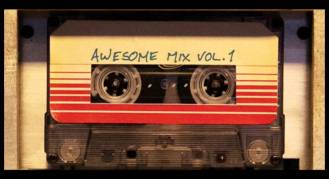
Cassettes, Communion, and Guardians of the Galaxy: Online Worship isn’t the Answer to Everything

Hooked on a feeling, I'm high on believing.

Young people these days are a rum lot! I’ve recently discovered that they’re getting into cassette tapes in a big way. I understood when people got back into vinyl again, that made perfect sense; analogue audio just sounds better than its digital counterpart, and there is something magical about the gentle crackle of a needle amplified by a good set of speakers. For the same reason, as a keen digital photographer, I understand why some of my snap-happy brethren are rediscovering film, even I have no desire to go to the trouble of setting up a darkroom myself.

But tapes? We lived off cassettes in the 1980s; we would make compilations by recording scratchy radio stations, sometimes Radio Luxembourg on Medium Wave, barely audible before sunset and full of fading after it in far-off Belfast. I remember how prone to breaking they were, always getting tangled up on the heads of the tape player, having to be straightened out and wound back on with a pencil, usually damaging the sound quality, even when they didn’t break altogether. Who in their right mind wants to use tapes?

Hooked on a feeling, I'm high on believing.
♪ Hooked on a feeling, I’m high on believing, but just not via Zoom ♫

A clerical colleague, who has the advantage of having teenage children, explained to me that it all started with Guardians of the Galaxy. And I can see why. Rarely has anything been more aptly named than Awesome Mix Vol. 1. My coleague’s son had recently given his girlfriend a mixtape for her birthday – they use that ugly Americanism (ugh!) rather than ‘compilation’, apparently. A question formed in my mind: but surely he could just make her a playlist on Spotify? The answer was so obvious I never even uttered the words. A compilation would always be a physical token of their love – in a sense, a sacrament. An outward and visible sign of an inward and spiritual grace.

Maybe the young people aren’t so rum after all.

Read more

Why This Liberal Catholic Will be Praying #ThyKingdomCome

The last thing the disciples are recorded as saying to Christ on Earth: “Lord, is this the time when you will restore the kingdom to Israel?”

After all they’d been through, they still didn’t get the point. They were looking for an earthly realm founded on their values – which of course were God’s, and therefore would usher in an era of justice and peace – and missed so much about the Crucifixion and Resurrection they’d experienced first-hand. Doubtless too, they missed the subtle point that all earthly kingdoms, political, theological, or otherwise, are prone to corruption and subverting their own principles.

Why should we be surprised? After two thousand years, we are no different.

As a Liberal Catholic, I can understand Angela Tilby’s pain and sense of loss: for we were the future once. Our tribe had once controlled the kingdom – or at least that small part of it that is the Church of England – and, while we had our faults, it was broadly a time of enlightenment and faith, liberation and not a little courage. It is wonderfully captured in a photo from the mid-1980s, I think in Dean’s Yard, of a smiling Desmond Tutu and Robert Runcie. This was the future of the Church – Catholic and reformed, deeply faithful yet open to asking hard questions, confident in its calling while open towards others, sacrificially committed to justice and peace. This was just thirty years ago.

Read more

Why is Cathedral Evensong Growing and What Does It Mean?

This piece appeared in the May-June 2014 edition of Salisbury Cathedral News I’ve always preferred the intimate parish church community to a cathedral’s grandeur. I came to mature faith in Belfast’s city centre parish of St. George’s, walking past the door of the Cathedral to do so. Since arriving in Salisbury last summer, I’ve yet … Read more