Wrestling with God: A Reflection for Holy Week (Monday 14th April 2025)

A vibrant painting with a red background depicts a dynamic biblical scene. On the right, an angel with golden wings wrestles with a man in a blue robe, their bodies locked in struggle. In the center, a small goat stands near a tree with a gnarled trunk. On the left, several figures in white and blue robes, possibly women, sit and observe the scene, set against a backdrop of green hills and a dramatic sky. The overall mood is intense and symbolic, capturing a moment of spiritual conflict.

Given at St Mary’s, Potterne

Genesis 32. 22-32

“Oh, sorry Vicar!” People often say that when after they’ve just had a good swear in front of me. A vicar is, of course, the sort of person you shouldn’t use foul language in front of. He – or, she, these days – is a very prim and proper person who would never swear, any more than they would drink, and blushes to hear even the first syllable of the word balderdash.

A classical painting depicts a dramatic scene of two figures engaged in a struggle. One figure, dressed in a red and white robe, appears to be a man with a beard, gripping the other tightly. The second figure, with wings and curly hair, is likely an angel, wearing a white garment. They are locked in an intense wrestle, set against a muted, earthy background, suggesting a moment of spiritual or physical conflict.
Rembrandt, Jacob Wrestling with An Angel (1659). Hangs in the Gemäldegalerie, Berlin.

And God is often perceived by the same people, in the unlikely event He exists at all, as a sort of Supervicar, very prim and priggish, in front of whom you want to be on your best behaviour—because if God does exist, and He finds out what’s really going on in your head, then you’re in big trouble.

The same people sometimes tell me that they’d like to believe in God—they envy people who have Faith, they tell me, envy the meaning and purpose our lives and envy our strong sense of community. Of course, we Christians know that we’re actually a bit more prone to isolation and drifting than that, but let’s roll with the idea… These people tell me they envy us our Faith, but they struggle the idea of a God who created life to include the harsh realities of suffering and pain. Because why would a supervicar do that?

The Bible paints a picture of God that is far from a supervicar. Far from expecting blind obedience, in tonight’s reading, God is presented as a mysterious stranger who proactively seeks out Jacob for a good bout of wrestling that lasts all night – we all know about wrestling with God all night don’t we? When dawn breaks, the stranger has not defeated Jacob, who is still battling gamely with Him, although He has been left with a limp from a blow to the hip.

Read more

Reflection on ‘Judgement’ for Holy Week; Monday 3 April 2023

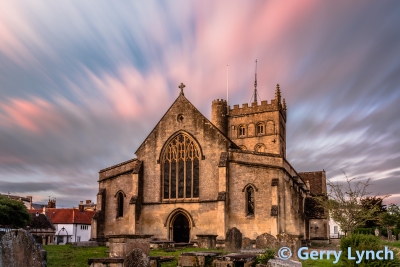
A medieval church, St Mary's in Potterne, brilliantly lit in golden colour by bright evening sun.

Given at St Mary’s, Potterne

Matthew 25. 31-40

Do we want to live in a universe where Jimmy Saville got away with it?

A medieval church, St Mary's in Potterne, brilliantly lit in golden colour by bright evening sun. Some tombstones are in the churchyard, also brilliantly lit, and a few primroses are just visible
I walked over the fields on a gorgeous spring evening to this wonderful church and then gave a reflection on judgement, damnation, and one of the vilest characters ever to disgrace British public life… © Gerry Lynch, 3 April 2023.

I found myself asking this as I prepared the readings for tonight’s service. Many of us will know the famous parable of the sheep and the goats that our bible reading tonight came from. It was rather too long for this short service, so I left out the bit about what happens to the goats. I left out the bit that may be the most important for us to hear, because I didn’t want to frighten or upset anyone.

The idea of God as divine judge is frightening and upsetting. Maybe, however, that’s no bad thing. It’s a pity that Jimmy Saville wasn’t a bit more afraid of being judged by God.

The Church has in recent decades downplayed the idea of divine judgement. It wanted to be positive, to celebrate the best in humanity; it often said that judgement really wasn’t what Jesus Christ, Love incarnate, was about. People weren’t fooled. They knew this was a rewrite of what Christianity had always said. You can’t escape for too long that the Biblical record is pretty clear that Jesus did talk a lot about judgement. Worse yet, nobody seemed much interested in this rewrite, which is probably part of the story of why the churches slowly emptied. If we don’t need redeeming from our sins, then why do we need a saviour?

Read more

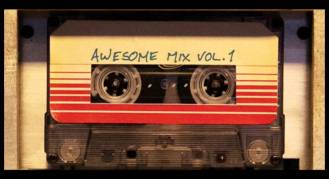
Cassettes, Communion, and Guardians of the Galaxy: Online Worship isn’t the Answer to Everything

Hooked on a feeling, I'm high on believing.

Young people these days are a rum lot! I’ve recently discovered that they’re getting into cassette tapes in a big way. I understood when people got back into vinyl again, that made perfect sense; analogue audio just sounds better than its digital counterpart, and there is something magical about the gentle crackle of a needle amplified by a good set of speakers. For the same reason, as a keen digital photographer, I understand why some of my snap-happy brethren are rediscovering film, even I have no desire to go to the trouble of setting up a darkroom myself.

But tapes? We lived off cassettes in the 1980s; we would make compilations by recording scratchy radio stations, sometimes Radio Luxembourg on Medium Wave, barely audible before sunset and full of fading after it in far-off Belfast. I remember how prone to breaking they were, always getting tangled up on the heads of the tape player, having to be straightened out and wound back on with a pencil, usually damaging the sound quality, even when they didn’t break altogether. Who in their right mind wants to use tapes?

Hooked on a feeling, I'm high on believing.
♪ Hooked on a feeling, I’m high on believing, but just not via Zoom ♫

A clerical colleague, who has the advantage of having teenage children, explained to me that it all started with Guardians of the Galaxy. And I can see why. Rarely has anything been more aptly named than Awesome Mix Vol. 1. My coleague’s son had recently given his girlfriend a mixtape for her birthday – they use that ugly Americanism (ugh!) rather than ‘compilation’, apparently. A question formed in my mind: but surely he could just make her a playlist on Spotify? The answer was so obvious I never even uttered the words. A compilation would always be a physical token of their love – in a sense, a sacrament. An outward and visible sign of an inward and spiritual grace.

Maybe the young people aren’t so rum after all.

Read more

Beginning Public Ministry in a Liminal Time

St Anne's Cathedral, Belfast, reflected in a puddle on Donegall Street, 29 April 2020, © Gerry Lynch

On Saturday last, I should have made a deacon in Salisbury Cathedral, a place I love, the antepenultimate milestone in a journey to fulfil a call to priesthood in the church of God that I began, depending on how one counts it, either six, ten, or twenty-two years ago. I first went to see the Director of Ordinands for the Diocese of Connor and joined the Fellowship of Vocation there in September 1998. I often find it useful to date moments in my life by the pop songs on the radio at the time; the UK Number 1 single then was, with delicious irony, T-Spoon’s Sex on the Beach. That really was a long time ago now.

St John the Baptist Church, Devizes, 1 July 2020, © Gerry Lynch

Having been formally licensed as a lay worker in the parish of St John with St Mary, Devizes, by the Bishop of Salisbury via videoconference on Sunday I am, however, a curate if not a cleric, an officially licensed tender of God’s garden of souls at a time when churches have not held public worship for more than three months, when public health regulations have quite correctly banned visiting the army of lonely and isolated people in their own homes. Hundreds of others have had their ordinations similarly delayed, and are experiencing similar uncertainties. For me, a journey towards ordained ministry that often involved being told that I was an awkward person on the edge leads to a public ministry that begins in a virus-ravaged world that sits on the edge of… who knows what?

Wikipedia tells me that in anthropology, liminality (from the Latin word limen, meaning ‘a threshold’) is the quality of ambiguity or disorientation that occurs in the middle stage of a rite of passage, when participants no longer hold their pre-ritual status but have not yet begun the transition to the status they will hold when the rite is complete. Liminality is terribly fashionable in the Church at the moment; I have not always found it to be a pleasant or rewarding place to inhabit. It is, however, the state in which the whole world waits for a new order to emerge, groaning for better but often in trepidation of worse.

Liminal time exists in the cracks in our lives and the cracks in the life of the world that lie between the passing of the old and the coming of the new. Of course, there are other ways of looking at the world, ways that emphasize the continuities rather than the discontinuities. Emphasising the continuities that lie across all breaks in human experience seems to have been the most modish approach of late. Understandings that emphasize continuity bring richness and insight, for each of us always remains himself and all of us always remain human. Like all perspectives, however, these are limited. Just as a photographer will choose his perspective depending on the time of day and year, weather conditions, subject matter, and the like, sometimes we must consciously open ourselves to new viewpoints on ourselves and our world.

Read more

Chapel Address at Evensong, St Stephen’s House, Oxford, 4 November 2019

Chapel Address at Evensong, St Stephen’s House, Oxford, 4 November 2019
Gerry Lynch

St Stephen's House Chapel, Oxford

“When you talk to God, it’s called prayer. When God talks to you, it’s called insanity.”

That bon mot came to mind as I pondered today’s readings from the first chapters of Daniel and Revelation, two of the most misunderstood and misused books of the Bible, yet also among the most transcendent.

Prophecy has always been a tricky topic in the Church – St Paul admonished the Corinthian Church about it. The soldiers who beat up the blindfolded Jesus demanded he guess which of them had struck him. They were confusing prophecy and fortune-telling. It is still a common mistake, and made as much within the Church, or at last at its fringes, as it is outside it. The YouTube fanatics who drop random texts from Revelation to confidently predict the arrival of doomsday next Wednesday have done tremendous damage to the Church.

The Belfast of my boyhood was thick with these chancers. There was even a BBC children’s TV drama of the early 1980s, set in Belfast, about one of these street corner Jeremiahs, entitled The End of the World Man. Of course the title character was nothing but a hypocrite, setting himself up in self-righteous judgement while using his political connections to facilitate a corrupt land deal to destroy a patch of urban wilderness much loved by our televisual child heroes. If you want to lampoon the Church, these self-proclaimed prophets are an easy way to do it. And they are terribly unbiblical. The end will come like a thief in the night; it is not ours to know when and how it will come; Jesus says this very directly in St Matthew’s Gospel.

Read more

The Bright Field

Late on a summer evening, as I took photos from the summit of Divis (478m above sea level) the highest of the Belfast Hills towards Lough Neagh, suddenly a shaft of sunlight broke through and illuminated the fields on top of Budore Hill, about 4 km away. Clearly visible on Lough Neagh is Ram’s Island, … Read more

Presbyterians, Salvation, and God

Cross-posted at Slugger O’Toole.

We cremated my friend James on the freakishly warm Friday before St Patrick’s Day, between the two bouts of even freakier snow. We did this after a celebration of the Supper of the Lord Jesus Christ who was his Saviour and the anchor of his life. The daffodils bobbed in the sunshine as we took his coffin through the traffic from the church in the shadow of St Paul’s Cathedral to the crematorium in East Finchley, his terminus ad quem before his voyage to heaven. As an Angus-born and Edinburgh-reared son of the Kirk, he came to mind after this week’s shenanigans at the Presbyterian General Assembly in Belfast.

James lived with MS for thirty years, something unimaginable when he was first diagnosed in the late 1980s. His continued life was a miracle, but it was also a struggle. I never knew the wordsmith, cyclist and cook that his older friends wrote about (movingly here and here). By the time I met him, sixteen years ago, his disease had robbed his legs of the power to walk, left his hands unable to handle a pen or a carving knife, and made his speech slurred and slow.

What he was never robbed of was his indomitable spirit, his twinkly smiling eyes, or his dry humour. Nor did MS prevent him throwing the legendary champagne-soaked parties in his Barbican flat, attended by a mix of characters who had little in common but their friendship with this delightful bon vivant: nonagenarian grand dames from Islington garden square mansions would rub shoulders with middle-aged actors struggling long past any hope of stardom and recently arrived twenty-somethings from Doncaster or Brazil, penniless but sure they’d make their fortune in London.

I never heard him complain about his lot: at most he would sigh wistfully that people should avoid getting MS if they could, not that they can. In that I saw a shadow of the boy, many decades before, whose father died when he was only nine, who then had to grow into a man far too soon and just get on with it.

Read more

Tides Also Come In

TIDES ALSO COME IN (A response to Arnold. And to Cupitt.) A stormy sea today. Grey rock pools catch a leaden sky In Lowry hues; not very far away Bangor’s a shade; the hills of Ireland peer, Like dragons’ silhouettes through wind-whipped spray. Come, take the salt air, walk while the wind’s high! Only, the … Read more