Worship is Worth It: Sermon Preached on 29th January 2023 (Fourth Sunday after The Epiphany)

Preached at Evensong in St Mary the Virgin, Bishop’s Cannings

Genesis 28.10-22; Philemon 1–16

“…this stone, which I have set for a pillar, shall be God’s house.”

Philemon is not a text that preachers tend to thank the lectionary for throwing their way. Nonetheless I think it has quite a bit of interest to say to us here this evening, especially when paired with our Old Testament reading from Genesis, one of the most famous passages from that book, Jacob’s Ladder. Evensong often gives us the chance to engage with parts of the Bible that are rarely read in the Sunday morning lectionary. Tonight it certainly has.

White angels climbing up and down a ladder, representing a famous vision of Jacob in Genesis 28. A red sunset hovers overhead and a dark town is in the background. This is a painting by Mark Chagall from 1973.
Chagall, Jacob’s Ladder (1973).

There is often debate in the Church about whether the Church’s primary job is to help the needy or to worship almighty God. We often hear a similar debate about evangelism, where some argue it should be de-prioritised or even avoided entirely for the sake of helping the poor. In his letter to Philemon, St Paul sees all these things as being intimately connected with one another and mutually reinforcing one another. He prays for Philemon that “the communication of thy faith may become effectual by the acknowledging of every good thing which is in you in Christ Jesus”. It is when we take time to recognise the good that Jesus Christ does in us and through us, and to thank Him for that in prayer, that we become effective in sharing our faith.

Philemon is a difficult document because in it Paul discusses Onesimus, a runaway slave, with Philemon, who is his owner. Any thought of doing anything other than condemning slavery makes us outraged, and rightly so. The sad reality, however, is nearly every human society, on every continent, began practising slavery as soon the development of agriculture made it practical. What more demonstration of the reality of original sin do we need?

Indeed, while our first instinct when reading this letter is to stand in pious judgement over St Paul and the Roman Imperial society that produced him, we might consider that for all their faults, the Romans never came close to threatening the planet’s capacity to support human life, something we’ve done remarkably quickly through nothing more sophisticated than burning a bit of coal and oil. We are very quick to judge those of the past perhaps precisely because we know that us people of the present are, for all our wealth and technological power, just as flawed as our ancestors.

So, I think part of what this difficult letter has to teach us that there is no perfect social or political order and that there never will be — we must live our lives as Christians and seek to do good and follow Christ in a world that will always have dark aspects. We can, of course, work to change the political system and the laws we live under. Christianity supplied most of those who led the worldwide abolition of slavery in the century before last and we thank God for them. But we won’t always succeed in our attempts to make the world a better place; in fact sometimes we won’t even be pushing for the right things. Attempts to create utopia, to actually build heaven on earth, have usually led to hellish outcomes; the first society to reintroduce forms of slavery after having previously abolished the practice was the Soviet Union, which claimed to be a staging-post towards the perfect system of governing the world.

Read more

New Life After A Sojourn in the Wilderness

This article first appeared in the March 2021 edition of the parish magazine of St John with St Mary, Devizes.

Although summer remains far away and we could yet be overtaken by a genuinely cold snap or even snow, the signs of new life are all around us at present. The snowdrops are magnificent, especially in our local woodlands, and the days are getting rapidly longer: each day currently gives us an extra four minutes of daylight. It soon builds up.

We trust and pray we are also seeing signs of new life after the pandemic. The number of new Covid-19 cases in the UK is decreasing at some speed, the horrifying daily death toll is also mercifully falling rapidly, the number of people vaccinated is going up, and the government has presented its roadmap out of lockdown, promising an end to restrictions by late June. As ordinary citizens, we can do little but trust and pray that our scientists and statisticians have done their modelling correctly and that this will indeed be our last lockdown.

In that light, after discussions at the Parochial Church Council, we are planning a return to services in church on Sundays. There has, however, been a recent and fairly significant outbreak in Devizes, with local infection rates running at 2½ times the average for England. This has gone almost unreported in the local press, but is a reality. Responsibility demands we wait for that to subside before bringing people back into church, other recent local outbreaks indicate we can expect this to happen quickly under lockdown conditions. The PCC has delegated the decision on a date of return to the churchwardens, who will review the situation every week. We will not delay any longer than necessary, and barring truly exceptional circumstances envisage being back in church by Holy Week and possibly some time before. We will contact people by e-mail, or by telephone for those without access to the Internet, on the Monday before any Sunday return.

Read more

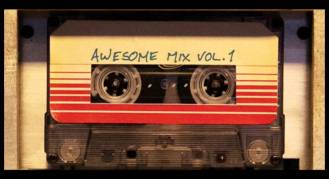
Cassettes, Communion, and Guardians of the Galaxy: Online Worship isn’t the Answer to Everything

Hooked on a feeling, I'm high on believing.

Young people these days are a rum lot! I’ve recently discovered that they’re getting into cassette tapes in a big way. I understood when people got back into vinyl again, that made perfect sense; analogue audio just sounds better than its digital counterpart, and there is something magical about the gentle crackle of a needle amplified by a good set of speakers. For the same reason, as a keen digital photographer, I understand why some of my snap-happy brethren are rediscovering film, even I have no desire to go to the trouble of setting up a darkroom myself.

But tapes? We lived off cassettes in the 1980s; we would make compilations by recording scratchy radio stations, sometimes Radio Luxembourg on Medium Wave, barely audible before sunset and full of fading after it in far-off Belfast. I remember how prone to breaking they were, always getting tangled up on the heads of the tape player, having to be straightened out and wound back on with a pencil, usually damaging the sound quality, even when they didn’t break altogether. Who in their right mind wants to use tapes?

Hooked on a feeling, I'm high on believing.
♪ Hooked on a feeling, I’m high on believing, but just not via Zoom ♫

A clerical colleague, who has the advantage of having teenage children, explained to me that it all started with Guardians of the Galaxy. And I can see why. Rarely has anything been more aptly named than Awesome Mix Vol. 1. My coleague’s son had recently given his girlfriend a mixtape for her birthday – they use that ugly Americanism (ugh!) rather than ‘compilation’, apparently. A question formed in my mind: but surely he could just make her a playlist on Spotify? The answer was so obvious I never even uttered the words. A compilation would always be a physical token of their love – in a sense, a sacrament. An outward and visible sign of an inward and spiritual grace.

Maybe the young people aren’t so rum after all.

Read more

Let’s Worship Outside

The News Letter later asked me to turn this blog into a newspaper article which you can read here.

Worshipping outside in happier times in South Dorset. Photo © Diocese of Salisbury/Gerry Lynch.

The dreadful news that more than a hundred people were infected with coronavirus at a single, legally permitted, church service in Germany earlier this month should make it transparent that we are unlikely any time soon to be returning to church worship as we hitherto understood it.

In this time of fear and death, I feel deeply deprived of connection with God. I have not received communion in more than two months; I have no idea when I might do so again. I cannot even spend time in a church praying in the presence of the reserved sacrament. I cannot kneel in any of my familiar haunts for prayer, nor can I discover new ones. A computer screen in my parents’ box room has proven a distracting and sensory-deprived locus for prayer. In my case, as a very definite extrovert, prayer is very much an externally contextualised physical process as well as an interior mental and psychological one. Prayer involves the placing of the earthly into the loving care of the heavenly, and is thus intimately bound up with place, physicality, community and body.

Worship via videoconference involves deprivation of the senses. It only involves sight and hearing; never smell, taste, or touch. The aural and visual, already overprivileged in technological societies, are mediated through a screen and a speaker, usually with poor audio and video quality. That is not to dismiss its value – certainly some people seem to have reconnected or newly connected with Christian worship via online means during the pandemic. But it can never involve the smell of incense, the taste of sacramental wine, the heat of a ray of sunshine streaming through a window, a hug, or noticing that a much loved elderly parishioner’s gait has suddenly become laboured.

Are there other ways to worship safely in the era of coronavirus?

Read more

Blogging Staggers Day One: Praying With the Lepers

The Bartlemas Chapel – a name that sounds like something out of Dickens, and the chapel felt like something from a disappeared world as well. A few hundred metres down a laneway from the noise and bustle of the Cowley Road lies a former leper chapel, feeling as if it were behind a portal to … Read more