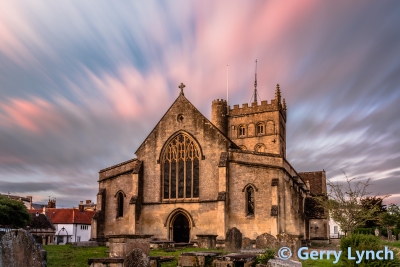
Never Mind the Bishops!: Sermon Preached on Candlemas (Sunday 2nd February 2025)

A 13th Century drawing of Mary and Joseph presenting the infant Jesus to Simeon at the Temple in Jerusalem - or at least what a 13th Century artist thought that looked like - while Anna worships and nine onlookers watch.

Preached at St Mary’s Potterne and Christ Church, Worton

Readings – Hebrews 2. 14-18; Luke 2. 22-40

“he himself likewise shared the same things, so that through death he might … free those who all their lives were held in slavery by the fear of death.”

“It’s rather like sending your opening batsmen to the crease only for them to find, the moment the first balls are bowled, that their bats have been broken before the game by the team captain.”

A man in a suit and tie is standing and holding a piece of paper, appearing to be speaking or reading in a formal setting, possibly a legislative or governmental assembly. Several other individuals, also dressed in formal attire, are seated around him, listening attentively. The setting suggests a serious and official environment.
Presentations come in many shapes and sizes; Geoffrey Howe resigns on 13 November 1990. Used under the Fair Use doctrine.

Perhaps I am the first preacher ever to quote, in a sermon, this famous line from Sir Geoffrey Howe’s 1990 resignation speech as Deputy Prime Minister. Yet they were words that popped unbidden to mind as I returned from a fairly long and very pleasant leave, raring to get back into the fray, to find myself confronted with disastrous stories in the media about the Church of England, generated by our bishops: these are the people who are supposed to be our shepherds, our pastors. For it is rather like arriving at the crease, hoping to start a long and productive spell, only to find that my bat has indeed been broken.

What does that have to do with this morning’s Bible readings? Well, quite a lot as it turns out. One is the famous story of Jesus being presented by Mary and Joseph in the Temple, in fulfilment of Jewish religious law, as we would expect as today is Candlemas, the Feast of the Presentation. The other reading is a passage from Hebrews which reflects on the implications of Jesus sharing our human nature in all its fullness. Both identify Jesus directly as the Christ, the Messiah, sent by God to deliver His people.

So it makes sense to have this pair of readings together on the same day, but they are to some extent in tension with one another. Our Gospel shows even Christ, God made human, binding Himself to the Law of Moses, and the religious system of the Temple at Jerusalem, in which sacrifices of animals played a major role. But the Letter to the Hebrews is all about making the case that the system of animal sacrifices has been ended by Christ, whose sacrifice of Himself on the Cross is enough for everyone, for all time. The Bible doesn’t give us simple answers. To read the Bible faithfully, we need to listen carefully when we find different parts of it in tension. It is always tempting to mine Scripture for simple answers; the trouble with that is that we then tend to find the answers we already wanted. If we honestly seek to puzzle our way to finding God’s will for us and for the world, it will be a job that we can barely make a start on in a lifetime.

Read more

I Would Do Anything for Church Unity But I Won’t Do That: Sermon Preached on 22nd January 2023 (Third Sunday After Epiphany)

Three men standing in front of a large banner saying "Homosexuality is Sin" with five other men behind them, two of them holding smaller placards saying "the precious blood of life" and "repent ye, and believe the gospel." In a very high ratio landscape format.

Preached at St John’s Devizes

1 Corinthians 1.10-18; Matthew 4.12-23

“…each of you says, “I belong to Paul,” or “I belong to Apollos,” or “I belong to Cephas,” …  Has Christ been divided? Was Paul crucified for you?”

The divisions between the churches are often given as a reason why people reject Christianity. Therefore it’s a pity that we Christians can’t put aside our divisions and reunite the whole universal Church into one body, so we can witness far more effectively for Christ.

Many a sermon during Church Unity Week has begun with a statement like this. I happen, however, to forcefully disagree with it. (That wasn’t the bland and pious exhortation to ecumenism you were expecting twenty seconds ago, was it?)

Institutional unity wouldn’t mean we all agreed on everything anyway. I mean, as you’ll have noticed in the news this week, even in the Church of England we don’t actually agree on everything. The Roman Catholic Church the one body of any size that regards itself as being the only true and universal Church, is as internally divided as any other. Some of you may have seen in The Spectator a few weeks ago the deathbed letter of George Pell, the former Primate of Australia and leading Roman Catholic conservative in the English-speaking world, excoriating Pope Francis and his papacy. Given how deep the divisions within existing churches are, I wonder why so many of us seem to think reuniting into one big worldwide church institution is an ideal we should all aspire to. We’d still be divided within it.

Three men standing in front of a large banner saying "Homosexuality is Sin" with five other men behind them, two of them holding smaller placards saying "the precious blood of life" and "repent ye, and believe the gospel." A large warehouse-style building, brick built and old, is behind.
Some protestors perhaps not so keen on rapid institutional reunion with the Church of England, © Gerry Lynch, 28 August 2010.

There’s a negative way of thinking about the persistence of divisions among Christians, which is that they reflect our sinfulness, our pride, our inability to humble ourselves to truly discerning the mind of Christ.

I prefer to look at it another way. I prefer to start by noting that unity in Christ cannot mean uniformity, for that is not the unity that Christ modelled with His disciples when He walked the Earth. In the Gospels, Christ gives the disciples the freedom to argue and fall out with one another, and to misinterpret what He had to say. A generation later, Peter and Paul fought like rats in a sack. The Church of their heyday was as divided over issues like circumcision and whether it was morally acceptable to eat food sacrificed to idols, as we are about same-sex marriage. Some of the issues that tormented the early Church seem obscure to us now, but if one takes time to understand their context they are about the same things that are most divisive in the Church today – identity, and the extent to which Christians should model a distinct way of life from the rest of society, or instead integrate within it to help it become more like the Kingdom of God.

Read more

Cassettes, Communion, and Guardians of the Galaxy: Online Worship isn’t the Answer to Everything

Hooked on a feeling, I'm high on believing.

Young people these days are a rum lot! I’ve recently discovered that they’re getting into cassette tapes in a big way. I understood when people got back into vinyl again, that made perfect sense; analogue audio just sounds better than its digital counterpart, and there is something magical about the gentle crackle of a needle amplified by a good set of speakers. For the same reason, as a keen digital photographer, I understand why some of my snap-happy brethren are rediscovering film, even I have no desire to go to the trouble of setting up a darkroom myself.

But tapes? We lived off cassettes in the 1980s; we would make compilations by recording scratchy radio stations, sometimes Radio Luxembourg on Medium Wave, barely audible before sunset and full of fading after it in far-off Belfast. I remember how prone to breaking they were, always getting tangled up on the heads of the tape player, having to be straightened out and wound back on with a pencil, usually damaging the sound quality, even when they didn’t break altogether. Who in their right mind wants to use tapes?

Hooked on a feeling, I'm high on believing.
♪ Hooked on a feeling, I’m high on believing, but just not via Zoom ♫

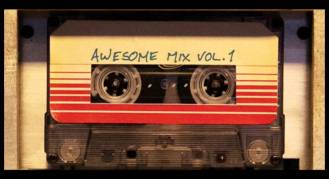
A clerical colleague, who has the advantage of having teenage children, explained to me that it all started with Guardians of the Galaxy. And I can see why. Rarely has anything been more aptly named than Awesome Mix Vol. 1. My coleague’s son had recently given his girlfriend a mixtape for her birthday – they use that ugly Americanism (ugh!) rather than ‘compilation’, apparently. A question formed in my mind: but surely he could just make her a playlist on Spotify? The answer was so obvious I never even uttered the words. A compilation would always be a physical token of their love – in a sense, a sacrament. An outward and visible sign of an inward and spiritual grace.

Maybe the young people aren’t so rum after all.

Read more

Beginning Public Ministry in a Liminal Time

St Anne's Cathedral, Belfast, reflected in a puddle on Donegall Street, 29 April 2020, © Gerry Lynch

On Saturday last, I should have made a deacon in Salisbury Cathedral, a place I love, the antepenultimate milestone in a journey to fulfil a call to priesthood in the church of God that I began, depending on how one counts it, either six, ten, or twenty-two years ago. I first went to see the Director of Ordinands for the Diocese of Connor and joined the Fellowship of Vocation there in September 1998. I often find it useful to date moments in my life by the pop songs on the radio at the time; the UK Number 1 single then was, with delicious irony, T-Spoon’s Sex on the Beach. That really was a long time ago now.

St John the Baptist Church, Devizes, 1 July 2020, © Gerry Lynch

Having been formally licensed as a lay worker in the parish of St John with St Mary, Devizes, by the Bishop of Salisbury via videoconference on Sunday I am, however, a curate if not a cleric, an officially licensed tender of God’s garden of souls at a time when churches have not held public worship for more than three months, when public health regulations have quite correctly banned visiting the army of lonely and isolated people in their own homes. Hundreds of others have had their ordinations similarly delayed, and are experiencing similar uncertainties. For me, a journey towards ordained ministry that often involved being told that I was an awkward person on the edge leads to a public ministry that begins in a virus-ravaged world that sits on the edge of… who knows what?

Wikipedia tells me that in anthropology, liminality (from the Latin word limen, meaning ‘a threshold’) is the quality of ambiguity or disorientation that occurs in the middle stage of a rite of passage, when participants no longer hold their pre-ritual status but have not yet begun the transition to the status they will hold when the rite is complete. Liminality is terribly fashionable in the Church at the moment; I have not always found it to be a pleasant or rewarding place to inhabit. It is, however, the state in which the whole world waits for a new order to emerge, groaning for better but often in trepidation of worse.

Liminal time exists in the cracks in our lives and the cracks in the life of the world that lie between the passing of the old and the coming of the new. Of course, there are other ways of looking at the world, ways that emphasize the continuities rather than the discontinuities. Emphasising the continuities that lie across all breaks in human experience seems to have been the most modish approach of late. Understandings that emphasize continuity bring richness and insight, for each of us always remains himself and all of us always remain human. Like all perspectives, however, these are limited. Just as a photographer will choose his perspective depending on the time of day and year, weather conditions, subject matter, and the like, sometimes we must consciously open ourselves to new viewpoints on ourselves and our world.

Read more

Let’s Worship Outside

The News Letter later asked me to turn this blog into a newspaper article which you can read here.

Worshipping outside in happier times in South Dorset. Photo © Diocese of Salisbury/Gerry Lynch.

The dreadful news that more than a hundred people were infected with coronavirus at a single, legally permitted, church service in Germany earlier this month should make it transparent that we are unlikely any time soon to be returning to church worship as we hitherto understood it.

In this time of fear and death, I feel deeply deprived of connection with God. I have not received communion in more than two months; I have no idea when I might do so again. I cannot even spend time in a church praying in the presence of the reserved sacrament. I cannot kneel in any of my familiar haunts for prayer, nor can I discover new ones. A computer screen in my parents’ box room has proven a distracting and sensory-deprived locus for prayer. In my case, as a very definite extrovert, prayer is very much an externally contextualised physical process as well as an interior mental and psychological one. Prayer involves the placing of the earthly into the loving care of the heavenly, and is thus intimately bound up with place, physicality, community and body.

Worship via videoconference involves deprivation of the senses. It only involves sight and hearing; never smell, taste, or touch. The aural and visual, already overprivileged in technological societies, are mediated through a screen and a speaker, usually with poor audio and video quality. That is not to dismiss its value – certainly some people seem to have reconnected or newly connected with Christian worship via online means during the pandemic. But it can never involve the smell of incense, the taste of sacramental wine, the heat of a ray of sunshine streaming through a window, a hug, or noticing that a much loved elderly parishioner’s gait has suddenly become laboured.

Are there other ways to worship safely in the era of coronavirus?

Read more

Chapel Address at Evensong, St Stephen’s House, Oxford, 4 November 2019

Chapel Address at Evensong, St Stephen’s House, Oxford, 4 November 2019
Gerry Lynch

St Stephen's House Chapel, Oxford

“When you talk to God, it’s called prayer. When God talks to you, it’s called insanity.”

That bon mot came to mind as I pondered today’s readings from the first chapters of Daniel and Revelation, two of the most misunderstood and misused books of the Bible, yet also among the most transcendent.

Prophecy has always been a tricky topic in the Church – St Paul admonished the Corinthian Church about it. The soldiers who beat up the blindfolded Jesus demanded he guess which of them had struck him. They were confusing prophecy and fortune-telling. It is still a common mistake, and made as much within the Church, or at last at its fringes, as it is outside it. The YouTube fanatics who drop random texts from Revelation to confidently predict the arrival of doomsday next Wednesday have done tremendous damage to the Church.

The Belfast of my boyhood was thick with these chancers. There was even a BBC children’s TV drama of the early 1980s, set in Belfast, about one of these street corner Jeremiahs, entitled The End of the World Man. Of course the title character was nothing but a hypocrite, setting himself up in self-righteous judgement while using his political connections to facilitate a corrupt land deal to destroy a patch of urban wilderness much loved by our televisual child heroes. If you want to lampoon the Church, these self-proclaimed prophets are an easy way to do it. And they are terribly unbiblical. The end will come like a thief in the night; it is not ours to know when and how it will come; Jesus says this very directly in St Matthew’s Gospel.

Read more

Blogging Staggers Day One: Praying With the Lepers

The Bartlemas Chapel – a name that sounds like something out of Dickens, and the chapel felt like something from a disappeared world as well. A few hundred metres down a laneway from the noise and bustle of the Cowley Road lies a former leper chapel, feeling as if it were behind a portal to … Read more

Presbyterians, Salvation, and God

Cross-posted at Slugger O’Toole.

We cremated my friend James on the freakishly warm Friday before St Patrick’s Day, between the two bouts of even freakier snow. We did this after a celebration of the Supper of the Lord Jesus Christ who was his Saviour and the anchor of his life. The daffodils bobbed in the sunshine as we took his coffin through the traffic from the church in the shadow of St Paul’s Cathedral to the crematorium in East Finchley, his terminus ad quem before his voyage to heaven. As an Angus-born and Edinburgh-reared son of the Kirk, he came to mind after this week’s shenanigans at the Presbyterian General Assembly in Belfast.

James lived with MS for thirty years, something unimaginable when he was first diagnosed in the late 1980s. His continued life was a miracle, but it was also a struggle. I never knew the wordsmith, cyclist and cook that his older friends wrote about (movingly here and here). By the time I met him, sixteen years ago, his disease had robbed his legs of the power to walk, left his hands unable to handle a pen or a carving knife, and made his speech slurred and slow.

What he was never robbed of was his indomitable spirit, his twinkly smiling eyes, or his dry humour. Nor did MS prevent him throwing the legendary champagne-soaked parties in his Barbican flat, attended by a mix of characters who had little in common but their friendship with this delightful bon vivant: nonagenarian grand dames from Islington garden square mansions would rub shoulders with middle-aged actors struggling long past any hope of stardom and recently arrived twenty-somethings from Doncaster or Brazil, penniless but sure they’d make their fortune in London.

I never heard him complain about his lot: at most he would sigh wistfully that people should avoid getting MS if they could, not that they can. In that I saw a shadow of the boy, many decades before, whose father died when he was only nine, who then had to grow into a man far too soon and just get on with it.

Read more

Why This Liberal Catholic Will be Praying #ThyKingdomCome

The last thing the disciples are recorded as saying to Christ on Earth: “Lord, is this the time when you will restore the kingdom to Israel?”

After all they’d been through, they still didn’t get the point. They were looking for an earthly realm founded on their values – which of course were God’s, and therefore would usher in an era of justice and peace – and missed so much about the Crucifixion and Resurrection they’d experienced first-hand. Doubtless too, they missed the subtle point that all earthly kingdoms, political, theological, or otherwise, are prone to corruption and subverting their own principles.

Why should we be surprised? After two thousand years, we are no different.

As a Liberal Catholic, I can understand Angela Tilby’s pain and sense of loss: for we were the future once. Our tribe had once controlled the kingdom – or at least that small part of it that is the Church of England – and, while we had our faults, it was broadly a time of enlightenment and faith, liberation and not a little courage. It is wonderfully captured in a photo from the mid-1980s, I think in Dean’s Yard, of a smiling Desmond Tutu and Robert Runcie. This was the future of the Church – Catholic and reformed, deeply faithful yet open to asking hard questions, confident in its calling while open towards others, sacrificially committed to justice and peace. This was just thirty years ago.

Read more