Worthless Slaves?: Sermon Preached in Christ Church, Worton, Sunday 2nd October 2022 (Sixteenth Sunday after Trinity)

Readings – 2 Timothy 1: 1–14; Luke 17: 5–10

“We are worthless slaves; we have done only what we ought to have done!”

In the name of the Father, and of the Son, and of the Holy Spirit.

I don’t know about you, but I could have done without a Gospel reading like that. We are told to be like the poor slaves toiling in the fields all day, then as soon as they come home ordered to prepare their master’s dinner before they get the chance to eat and drink themselves. It’s not exactly the most encouraging text in the current circumstances.

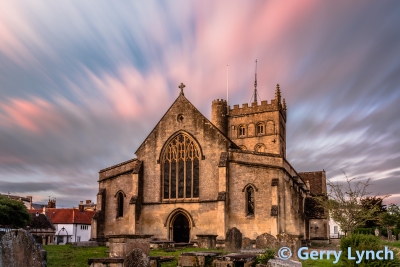
Christ Church Worton, 2 October 2022.

I am tired after the last two and a half years of Corona-Christianity, of the endless chopping and changing of regulations and routines, of the closures and the re-openings, of putting huge effort into learning new skills that became obsolescent a few months later. It was blooming hard work, made more exhausting by being constantly told that the pandemic had forced the Church to confront that it has no money and that we need to get used to a leaner Church more dependent on volunteers. This comes on top of decades of the lay people in the villages, the Poor Bloody Infantry of the Church of England, being amalgamated into ever bigger benefices with ever fewer clergy even as the demand for share goes up. Of course, every clever reorganisation presents itself as the solution to the current problems, but ends up being superseded by the next clever scheme a few years down the line.

There is money in the system, but it’s never for churches or benefices like this; only ever for churches in student towns and big cities promoting a style of worship that is a million miles away from village Anglicanism. Strangely, those churches often seem to promote a sort of theology of success that is also a million miles from the Gospel Jesus is proclaiming this morning, where the reward for hard work is yet more hard work. It is enough to make you lose faith.

Read more

Where is Your Faith?: Sermon Preached at St John’s, Devizes, Sunday 20th February 2022 (The 2nd Sunday before Lent)

Readings – Revelation 4; Luke 8:22–25

‘Where is your faith?’

I think we all know by now that the world’s Number 1 tennis player, Novak Djokovic, refuses to take a coronavirus vaccine. For many weeks now, this has been one of the most reported news stories all over the world. What I find odd is that nobody asks why his views seem to matter so much. He’s a great tennis player, but not exactly one of our era’s great minds. So why do we care what he thinks about any subject not related to a tennis court?

2022: Behold Your Idols!

The Church is considered irrelevant. More than that, Church is deeply insecure about its supposed lack of relevance, and spends a huge amount of time desperately trying to be relevant, sometimes making itself look stupid in the process. Yet, is it the Church that has a problem, or is it a wider society that turns professional sportspeople into oracles of wisdom on every subject?

Now, let me read you an excerpt from the work of another prominent figure in the debate about coronavirus vaccines:

“Shorty I’mma only tell you this once, you the illest
And for your loving I’mma die hard like Bruce Willis
You got spark, you, you got spunk
You, you got something all the girls want
You’re like a candy store
And I’m a toddler”

This is the lyrical genius of the rapper Nicki Minaj, one of the world’s most successful musicians. Last September, Minaj tweeted to her 24 million followers that her cousin’s friend became impotent as a result of the vaccine. Since then her ever shifting views on vaccination have been the subject of endless media debate. The same society that considers the Church irrelevant obsesses about what vapid celebrities think about matters of medical science.

None of this is to excuse the Church’s self-importance. It has been the architect of many of its own problems. This week, I read news reports of another disastrously managed safeguarding case of the period between 1960s and the 1990s. I can see why people lost faith in the Church. But where did their faith go?

Once people had faith in political leaders, or in trade unionists or captains of industry, or in thinkers and self-help gurus. All of these people squandered people’s faith as determinedly as the Church did.

At the moment, the professional upper-middle-classes still seem to have faith in one thing: science and scientists. Indeed the dominant religion of the English bourgeoisie has shifted from the Church of England to the church of experts. That doesn’t, however, translate into the rest of society. If anything, the way in which questioning anything presented in scientific terms is treated as ridiculous and laughable by the best off and best educated seems to provoke a backlash from other sections of society, as the rise of anti-vaccine sentiment shows.

While social media and fragmentation of the mass media doubtless play a role, the crisis in faith in science has deeper causes. We, the public, are another contributor to the problem, by asking too much of science, asking it to answer questions that are matters of ethics or political philosophy. Scientists themselves have, however, often colluded in the politicisation of their profession, something social media has made clear as scientists argue among themselves in full public view. It has become too easy to guess a scientist’s position on the left-right spectrum from the way they speak about their field of expertise.

With the last pillar of traditional authority crumbling, it seems the only people left with any moral authority in Western societies are stars of sport and entertainment, the Novaks and the Nickis. God help us all.

Read more

Celebrating Our Bodies: Sermon Preached at Holy Cross, Seend, Friday 24th December 2021 (Midnight Mass)

Readings – Hebrews 4: 1–4 , John 1: 1–14

The word was made flesh and dwelt among us.

The word was made flesh and dwelt among us.

For some of you here tonight, that will be a familiar expression heard in Church a hundred times and regularly read in your Bibles. For others, it will undoubtedly a very weird collection of words that makes no sense whatsoever. Yet this phrase sets out the most important thing about the Christmas story; it’s why Christmas became the biggest holiday of our calendar, and why it remained so over many centuries. So let me unpack it a little.

After celebrating my first Midnight Mass as a priest at Holy Cross, Seend, 25 December 2021

The Word is God – God who made the universe, God who was there in the very beginning, God who existed when the Big Bang went bang, God who made the Big Bang go bang. Our Gospel reading a moment ago said many strange things, and another of them was this: “the Word was with God, and the Word was God.” So we have two beings in the beginning, who make the Big Bang go bang – God and the Word; but the Word is also God. It’s very odd, isn’t it?

Now this “Word”, as St John’s Gospel calls it, became flesh and dwelt among us. In the form of a tiny baby in the womb. Not the son of a King, but the son of a carpenter, who married his mother when she was already pregnant, dragged far from home by the cold bureaucratic order of a distant ruler occupying their country. That the maker of the universe should become one of us is odd enough; stranger still that He should do it as an ordinary man, in a backwater town, without even a proper roof over His head.

We human beings are made in the image of God, not only in our souls, but in our bodies, because Jesus Christ is God, the Word who was already there when the Big Bang went bang. Our bodies are beautiful gifts of God. Our bodies are both unique to ourselves and something we share with everyone else who has ever lived and will ever live. Our bodies have limitations – we are not supermen – but those limitations are not flaws, but design features.

Yet we live at a time when many of us seem to be profoundly alienated from our bodies. We see this most clearly in the epidemics of eating disorders and self-cutting which have become so widespread, especially among adolescent girls and young women.

Technology is part of the explanation for this, although only part of it. Instagram and Facebook hit us with page after page of beautiful people living perfect lives, with all their teeth perfect and not a hair out of place. It’s almost always fake – a pose held for a few seconds, assisted by plastic surgery and a digital photo filter – but it makes us think we are inadequate. Yet you are made to be the way you are, to have the body and face you were given by God.

Read more

“Out of Our Depth”: Sermon Preached at St John’s, Devizes on Sunday 9 August 2020 (the 9th Sunday After Trinity)

Readings – 1 Kings 9:9-18, Matthew 14:22-33

But when he noticed the strong wind, he became frightened, and beginning to sink, he cried out, ‘Lord, save me!’ Jesus immediately reached out his hand and caught him, saying to him, ‘You of little faith, why did you doubt?’

May I speak in the name of God who is Father, Son, and Holy Spirit.

Have you ever found yourself out of your depth and almost embarrassed that you were driven to ask for God’s help to get you out of the consequences of your own stupidity?

I certainly have!

I suspect I’m not the only one who used the lockdown as an excuse to get fitter. Do you know the start of the hundred and twenty-first psalm? “I will lift up mine eyes unto the hills, from whence cometh my help. My help cometh even from the Lord.” Well, that was my motto of the lockdown; in a small terraced house in Belfast’s inner-city with my parents, it was a case of either turning to the hills that surround the city or turning to drink. If the truth be told, there might have been a bit of both.

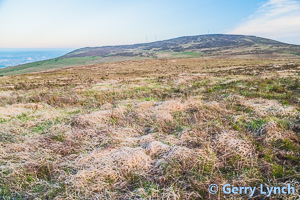
Divis from Wollfhill 20 May 2020 © Gerry Lynch
Divis from Wollfhill, 20 May 2020, © Gerry Lynch.

Still, on the first Saturday of the lockdown I surprised myself by tackling the highest of the Belfast Hills, a four hundred and eighty metre monster called Divis, in one go, six miles walk from home which is near the docklands and sea level. I was very proud of myself. But I hadn’t really got my mountain legs at this point, and I didn’t relish the circuitous walk back down. A quick scan of aerial photos on Google Maps showed that at one point it was barely four hundred metres from a formal path to the tarmacked city streets below, from where it would be an easy three mile stroll back. I knew the hill was steep at this point, as its slopes are visible across the city, but from below it always looked like a manageable scramble across some very pretty, gorse-bedecked, fields. My father, who grew up in the estate immediately below that hill, has long regaled me with stories of a childhood spent playing up on that mountain. When I clambered naughtily over the fence to start my short-cut, I had to admit it looked steeper than it seemed from a distance. Much steeper. But you know, four hundred metres, four football fields, how hard could it be?

Read more

Sermon Preached at St John’s Devizes on Sunday 19 July 2020, the 6th Sunday After Trinity

Readings – Romans 8:12–25, Matthew 13:24–30, 36–43

“…in gathering the weeds you would uproot the wheat along with them. Let both of them grow together until the harvest.”

May I speak in the name of God, who is Father, Son, and Holy Spirit. Amen.

It is good to be with you as your curate for the first time this morning. And I hope, for all of you, it is good to be back in Church.

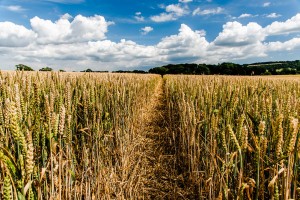
Wiltshire Wheat Fields in mid-July near West Dean © Gerry Lynch
Wiltshire wheat fields in mid-July, © Gerry Lynch, 22 July 2016.

The parable of the wheat and the weeds centres on the idea that God allows both goodness and wickedness to flourish here on earth. It is particularly appropriate at this time, for we’ve seen the best and the worst of human nature over the four months since people last gathered together to pray here in St John’s. We’ve seen medical personnel and care home staff put their lives on the line, and in some cases give their lives, for the common good. We’ve seen the natural world revive as the pressure we human beings put on it eases off just a little, with cleaner air and water, less noise, and wildlife returning to our towns and cities. We’ve seen a great revival of community spirit, with neighbours looking out for the vulnerable, and we’ve also seen a great global effort of medical science taking place across boundaries of nation, religion, race, and system of government.

We’ve also learned a lot about who is genuinely indispensable to society: when most of us were told to stay at home if we possibly could, those who still had to go into work were often those least financially rewarded for their labours. Supermarket workers, staff in meat plants, fruit and vegetable pickers, truck drivers, security guards, home helps, taxi drivers, as well as those working in the NHS and care homes – these were the people who had to go to work right through the worst of the pandemic, and many of them earn wages that make it impossible for them to imagine providing a secure home for their families. These were the people who died in disproportionate numbers.

Read more

The Case for Socialist Healthcare in One Country

“If China and Covid can’t shake doctrinal globalism, can anything?” My latest piece in The Critic… My friend Murat runs two tailor’s shops in the south of England. Having arrived from Turkey as a sole trader five years ago running a little alteration business in Salisbury, he now employs eight people, has a second premises … Read more

Beginning Public Ministry in a Liminal Time

St Anne's Cathedral, Belfast, reflected in a puddle on Donegall Street, 29 April 2020, © Gerry Lynch

On Saturday last, I should have made a deacon in Salisbury Cathedral, a place I love, the antepenultimate milestone in a journey to fulfil a call to priesthood in the church of God that I began, depending on how one counts it, either six, ten, or twenty-two years ago. I first went to see the Director of Ordinands for the Diocese of Connor and joined the Fellowship of Vocation there in September 1998. I often find it useful to date moments in my life by the pop songs on the radio at the time; the UK Number 1 single then was, with delicious irony, T-Spoon’s Sex on the Beach. That really was a long time ago now.

St John the Baptist Church, Devizes, 1 July 2020, © Gerry Lynch

Having been formally licensed as a lay worker in the parish of St John with St Mary, Devizes, by the Bishop of Salisbury via videoconference on Sunday I am, however, a curate if not a cleric, an officially licensed tender of God’s garden of souls at a time when churches have not held public worship for more than three months, when public health regulations have quite correctly banned visiting the army of lonely and isolated people in their own homes. Hundreds of others have had their ordinations similarly delayed, and are experiencing similar uncertainties. For me, a journey towards ordained ministry that often involved being told that I was an awkward person on the edge leads to a public ministry that begins in a virus-ravaged world that sits on the edge of… who knows what?

Wikipedia tells me that in anthropology, liminality (from the Latin word limen, meaning ‘a threshold’) is the quality of ambiguity or disorientation that occurs in the middle stage of a rite of passage, when participants no longer hold their pre-ritual status but have not yet begun the transition to the status they will hold when the rite is complete. Liminality is terribly fashionable in the Church at the moment; I have not always found it to be a pleasant or rewarding place to inhabit. It is, however, the state in which the whole world waits for a new order to emerge, groaning for better but often in trepidation of worse.

Liminal time exists in the cracks in our lives and the cracks in the life of the world that lie between the passing of the old and the coming of the new. Of course, there are other ways of looking at the world, ways that emphasize the continuities rather than the discontinuities. Emphasising the continuities that lie across all breaks in human experience seems to have been the most modish approach of late. Understandings that emphasize continuity bring richness and insight, for each of us always remains himself and all of us always remain human. Like all perspectives, however, these are limited. Just as a photographer will choose his perspective depending on the time of day and year, weather conditions, subject matter, and the like, sometimes we must consciously open ourselves to new viewpoints on ourselves and our world.

Read more

The Blind Eye Turned to Barrow

What’s not newsworthy about fascists, Islamists, grooming and death threats to journalists? My latest piece for The Critic. When we sit at an obvious hinge of history, the tendency of the press is to look in the wrong direction for the events that will define a new era. 106 years ago this month, foreign correspondents … Read more