Of Course You Can’t Walk On Water – Sermon Preached on 9th August 2026 (Tenth Sunday after Trinity)

Preached at Holy Cross, Seend; Christ Church, Worton; and St Mary’s, Potterne

Romans 10.5–15; Matthew 14.22–33

“…beginning to sink, he cried out, ‘Lord, save me!’”

A wide expanse of calm sea under a clear pale blue sky, occupying the lower two-thirds of the frame. The water shifts from deep teal in the foreground to a lighter turquoise towards the horizon, its surface finely rippled and catching the light. Across the middle distance lies a low, narrow island covered in dense dark green pine woodland, with a pale sandy shoreline and a few small buildings visible among the trees. A second, smaller wooded islet sits to the left, and further low islands are just discernible along the horizon on both sides. Several small vessels are scattered across the water: a white sailing yacht with a purple sail, another with white sails to the left, and a number of motorboats leaving thin white wakes. On the far right horizon, two larger ships are visible in silhouette. The photograph appears to be taken from an elevated position, looking down and out across the water.
“Here, fancy a walk over to those islands?” © Gerry Lynch, 26 July 2017.

A couple of summers ago, I was on the way to Jersey, on a very hot summer day, on a big slow ferry across the English Channel, when I decided to get off and go for a walk. The water was lovely and cool after the stuffy cabin, and it was enjoyably strenuous to climb up and down the waves, but my shoes were starting to get soaked and stained with salt water, and I worried about how they’d stink the cabin out.

Of course, this never happened. I made this up. People don’t walk on water. If God had wanted us to walk on water, we would be born with skis instead of feet.

Jesus can walk on water because Jesus isn’t just another small-town preacher and holy man, but the Messiah, sent by God as Saviour of the human race. This is one of the miracle stories in the middle part of Matthew’s Gospel where the disciples, and Peter in particular, are confronted with more and more evidence of Jesus’ divine origin. These form the backbone of our readings from Matthew’s Gospel through this late summer and autumn and Peter will, before too long, be the first to work it all out.

Peter was the first person to confess that Jesus is the Messiah. A great man. But Peter wasn’t God. So, Peter couldn’t walk on water. It isn’t that Peter couldn’t walk on water because he didn’t have enough faith – or that he was able to walk on water while he had his eyes on Jesus, but lost it when he got distracted by the wind. Jesus isn’t telling off Peter as “You of little faith” because he can’t walk on water. People can’t walk on water.

Read more

The Chickenhawk and the Oddball: Sermon Preached on Sunday 29th June 2025 (Feast of SS Peter and Paul)

Preached in the Green Gardens, Poulshot

Readings – Acts 12.1-11; Matthew 16.13-19

The image depicts a detailed black-and-white relief sculpture featuring two male figures dressed in flowing robes, each with a halo around their head, indicating their saintly status. The figure on the left holds a large key with intricate designs, while the figure on the right holds a book in one hand and a sword in the other. Above them, a winged angel with a halo holds a crown, symbolizing divine authority or martyrdom. The background includes a textured wall and a tiled floor, adding depth to the composition.
The chickenhawk and the oddball.

Peter and Paul! We know these two names go together, but we tend to forget they were real people. Our image of them is, when we think about them at all, is like the image on the front of your order of service— two-dimensional men from a vanished era with stern faces and beards that would put a Hoxton hipster to shame. If we’re a bit less religious we tend to dismiss them as irrelevant, and if we’re a bit more religious we can turn them into plasterboard saints, beyond critique and therefore not really human at all.

But the Peter and Paul the Bible writes of are very real people, with strong personalities, and some real faults. Both of them could be quite hot headed for starters! Beyond that, they were very different.

Paul could be difficult to deal with. He seems to have been quite socially awkward and a little bit obsessive—maybe, to use the modern phrase, quite far out on the spectrum. Even his best friends found Paul hard to take sometimes. Yet this awkward, annoying, obsessive nature was possibly also why Paul had so much determination, stickability, and raw courage.

Peter was very different. He was a natural leader of men, and a man’s man . It’s easy to imagine the young Peter sitting in a tavern in a port on the Sea of Galilee holding court, surrounded by his hired men. He was no sophisticated thinker, but Peter could be as sharp as a tack—this morning’s Gospel reading shows him being the first person to work out that Jesus was more than just a wandering teacher and healer. But although he liked to talk big and lead from the front, when the chips were down he wasn’t always so good at following through—at least not at first, but we’ll come back to that.

Read more

Fame and Truth: Sermon Preached on 12th May 2024 (The Sunday After Ascension)

Preached at St Peter’s, Poulshot and St Mary’s, Potterne

Readings – Acts 1. 15-17, 21-26 ; John 17. 6-19

“…and the lot fell on Matthias.”

The singer Bambie Thug, in heavy makeup, looks at the camera at Eurovision 2024.
Seeking El Dorado? Eurovision 2024, © Arkland, Used under CC-BY-SA 4.0.

On the morning after the Eurovision Song Contest, it seems appropriate to reflect that fame and celebrity seems to be the El Dorado of the present age. It isn’t new, of course – even in the 19th Century, artists with a worldwide reputation like the singer Nellie Melba or the pianist-conductor Franz Liszt could often arrive in a new city to crowds of screaming fans, much as the Beatles and the Stones would a century later. The ancient Romans and Persians also had their celebrities. But this ancient human trait seems to have intensified since the turn of this century. Reality TV and talent shows began to crowd out more interesting forms of programme-making, while the Internet facilitated new forms of celebrity entrepreneur, willing to say, do, or sell anything to harvest attention from their own little world of fans.

People can make a good living from this. You’ve probably never heard of Charli d’Amelio. Charli is a social media influencer, someone who’s famous on social media because she’s famous on social media, and therefore attractive to people wanting to advertise and promote brands. Charli has 44 million followers on Instagram and a whopping 154 million followers on TikTok. Her most recent TikTok video, posted on Wednesday, shows Charli and a friend dancing to music while washing their hair with Garnier shampoo.

Compare this with the situation in our epistle reading. The 120 people Peter speaks to seem to comprise all the remaining Christians in the entire world. Even I have more social media followers than this. About twice that number came to church on Easter morning in our little country benefice.

Read more

Losing Your Life: Sermon Preached on 25th February 2024 (Second Sunday in Lent)

Galilee countryside viewed from Mount Tabor - gnarled hills with many water-cut ridges and some deep, but lush, valleys.

Preached at Holy Cross, Seend

Romans 4. 13-21; Mark 8. 31-38

“Get behind me, Satan! For you are setting your mind not on divine things but on human things.”

Do you want to have a happy, successful, prosperous life? I certainly do. I don’t want to suffer, or be picked on, still less persecuted, and I certainly don’t want to lose my life—at least not until I’ve had my fair share of the good times.

Ilya Repin's brightly coloured "Get Thee Behind Me Satan" of 1860, with Jesus in gold next to a disfigured, red and black Devil, in front of a dark blue background.
Get Thee Behind Me Satan, by Ilya Repin, ca. 1860. Rostov Regional Museum of Fine Arts, Rostov-on-Don.

Poor Peter always gets a hard time for provoking Jesus into saying, “Get behind me, Satan!” But he’s only reacting like any of us would do if were told by our best pal that we would have to suffer on their behalf. In fact, if we saw someone we knew being spoken to by their best friend in the way Jesus spoke to Peter, we’d probably tell them to get a new best friend—even more if we heard them being told something as weird as “those who want to save their life will lose it, and those who lose their life for my sake…will save it.”

Christianity, my brothers and sisters, is a very, very, weird religion. We often miss that weirdness, because Christianity was the framework through which nearly everyone in this country viewed the world for more than fifty generations—an unimaginable stretch of time. Perhaps Christianity was preached more than it was practiced, but it guided people in how they should behave even if they didn’t always live up to it. Now that it is in retreat, the strangeness of Christianity is starting to become visible again.

We forget how much Christianity, as it rose, upended what had been the established norms of right and wrong, and in a good way. The Wiltshire-based historian of the ancient world, Tom Holland, came back to the Faith after having abandoned it as a young man once he understood how much it had subverted the dominant value systems of the Roman Empire, which were all about power and authority, often exerted with great cruelty. At the heart of the Christian story is Jesus Christ being executed in a particularly cruel way, despite having broken no laws, for reasons for political convenience. The Romans never missed an opportunity to remind the public of just how bloody and brutal they could be if they felt it necessary. This was a society that glorified cruelty as something that successful and honourable men did, not only out of necessity, but also for pleasure. Might is right and the devil take the hindmost—this was this value system that Christianity upended

Read more

Sweetly Seductive Satan: Sermon Preached on 3rd September 2023 (13th Sunday after Trinity)

The cover of Iron Maiden's 1982 album, Number of the Beast

Preached at St John’s, Devizes

Readings – Romans 12.9-21; Matthew 16.21-28

“And Peter took him aside and began to rebuke him…”

Conjure the scene in your mind: Peter tapping Jesus on the shoulder in front of James and John and all that lot and saying, “Jesus, can I have a word… in private?”

Sometimes there are revealing little details in the Bible that can pass us by our whole lives, even when the stories are very familiar. As I prepared this morning’s sermon, a phrase that caught in my mind for the first time was that when Peter told Jesus not to risk His life in Jerusalem, Peter “took him aside and began to rebuke him.” One wonders what the other disciples thought.

Now, Jesus doesn’t tell Peter off for embarrassing Him in front of the other disciple, but something more dramatic, famously telling him, “Get behind me, Satan!”

Why did Jesus give Peter such a blunt and probably rather hurtful answer? Well, can you remember what last week’s Gospel was? It was Peter working out the Jesus was indeed the Messiah, and Jesus telling Peter that he would be the rock on which He would build His Church. This morning’s reading follows directly on from that story without a break. In all three synoptic Gospels, once Peter works out that Jesus is the Messiah, Jesus begins to tell the disciples that He must suffer and die in Jerusalem – although Luke doesn’t mention Jesus saying “Get behind me, Satan.”

The cover of Iron Maiden's 1982 album, Number of the Beast
Why should The Devil get all the good music?

Poor Peter must have been crushed by this. When Jesus told Peter that that He was indeed the Messiah and, better still, that Peter would be the rock of His community, suffering and death would have been the last thing in Peter’s mind. The Messiah was expected to be a great religious, political, and probably military leader. Peter will naturally have thought that Jesus the Messiah would march into Jerusalem, annihilate the Romans in a huge battle, overthrow Herod, and put the scribes and Pharisees in their place. Jesus would then reign as king, and Peter would be something like His Prime Minister. Peter thinks he’ll be a powerful figure in Jesus’s new Kingdom—and, in fact, he is entirely correct in that, but he completely misunderstands what the new Kingdom is.

Read more

Can You Walk on Water?: Sermon Preached on 13th August 2023 (10th Sunday After Trinity)

Preached at St John’s Devizes

Readings – Romans 10. 5–15; Matthew 14. 22–33

A painting of Jesus rescuing Peter after he fails to walk on water, a scene from the section of Matthew 14 the sermon is preached on. A dark ship is in the background.
Jesus and Peter on the Water by Gustave Brion, 1863. Now hangs in the Museum of Art, Brigham Young University, Provo, Utah.

Did you know that the next Rugby World Cup kicks off in less than four weeks’ time? When I was in my early teens, I briefly entertained thoughts of playing in a Rugby World Cup someday. I would be open-side flanker for Ireland, and in the final, I would burrow through the opposition pack using my low centre of gravity, and score the winning try, under the posts, as the dying seconds ticked away against England (of course against England).

If you put your mind to it, you can accomplish anything goes the phrase. Well, up to a point, Lord Copper. If God wanted me to play in the pack in international rugby, he may have made me bigger than five-foot-five. And given me better hand-eye co-ordination. God, presumably had plans for me that were different than having me put England to the sword in a Rugby World Cup final, although hopefully He has those plans for someone else in a green jersey.

We all have different gifts – and Peter’s gifts didn’t include walking on water, any more than my gifts included being able to play international rugby. I gave you that intro because the story of Peter trying, and failing to walk on water, is one of the most annoyingly misread passages of Scripture.

So let’s work our way through the story to look for things that are often missed.

The first thing to ask is when this took place—that is immediately after the feeding of the five thousand. So, before this morning’s reading starts, Jesus had sailed off on his own to a deserted place, but the crowds followed Him, like fans chasing a superstar. Although Jesus clearly needed some space, He spent  all day healing members of this crowd, then feeding them miraculously. This is the last sentence in Matthew’s Gospel before this morning’s reading starts—“those who ate were about five thousand men, besides women and children.”

Today’s Gospel begins, “Immediately, he made the disciples get into the boat and go on ahead to the other side, while immediately he dismissed the crowds.” Then Jesus goes up the mountain and spends all night there, then early in the morning, presumably refreshed, He walks out into the lake to meet the disciples – walking on the water – as their boat has drifted away from the shore overnight. When the disciples see Jesus, given that they, not unreasonably, don’t believe people can walk on water, they think He’s a ghost. And Peter says, “Lord, if it is you, command me to come to you on the water.”

So, Peter puts Jesus to the test. Peter demands that Jesus gives him the power to do what humans aren’t designed to do, all because he doesn’t really trust Jesus. And that is what this is what this story is all about.

I often hear it presented as if Peter’s problem was that he didn’t have enough faith, and if he did, he would have been water-skiing on his bare feet. Sometimes, the preacher then uses it in quite a manipulative way to harangue the congregation for not having enough faith themselves, saying that if they did, they would work miracles too. But if humans were meant to walk on water, God would have given us flippers.

Read more

Get Thee Behind Me Satan – Sermon on 30th August 2020 (Twelfth Sunday After Trinity)

Preached at St John’s, Devizes

Readings – Romans 12:9-21, Matthew 16:21-28

But he turned and said to Peter, ‘Get behind me, Satan! You are a stumbling-block to me; for you are setting your mind not on divine things but on human things.’

May I speak in the name of God who is Father, Son, and Holy Spirit.

Der Baader Meinhof ComplexLast week I watched two films that depicted how people convinced they are fighting injustice can descend into barbarism precisely because of their moral certainty. Both looked back on events in the late 1960s and 1970s. The first was Sam Green and Bill Siegel’s insightful documentary on The Weather Underground, the second was Bernd Eichlinger’s emotionally overwhelming dramatization of the story of The Baader Meinhof Complex. On both sides of the Atlantic, young people outraged by the nightly television scenes from Vietnam, with America killing civilians in great numbers, themselves resorted to bombing and killing. None of this produced any of the justice and liberation they sought. In the end, both organisations found the world moved on rapidly and left those in them behind: on the run, or marooned on the edge of society, or imprisoned. The illusion that if only we ourselves ran the world, then everything would be wonderful, is a dangerous one.
First century Palestine was a place of political and religious ferment and frequent outbreaks of religiously-inflected political violence. Utopianism was as prevalent there as it was in the Chicago or West Berlin of 1968. To understand how Jesus calling Peter “Satan” fits into that world, we need to go back to the episode in Matthew’s Gospel that immediately precedes Jesus beginning his public ministry. It’s the bit where Jesus is “led up by the Spirit into the wilderness to be tempted by the devil”. The last of the three temptations Satan puts before Jesus is to offer him all the kingdoms of the world in return for His worship. Jesus refuses and the Devil flees. Jesus’ goal is not power or conquest, nor even to initiate an enlightened political order, but the service of His heavenly Father.

Peter stumbles into being a bit of a devil without realising it, for he places exactly the same temptation before Jesus, to renounce His mission from the Father and seize earthly power. We know that power comes into it for the passage immediately preceding this, the Gospel at last Sunday’s service, is the one where Peter is the first person to correctly identify Jesus as the Messiah. The Messiah was expected to be an extraordinary God-sent leader who would restore The Temple to holiness from the way it had been spiritually despoiled by the Herods, and deliver the Jewish people from Roman Occupation. It was thought the Messiah was going to, if you will, Make Jerusalem Great Again.

Read more

“Out of Our Depth”: Sermon Preached at St John’s, Devizes on Sunday 9 August 2020 (the 9th Sunday After Trinity)

Readings – 1 Kings 9:9-18, Matthew 14:22-33

But when he noticed the strong wind, he became frightened, and beginning to sink, he cried out, ‘Lord, save me!’ Jesus immediately reached out his hand and caught him, saying to him, ‘You of little faith, why did you doubt?’

May I speak in the name of God who is Father, Son, and Holy Spirit.

Have you ever found yourself out of your depth and almost embarrassed that you were driven to ask for God’s help to get you out of the consequences of your own stupidity?

I certainly have!

I suspect I’m not the only one who used the lockdown as an excuse to get fitter. Do you know the start of the hundred and twenty-first psalm? “I will lift up mine eyes unto the hills, from whence cometh my help. My help cometh even from the Lord.” Well, that was my motto of the lockdown; in a small terraced house in Belfast’s inner-city with my parents, it was a case of either turning to the hills that surround the city or turning to drink. If the truth be told, there might have been a bit of both.

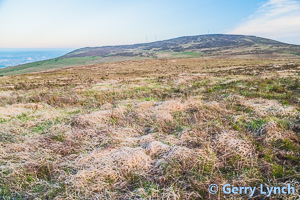
Divis from Wollfhill 20 May 2020 © Gerry Lynch
Divis from Wollfhill, 20 May 2020, © Gerry Lynch.

Still, on the first Saturday of the lockdown I surprised myself by tackling the highest of the Belfast Hills, a four hundred and eighty metre monster called Divis, in one go, six miles walk from home which is near the docklands and sea level. I was very proud of myself. But I hadn’t really got my mountain legs at this point, and I didn’t relish the circuitous walk back down. A quick scan of aerial photos on Google Maps showed that at one point it was barely four hundred metres from a formal path to the tarmacked city streets below, from where it would be an easy three mile stroll back. I knew the hill was steep at this point, as its slopes are visible across the city, but from below it always looked like a manageable scramble across some very pretty, gorse-bedecked, fields. My father, who grew up in the estate immediately below that hill, has long regaled me with stories of a childhood spent playing up on that mountain. When I clambered naughtily over the fence to start my short-cut, I had to admit it looked steeper than it seemed from a distance. Much steeper. But you know, four hundred metres, four football fields, how hard could it be?

Read more