Changing Politics, Changing Country

How does the Church of England navigate a Britain of a transforming party system, transforming demographics, and increasing division?

Workshop presentation for the Diocese of Salisbury Clergy Conference, 8 July 2026, Bryanston School, Dorset

A densely detailed satirical illustration in the style of an eighteenth-century engraving. On the left, an angry crowd of working people brandish brooms and placards reading "Fair Wages!", "Tax the Rich!" and "Voices Heard!" beside a cracked classical column labelled "British Institutions". A woman in a red dress and white apron holds up an angel pendant, an angel embroidered on her apron. On the right, anxious men and women in suits and lanyards clutch clipboards, charts and phones as poll data, banknotes, ballot boxes and televisions showing shouting faces swirl away in a vortex between the two groups. Behind them, under a stormy sky, a small parish church with a square tower stands on a green hill, its door glowing with light as small figures climb the path. Signs read "The City of Confusion: where all is flux" and "Truth found only on the hill".

I. On radical cultural shifts

None of us interprets the world entirely as a blank slate. All of us see the world through a set of assumptions, values, and ways of understanding the world that a society or group takes largely for granted. We can call this a paradigm – a paradigm is the collection of usually unexamined beliefs through which people interpret the world, judge what is normal or plausible, and organise their collective life. These are never entirely fixed – they tend to change, gradually and organically, over time. We need these mental models, as reality is too complex for us to grasp in its fullness.  But every once in a while a paradigm that had been convincing starts to become very poor at describing the reality that people experience. When that happens, the paradigm starts not to evolve, but to collapse: the old ways of seeing the world no longer make sense, and for a moment all sorts of new ideas seem possible; after a period of uncertainty, even chaos, a new paradigm starts to congeal.

My argument is that we are inside one of those transitions in the way that people understand the world – a paradigm collapse. Even if you’ve never come across the concept, we have lived through major collapses of a paradigm within living memory. One of them happened to the Church; one of them happened in another part of the world but was of global importance. How the Church responded to the first, and how the world responded to the second, tells us much about how to respond to the one which I believe we are about to experience.

1963: the collapse of Western Christendom

1963 was a time of radical change – television had arrived in every living room, car ownership was increasing rapidly while Dr Beeching was taking an axe to the railways, and the Pill was just starting to rewire people’s most intimate relationships.

Philip Larkin fixed the hinge of the British 20th Century in that year, in the poem ‘Annus Mirabilis’, which starts:

Sexual intercourse began
In nineteen sixty-three
(which was rather late for me) –
Between the end of the “Chatterley” ban
And the Beatles’ first LP.

The joke lands because it is true. Church historians of every stripe now locate in the early 1960s the moment at which a Christendom in place for over a millennium gave way with astonishing speed. Callum Brown, an atheist historian of religion in Britain who positively celebrates the change, insists the data show this “was not the long, inevitable religious decline of the conventional secularisation story, but a remarkably sudden and culturally violent event” – one which followed a 1950s of rising church attendance and sacramental participation. Sam Brewitt-Taylor, who laments the change, has shown that senior Christian leaders suddenly conceded the arrival of the ‘secular society’ in 1963–64, making the collapse of cultural Christianity all but inevitable. The collapse of Christendom was less a case of gradual erosion since the Enlightenment, more an avalanche.

Read more

Faith in a Geopolitical Wilderness: Sermon Preached on 9th March 2025 (First Sunday in Lent)

A wide desert landscape under a clear blue sky, with scattered dry, golden-brown shrubs dotting the sandy terrain. In the background, a range of rugged, brown mountains stretches across the horizon, creating a stark contrast with the flat, arid foreground.

Preached at St Peter’s, Poulshot and Christ Church, Bulkington

Romans 10. 8b-13; Luke 4. 1-13     

“Jesus… was led by the Spirit in the wilderness, where for forty days he was tempted by the devil.”

In the wilderness, the rules and habits that helped us to flourish in civilised life no longer work; in fact, they can be a hindrance to survival. In the wilderness, we are thrown back entirely on our own resources. There is nobody to help us—except, of course, for God. The wilderness can kill us—or we can use it to allow our illusions about ourselves and the world to die. We can use it to teach us to trust in God, and God alone.

A barren desert landscape featuring a twisted, leafless tree with sprawling branches in the foreground. The ground is covered with dry, sparse vegetation and sandy soil. In the background, rugged, layered mountains rise under a vibrant blue sky with wispy, streaked clouds.

Explain desert ecosystems

Discuss desert photography
In the wilderness, Tankwa Karoo National Park, South Africa © Gerry Lynch, 27 January 2025

“We now live in a geopolitical wilderness where the post-Cold War order has collapsed.” I last used that phrase in a sermon three years and three days ago, on the First Sunday in Lent 2022, when we last had this pair of readings set for us. That was less than a fortnight after Russia launched its massive invasion of Ukraine. It is even more obvious today that the assumptions most of us held about the nature of the 21st Century world have turned out to be illusions.

We hear that frightening geopolitical wilderness reported every day in the news bulletins, so let us keep it in mind as we turn to today’s Gospel reading, for its detail is easy to overlook. 

Christ is challenged with three very specific temptations: the temptation to put worldly comfort before the Mission given to Him by His Father, symbolised by turning stones into bread; the temptation to take no responsibility for His own wellbeing, abusing God’s care for Him, symbolised by throwing Himself from a building and trusting in angels to catch Him; and the temptation to take power Himself as the solution for all the world’s problems, at the price of worshipping Satan.

These events take place immediately after Jesus was baptised by John, and immediately before He began His ministry of healing and teaching in Galilee. It is seems Christ, truly human as well as truly God, had to confront these temptations before He could brave the crowds who would for a time cheer Him as a wonder-worker, crowds who would try to seize him by force and make Him king.

Christian leaders in every age must confront these three temptations: the temptation to use the Faith as a means of obtaining worldly comfort; the temptation to hide behind the Faith as a means of avoiding personal responsibility; and the temptation to see the Faith as a means of solving the world’s problems.

Read more

Requiem for a Dream

Also posted at Slugger O’Toole

European flag carpet, Gift from the Republic of Azerbaijan. World Forum for Democracy 2016, Strasbourg, France. © Northern Ireland Foundation

Today, the Netherlands reinstituted border checks with Germany and Belgium. The new policy, which will initially run for six months, aims “to combat migration and human-trafficking”. According to the EU, fourteen of the twenty-nine members of the Schengen passport-free travel area currently have some form of “temporary” border control; of these all but Malta’s relating to a major international conference feel at least semi-permanent, with Russian sabotage efforts and “risk of violent actions against Israeli citizens” cited by some countries along with irregular migration and organised crime.

This hits me particularly hard because of the ten summers in a row between the mid-1980s and mid-1990s I travelled by buses and ferries from Northern Ireland to Germany – in the early years to West Germany – via Belgium and the Netherlands to spend the summer with a German family. I remember the infrastructure on the Dutch-German border being dismantled in the early 1990s; most traffic was waved through before that, although a differently coloured passport could occasionally attract attention from a bored border guard. But on the Antwerp to Eindhoven motorway, even in the 1980s, I can only ever remember a few trucks being parked up in service areas waiting for a customs inspection. Otherwise there was nobody around to check passports and not even a little booth to house them. I had to Google when was the last time private citizens last faced checks on the Dutch-Belgian border; it turns out to be 1947!

Those of us who have believed in the vision of a united Europe and saw it start to blossom in our lifetimes are watching our dream dying. There are plenty of shrilly self-deluding voices screaming that it has been betrayed by populists and jingoists and paid shills for Putin. The harsh reality, however, is that it is dying because it hasn’t survived contact with reality; and more specifically, it hasn’t survived contact with Europe’s reality of the 2020s being very different from what anyone imagined in 1992, let alone 1947.

We could summarise the history of the European Union over the last 35 years in a rock lyric: “You reached for the secret too soon, you cried for the Moon.

Read more

View from Yerevan in The Tablet

It’s good to be in print in this week’s The Tablet (11 August 2022 edition) with a “View from Yerevan” – a piece about beautiful town planning, the revival and the absence of churches, losing a war, refugees from far away, and having one of the world’s most difficult geopolitical positions. It’s easy enough to … Read more

War and the Devil: Sermon Preached at St John’s, Devizes, Sunday 6th March 2022 (The First Sunday in Lent)

Readings – Romans 10:8–13; Luke 4: 1–13

“Jesus … was led by the Spirit in the wilderness, where for forty days he was tempted by the devil.” 

One of my favourite films is a movie made eleven years ago named Margin Call. It is a fictionalised version of 24 hours in the life of a big New York merchant bank at the start of the 2008 financial crisis.

In the small hours of the morning, two well-tailored bankers assimilate the possibility of the world economy collapsing thanks, in part, to their extreme investment risks. At one point, the younger one turns to the older and says, “This is bizarre. It’s like a dream.”

“Oh, I don’t know”, comes the reply, “Seems like we may have just woken up.”

The world of these men and women collapses in the space of a day, to their shock and horror. As the movie progresses, however, it becomes apparent that they knew all along that they were following a path that was unsustainable, but one that was making them all rich. They were lying to the rest of us, of course, but mostly they were lying to themselves. Part of the movie’s power comes from the way it depicts how the system rapidly seduces the young graduate trainees into believing that this world of greed and lies is normal, even good.

Subsequently disgraced – Kevin Spacey in Margin Call (2011).

Ironically, the wise old trader in that exchange was Kevin Spacey – soon afterwards disgraced, and deservedly so, for using his artistic genius as bait to exploit young men who dreamed of being stars.

Both the movie and the real-life story of its star are metaphors for the world of the last thirty years, which indulged itself in the myth that humanity was starting to escape the restrictions of its nature, and that freedom and prosperity for all could be best ensured by each of us pursuing our desires and demands to the maximum extent.

We need to face facts: we are never far away from the wilderness, where the Devil lurks.

Read more

Crumbling Empires and Eternal Bliss: Sermon Preached at St John’s, Devizes, Sunday 21st November 2021 (Christ the King)

Remnants of a vanished empire: a Soviet red star from 1953 on Kyiv's Paton Bridge.

Readings – Revelation 1:4b-8; Mark 10:17–31

 “My Kingdom is not from of this world.” 

May I speak in the name of God who is Father, Son, and Holy Spirit. Amen.

Some of you know, and some of you don’t, that I am a very keen radio ham, and a particular enthusiast for Morse code, which is still in use by hobbyists around the world on a daily basis. My love affair with radio started when I was an eight year old boy, on discovering that the radio cassette player my parents had given me as a Christmas present had a switch marked “Short Wave”. At first, tuning the dial on this strange waveband was unpropitious, as the adults had all assured me would be the case, revealing only strange bleeps and noises and a few stations in languages I didn’t even recognise.

Remnants of a vanished empire: a Soviet red star from 1953 on Kyiv's Paton Bridge.
Remnants of a vanished empire: a Soviet red star from 1953 on Kyiv’s Paton Bridge, 11 August 2017, © Gerry Lynch.

Within a few hours, however, I had discovered programmes in immaculate English from Sweden, the Netherlands, and Czechoslovakia and things developed from there over the following weeks and months. To a child always fascinated by maps and already at that tender age becoming interested in politics, that cassette player became like a magic carpet to distant lands, so much more remote in those pre-Internet days of the 1980s.

One of the most ubiquitous stations, and certainly the most bizarre, was Radio Tirana, which dominated large parts of the Short Wave spectrum with its creepy and unforgettable theme tune, introducing broadcasts that promoted Albania’s official state ideology in every language from Armenian to Zulu. It seemed to despise equally both what it described as American Imperialists and Soviet Socialist Imperialists, but its real ire was reserved for the oul’ enemy – the imperialists of Yugoslavia.

The undoubted king of the dial, however, was Radio Moscow, which in English alone had not only a North American service, and a World Service aimed mainly at audiences in Africa and South Asia, but for an hour at 8 o’clock every evening the wonderful Britain and Ireland Service. It was presented by gentlemen who were very well-spoken indeed, sounding like they had been educated at Marlborough and Cambridge – because they probably had been. They presented the failures of the Soviet Union as being the inevitable flaws of a system that was still merely Socialist, and that these would ultimately disappear as a perfect political system, a genuine Communism, inevitably emerged.

I discovered all this at Christmas 1985. Within a few years, Czechoslovakia, Yugoslavia, and even the mighty Soviet Union all vanished from our maps. Empires rise and fall. They always have done and always will do, and they are always profoundly flawed entities.

Read more

Afghanistan Exposes the West’s Crisis as it did the Soviets’

This post originally appeared on Slugger O’Toole

The Soviet Empire was undone by three things – firstly, overstretching itself, especially through the acquisition of a series of Global South satrapies from Nicaragua through Ethiopia to Vietnam in the 1970s and 1980s; secondly, misrepresenting realities to itself so as to fit Marxist-Leninist orthodoxy; thirdly, because its leaders no longer believed in that political religion even as they presided over a system that permitted no alternative.

Mohammad Najibullah’s government hung on in Kabul for three years after Soviet troops were withdrawn from Afghanistan in 1989; Ashraf Ghani’s kleptostate didn’t even survive until America’s withdrawal date. US and other Western experts were more wrong about Afghan society than the famously self-deluding late Soviet Union; in terms of plain logistics, the US executed a shockingly less competent withdrawal than a USSR on the brink of collapse; and in the shape of Ghani and before him Karzai, it backed rulers so monumentally corrupt that they seem to have been less palatable to devout Afghan Muslims than actual godless Communists.

In the dying days of 1979, Yuri Andropov, then head of the KGB, fought an initially successful internal battle against Soviet intervention in the country after the Communist coup, convinced that invading Afghanistan would end up in failure; it was feuding between Afghan Communist factions once in power that dragged the USSR in, and fear of losing face in the propaganda game of the late Cold War that kept it there for a while. But it only took the Soviets seven years to realise they weren’t actually being welcomed as defenders of material progress and women’s rights against religious obscurantism, and they were gone in nine. America took twenty.

Soviet APCs depart Afghanistan as part of the first phase of troop withdrawal in 1986.
Soviet APCs depart Afghanistan as part of the first phase of troop withdrawal in 1986. © RIA Novosti archive/ Yuriy Somov. Used under CC-BY-SA 3.0.

Yet all the while, the people directing the war in DC knew it was going badly and simply lied, as the Washington Post exposed in 2019 when it got access to the US government’s own report on its failures in Afghanistan. The Bush, Obama, and Trump administrations all lied, knowingly, not just to the public but much of the time to themselves; they couldn’t have sustained this war for 20 years otherwise. Countless experts colluded in the lies, spending time and money to create analyses to fit a consciously deceitful official narrative, nodding along because dissenting voices find their careers limited while nodding dogs get to bill four-figure daily rates.

Governments lying to themselves with the encouragement of experts well-paid to silence truth-tellers is a pattern of behaviour familiar from the story of toxic mortgage bonds and the 2008 financial crisis; something similar will probably turn out to surround the pandemic’s origins and how influential Western medics helped Beijing cover them up. This is not just an American problem. Lying is just as embedded, for example, in the UK, where the political class and punditocracy spent yesterday arguing about the ways in which Britain could have saved Kabul from the Taliban when the same people know British combat troops left Afghanistan in 2014.

Truth is now entirely subject to political ideology in the West, but being liberal democracies rather than a single-ideology state, various nexuses of deceit sell different sets of lies to their own groups of followers. The progressive/left take is that jihadism only exists because of colonialism and White supremacy with British Labour MP Richard Burgon even demanding reparations be paid to the Taliban. The soi disant sensible centre-left-to-mainstream-right were the actual architects of the Afghan disaster, with neocons and hawkish liberals like Blair inventing for themselves an Islamic world crying out to be bombed from the air so they could be free. And, of course, the post-Trump GOP is so far down the rabbit-hole of QAnon-lizardmen-paedo-pizza conspiracy that it doesn’t worry that its lies sound like they come from the secure wing of the local asylum.

Read more

Mozambique – resource rich, conflict riven

This article appeared in the 17 September 2020 edition of The Tablet. Islamist insurgents are causing mayhem in Mozambique’s northernmost province. Christian leaders insist the cause is not religion but incompetent government On 12 August, after an infiltration campaign planned with great sophistication, and executed meticulously, Islamist insurgents took control of the port of Mocímboa … Read more

Orbán, Trianon, and the Rebirth of Nationalism

orban
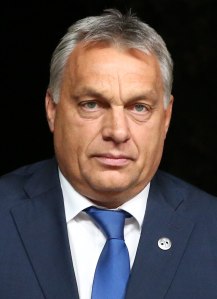
Photo of Viktor Orbán © The Estonian EU Presidency 2017 and used courtesy of CC 2.0.

It is well worth reading Viktor Orbán’s speech on the 100th anniversary of the Treaty of Trianon, which was last Thursday and I didn’t even notice until it passed. Let’s start with this passage towards the end, which needs little comment.

“The world is changing. The changes are tectonic. The United States is no longer alone on the throne of the world, Eurasia is rebuilding with full throttle, the frames of our European Union are crackling, and now it hopes to save itself with a salto mortale. The ground is trembling under the feet of our eastern neighbour. The Balkans is also full of questions to be answered.

“A new order is being born. In our world, in our lives as well, great changes are banging on our gates.”

The Treaty of Trianon was one of the Paris Peace Conference treaties with the defeated Central Powers after World War One, which included the famous Treaty of Versailles, but also the treaties of Neuilly (with Bulgaria), St Germain (with German Austria), and Sevres (with Ottoman Turkey but ripped up by Atatürk by force of arms). Hungary lots two-thirds of its territory, nearly all of which had an ethnic majority of another nationality; but it also lost about three million Hungarians.

Hungary has lost another million in the since 1980 through a collapsed birth rate and high emigration; it is not hard to see the desperate desire for a bout of natalism that young Hungarian women seem reluctant to supply.

“At times they gave soldiers to defend the nation, at other times they gave armies of nation-building craftsmen to the country.”

This is contentious language even within Hungary. But the Hungarian liberal-left cannot simply wish its way out of dealing with the great national disaster that was Trianon. Budapest’s Mayor, Gergely Karácsony, the nearest thing to a credible rival that Orbán possesses, ordered a minute’s silence last Thursday. He spoke of the fate of his mother, trapped in what was now Romania in 1920 with his elderly great-grandparents, after his grandparents fled to the newly shrunken core Hungary. The elders, despite caring for a small child, were put to forced labour. Hungary is full of such stories and such myths, not only of the time after 1920 but the time after 1945.

But the silences are as revealing as the topics for comment, for Horthy’s regency is swept under the carpet, neither glorified nor condemned but simply not discussed; unmentioned too are the five months of murderous madness under the Arrow Cross Party. For others must always be the architects of Hungary’s problems.

Read more

The Opioids of the People

Crossposted at Slugger O’Toole…

The United States government has launched a new anti-opioid campaign featuring true stories of people so desperate that they inflicted gruesome injuries on themselves to get another prescription.

Such stories have already been more effectively told in poetry. The epidemic’s most searing skald is William Brewer, a son of Oceana, West Virginia, a post-industrial town so gripped by addiction that it is nicknamed Oxyana.

We were so hungry; Tom’s hand
on the table looked like warm bread.
I crushed it with a hammer
then walked him to the ER to score pills.

The United States has now experienced its second consecutive year of declining life expectancy. A significant part of the change is driven by what have been called ‘deaths of despair’ among middle aged White people: as well as drugs, alcohol and suicide are also spiralling. Death rates among White Americans aged 45-54 increased by 0.5% per year between 1999 and 2013, and there is no sign the trend has reversed since. While the death of celebrity chef Anthony Bourdain this weekhas brought fresh awareness of suicide, rates have been rising for years, especially among middle-aged men, and are now 25% higher than they were at the turn of the millennium.

Read more