Modern Medes and Parthians (Pentecost, 8 June 2025)

Preached at St Peter’s, Poulshot and Christ Church, Bulkington

Readings – Acts 2. 1-21; John 14. 8-17

“how is it that we hear, each of us, in our own native language? Parthians, Medes, Elamites, and residents of Mesopotamia, Judea and Cappadocia…”

A fresco painting featuring a religious scene with a group of figures seated around a table, each with a halo, suggesting they are saints or holy figures. Above them is an ornate architectural structure with arches and a blue sky background, adorned with a dove encircled by a halo, symbolizing the Holy Spirit. The painting includes intricate decorative borders and shows some signs of wear and fading.
Giotto, Pentecost (1290-9). In the Basilica of St Francis, Assisi, Italy.

Hearing today’s reading about the Parthians, Medes, and Elamites reminded me of a Pentecost a few years ago in a Church in Belfast. I heard this passage read with a strong and distinctive accent—not mine, but an accent that as distinctive in Belfast as it would be in Wiltshire. It turned out this accent came from the land of the Parthians, Medes, and Elamites—some of whom heard the apostles preach in their own languages at the first Pentecost. The lands that were once Parthia, Media, and Elam have been part of Iran for over a millennium, and the lesson was read by a member of what is by now a large Iranian community in Belfast, many of them converts to Christianity.

When the Iranian revolution took place in 1979, there were only around 170,000 Christians in the country, mostly from the ancient Assyrian and Armenian communities. While they were given a protected minority status by Ayatollah Khomeini’s government – as long as they kept their heads down – severe repression was unleashed against the small number of converts from Muslim backgrounds and the churches they belonged to. The Anglican priest in the city of Shiraz, Arastoo Sayyah, was murdered at his desk within eight days of the Revolution. The repression has come in waves since. Right now, a mother of two young children and convert to Christianity named Aida Najaflou has been locked up in Tehran’s notorious Evin Prison for four months facing trumped-up charges of “acting against national security”.

We would expect a Church facing such persecution to be in terminal decline. Yet, while tens of thousands of Christians have fled Iran into exile, whether as refugees or after securing work in other countries, the Church in Iran is numerically stronger than it has been for many centuries.

If you told the average person in the UK that hundreds of thousands of people in Iran had converted from Islam to Christianity, they’d probably refuse to believe you. But God continually upends our expectations of what is possible.

Nobody is quite sure how many people have come to faith in Christ in Iran from Muslim backgrounds over the last thirty years or so. Some sceptics claim no more than a few tens of thousands, while some enthusiastic evangelicals claim numbers in the millions. Article 18, a UK-based charity which advocates for religious freedom for people of all faiths, says a “conservative” estimate is that there are between half a million and 800,000 converts to Christianity in Iran. Research carried out anonymously on the Internet in 2020 by sociologists in the Netherlands from a non-religious perspective estimated that 1.5% of Iranians considered themselves Christians, implying just over a million converts from Muslim backgrounds.

Read more

Paddington Bear and the Girl with Blue Hair

A little think-piece on class, faith, and evangelism in the England of 2022.

I encountered the girl with blue hair when we both replied to a mutual on Twitter. She was a graduate who worked in the arts in a university town. She didn’t agree that the Royal Funeral would do the Church of England any good, because in her social bubble the reaction to it and everyone involved in it had been negative.

I gently challenged her that her social bubble may not be representative, and she agreeably agreed that was the case; indeed the world would be a different place if her friends were representative, she said. She seemed genuinely amiable, in a way that few people on Twitter are.

Like all of liberal Protestantism and Vatican II-embracing Catholicism, the Church of England has long been obsessed with people like the girl with the blue hair – highly educated, thoughtfully intelligent, genuinely kind, and seeming to represent the future, something exemplified by enthusiasm to remain on trend culturally and politically. Much effort has been expended in trying to produce a Christianity that can be embraced from within their value system – one that is focused on building the Kingdom on Earth and minimises the importance of what it is in Heaven.

But the liberal upper-bourgeoisie has never been representative of the population as a whole – indeed, they may be the segment of the population most closed to coming to a lively Christian faith. Mainly from secure backgrounds and often with a healthy combination of agreeableness, intellect, and diligence thanks to having done well in the genetic lottery, they can expect to have comfortable and rewarding lives. Faith in the crucified God may not be appealing to them, whereas Faith in the perfectibility of humanity may, barring some major external personal or social shock, simply seem natural.

Read more

Faith, Gays, and Sandi Toksvig: Sermon Preached at St John’s, Devizes, Sunday 7th August 2022 (The Eighth Sunday after Trinity)

Readings – Hebrews 11: 1–3, 8–16; Luke 12:32–40

“Faith is the assurance of things hoped for, the conviction of things unseen”

“Faith is the assurance of things hoped for, the conviction of things unseen” – so writes the author of the Letter to the Hebrews. Faith and hope are intimately connected – they are the twin foundations for imagining a future that is better than the present.

Smartly dressed man singing and banging a hand drum in Africa
You gotta have faith! Confirmation Day in Sharpeville © Gerry Lynch, 15 September 2019

We live in a society where faith is routinely derided as an unscientific delusion without evidence. Yet doing anything transformative requires us to dream dreams that go well beyond what the evidence will sustain; without faith we can only ever be anchored in a permanent present, unable to take risks because we’re afraid of going into uncharted territory, where there isn’t yet any evidence and we must rely on insight and inspiration.

Perhaps this is part of the reason why our culture seems to be so stagnant, trapped in an endless cycle of movie repeats and music that sounds like it could have been made thirty years ago. Our artists and musicians and writers and journalists are overwhelmed with data about what sells or what generates the clicks. Why take risks when you know what works? Even when the creatives themselves want to try something new out, the executives and editors have all the same data and seem to opt for profits over vision every time.

It seems that the more we know about the present, the less we are able to imagine an alternative to it. Drowning in numbers, we lack the sort of visions that can renew us into the future.

In practice, humanism has displaced Christianity as the official religion of this country. Of course, the Church of England still provides Christian liturgies for all the formal state occasions; but listen to the language of politicians of all parties, or our leading cultural figures, and it is almost always couched in the terms of humanism.

One of our cultural leading lights, Sandi Toksvig, gave the Archbishop of Canterbury a public ticking off this week about the Lambeth Conference. She was herself a humanist, she said, but she was sure that “the sort of message” Jesus wanted to send people was for them to “just be a good person”.

Just be a good person. That’s a charming sentiment – coming from a nursery school teacher, perhaps, or an eight year-old. It is genuinely startling to hear an intelligent person come to mature years and not observe that even good people sometimes do bad things – even when it is obvious what is good and what is not, which is not always the case.

I think that is another part of our present malaise – we tell ourselves that we’re good people, and indeed the official narrative seems to be that people are basically good unless they’ve been subject to some sort of horrific early childhood emotional trauma, or something like that. But we all know that we aren’t always good, indeed that we often hurt the ones we love the most, while that the people whom we love the most are often those who wound us most.

Read more

Ecclesiastical History Rocks: 1960s Pentecostalism and Nigerian Anglicans

I spotted this interesting article and follow up letter in the Church Times when exploring its coverage of the 1968 Lambeth Conference. The article notes that the number of Anglicans in “the western part of Nigeria” was declining in favour of Pentecostals. Nigerian Anglicanism had gone through phases of shedding both sects and adherents towards Independency since at least the 1920s. But this was possibly the first report in the press of a new phenomenon which would have significant impacts on Anglicanism across the world.

There was a major Third Wave of new Pentecostal Churches emergent in Africa from the mid-1970s; in Nigeria, the continent’s most populous country, Jesse Zink locates this surge as beginning a little earlier, with an evangelical revival during the civil war of 1967-70. It would be incubated and then enormously multiplied in student groups meeting in the margins of the expanding Nigerian university system of the 1970s. Matthews Ojo understands these African movements as originating in the 1960s Pentecostalist revivals in North America and Britain; but Nigerian Independency long had links with the Anglo-Saxon north, and the influence wasn’t always unidirectional either.

Also of note here is some indirect evidence of Muslim-to-Christian conversion in Nigeria, which is far from unknown but somehow seems to escape everyone’s notice.

Anglicans facing competition from the burgeoning Pentecostal scene in Africa was one of a complex cluster of reasons why the issue of homosexuality became so toxic within world Anglicanism from the mid-1990s onwards.


From the Church Times, 9 August 1968

Fewer Anglicans in W. Nigeria

The number of Anglicans in the western part of Nigeria, West Africa, is declining, to the benefit of other denominations.

This is revealed in the report published giving the results of a research project into the “Role of Religion in Yoruba Society,” conducted by the Institute of African Studies of the University of Ife, Nigeria.

Read more

Ripon Cathedral’s Space Age Chapel

This is photo of the Apollo 11 control system-themed hanging pyx at Ripon Cathedral

The Chapel of the Holy Spirit in Ripon Cathedral represents a sadly stillborn Anglican Space Age tradition of church furnishing. Completed in 1970 in honour of the previous year’s Apollo 11 moon landing, it is very much of its time.

I have seen some horrified reaction on social media to my photos of it, complaining at such a supposedly jarring presence in one of the finest buildings of the Romanesque-Gothic transition anywhere in Europe. Let us not forget, however, that the places of worship on this site have been substantially altered many times, including by St Wilfrid himself in the 7th Century, and even destroyed and completely rebuilt once. Perhaps most obviously, the Victorian restoration was imaginative but also far more inappropriate than this: yet Ripon Cathedral would not be what it is today without that and without a few fine pieces of Edwardiana and post-Edwardiana that are hardly redolent of the High Middle Ages.

Having long since passed through its groovy phase, to my mind the Chapel of the Holy Spirit has also by now finished its naff phase, and is becoming established as the sort of quirky period piece that any great cathedral must have many of from many different eras.

Located at the east end of the south choir aisle the chapel represents the Holy Trinity in themes astronomical and astronautical themes.

The hanging pyx represents Christ, who is sacramentally present within it, as this is where the Cathedral reserves the Blessed Sacrament.

Public domain image used courtesy of Wikipedia – thanks.

The design of the pyx is essentially copied from the reaction control thrusters for the Apollo Lunar Excursion Module. Really, I’m not making that up.

Read more

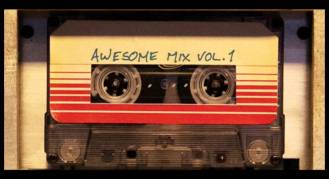
Cassettes, Communion, and Guardians of the Galaxy: Online Worship isn’t the Answer to Everything

Hooked on a feeling, I'm high on believing.

Young people these days are a rum lot! I’ve recently discovered that they’re getting into cassette tapes in a big way. I understood when people got back into vinyl again, that made perfect sense; analogue audio just sounds better than its digital counterpart, and there is something magical about the gentle crackle of a needle amplified by a good set of speakers. For the same reason, as a keen digital photographer, I understand why some of my snap-happy brethren are rediscovering film, even I have no desire to go to the trouble of setting up a darkroom myself.

But tapes? We lived off cassettes in the 1980s; we would make compilations by recording scratchy radio stations, sometimes Radio Luxembourg on Medium Wave, barely audible before sunset and full of fading after it in far-off Belfast. I remember how prone to breaking they were, always getting tangled up on the heads of the tape player, having to be straightened out and wound back on with a pencil, usually damaging the sound quality, even when they didn’t break altogether. Who in their right mind wants to use tapes?

Hooked on a feeling, I'm high on believing.
♪ Hooked on a feeling, I’m high on believing, but just not via Zoom ♫

A clerical colleague, who has the advantage of having teenage children, explained to me that it all started with Guardians of the Galaxy. And I can see why. Rarely has anything been more aptly named than Awesome Mix Vol. 1. My coleague’s son had recently given his girlfriend a mixtape for her birthday – they use that ugly Americanism (ugh!) rather than ‘compilation’, apparently. A question formed in my mind: but surely he could just make her a playlist on Spotify? The answer was so obvious I never even uttered the words. A compilation would always be a physical token of their love – in a sense, a sacrament. An outward and visible sign of an inward and spiritual grace.

Maybe the young people aren’t so rum after all.

Read more

Let’s Worship Outside

The News Letter later asked me to turn this blog into a newspaper article which you can read here.

Worshipping outside in happier times in South Dorset. Photo © Diocese of Salisbury/Gerry Lynch.

The dreadful news that more than a hundred people were infected with coronavirus at a single, legally permitted, church service in Germany earlier this month should make it transparent that we are unlikely any time soon to be returning to church worship as we hitherto understood it.

In this time of fear and death, I feel deeply deprived of connection with God. I have not received communion in more than two months; I have no idea when I might do so again. I cannot even spend time in a church praying in the presence of the reserved sacrament. I cannot kneel in any of my familiar haunts for prayer, nor can I discover new ones. A computer screen in my parents’ box room has proven a distracting and sensory-deprived locus for prayer. In my case, as a very definite extrovert, prayer is very much an externally contextualised physical process as well as an interior mental and psychological one. Prayer involves the placing of the earthly into the loving care of the heavenly, and is thus intimately bound up with place, physicality, community and body.

Worship via videoconference involves deprivation of the senses. It only involves sight and hearing; never smell, taste, or touch. The aural and visual, already overprivileged in technological societies, are mediated through a screen and a speaker, usually with poor audio and video quality. That is not to dismiss its value – certainly some people seem to have reconnected or newly connected with Christian worship via online means during the pandemic. But it can never involve the smell of incense, the taste of sacramental wine, the heat of a ray of sunshine streaming through a window, a hug, or noticing that a much loved elderly parishioner’s gait has suddenly become laboured.

Are there other ways to worship safely in the era of coronavirus?

Read more