Cassettes, Communion, and Guardians of the Galaxy: Online Worship isn’t the Answer to Everything

Hooked on a feeling, I'm high on believing.

Young people these days are a rum lot! I’ve recently discovered that they’re getting into cassette tapes in a big way. I understood when people got back into vinyl again, that made perfect sense; analogue audio just sounds better than its digital counterpart, and there is something magical about the gentle crackle of a needle amplified by a good set of speakers. For the same reason, as a keen digital photographer, I understand why some of my snap-happy brethren are rediscovering film, even I have no desire to go to the trouble of setting up a darkroom myself.

But tapes? We lived off cassettes in the 1980s; we would make compilations by recording scratchy radio stations, sometimes Radio Luxembourg on Medium Wave, barely audible before sunset and full of fading after it in far-off Belfast. I remember how prone to breaking they were, always getting tangled up on the heads of the tape player, having to be straightened out and wound back on with a pencil, usually damaging the sound quality, even when they didn’t break altogether. Who in their right mind wants to use tapes?
Hooked on a feeling, I'm high on believing.
♪ Hooked on a feeling, I’m high on believing, but just not via Zoom ♫

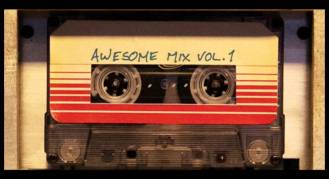
A clerical colleague, who has the advantage of having teenage children, explained to me that it all started with Guardians of the Galaxy. And I can see why. Rarely has anything been more aptly named than Awesome Mix Vol. 1. My coleague’s son had recently given his girlfriend a mixtape for her birthday – they use that ugly Americanism (ugh!) rather than ‘compilation’, apparently. A question formed in my mind: but surely he could just make her a playlist on Spotify? The answer was so obvious I never even uttered the words. A compilation would always be a physical token of their love – in a sense, a sacrament. An outward and visible sign of an inward and spiritual grace.

Maybe the young people aren’t so rum after all.

Read more

Let’s Worship Outside

The News Letter later asked me to turn this blog into a newspaper article which you can read here.

Worshipping outside in happier times in South Dorset. Photo © Diocese of Salisbury/Gerry Lynch.

The dreadful news that more than a hundred people were infected with coronavirus at a single, legally permitted, church service in Germany earlier this month should make it transparent that we are unlikely any time soon to be returning to church worship as we hitherto understood it.

In this time of fear and death, I feel deeply deprived of connection with God. I have not received communion in more than two months; I have no idea when I might do so again. I cannot even spend time in a church praying in the presence of the reserved sacrament. I cannot kneel in any of my familiar haunts for prayer, nor can I discover new ones. A computer screen in my parents’ box room has proven a distracting and sensory-deprived locus for prayer. In my case, as a very definite extrovert, prayer is very much an externally contextualised physical process as well as an interior mental and psychological one. Prayer involves the placing of the earthly into the loving care of the heavenly, and is thus intimately bound up with place, physicality, community and body.

Worship via videoconference involves deprivation of the senses. It only involves sight and hearing; never smell, taste, or touch. The aural and visual, already overprivileged in technological societies, are mediated through a screen and a speaker, usually with poor audio and video quality. That is not to dismiss its value – certainly some people seem to have reconnected or newly connected with Christian worship via online means during the pandemic. But it can never involve the smell of incense, the taste of sacramental wine, the heat of a ray of sunshine streaming through a window, a hug, or noticing that a much loved elderly parishioner’s gait has suddenly become laboured.

Are there other ways to worship safely in the era of coronavirus?

Read more

Sermon at Christ the King, Johannesburg, 8 September 2019

Sermon Preached at Christ the King Anglican Church, Mondeor, Johannesburg (Diocese of Christ the King) on Sunday 8 September 2019 (Twelfth Sunday After Trinity)

“If anyone comes to me and does not hate his father and mother, his wife and children, his brothers and sisters – yes, even his own life – he cannot be my disciple”. (Lk 6.26)

May I speak in the name of the Father, the Son, and the Holy Spirit.

Sometimes even the most Bible-based of Christians encounter a passage of Scripture that offends much of what they take as given about the Christian faith. Often it is a saying of Jesus Christ Himself. When that happens, there are two natural reactions: one is to try to minimise the importance of that passage; the other is to try and rationalise away the obvious meaning of the words, to somehow force them to fit a more conventional understanding.

This morning’s Gospel reading contains just such a phrase, and I ask you to avoid either of those temptations, and to allow for the possibility that Jesus Christ will have known exactly how disturbing and uncomfortable these words will have been. They will have been disturbing to the devoted and strong families of both the Jewish and Roman Imperial cultures of his day. Beyond that local context, this passage is offensive and disturbing to people across the vast chasms that separate us from the world that Jesus Christ walked, for these words strike at the heart of the closest human relationships that are most treasured by people in every place and time. God can only have inspired these words as Holy Scripture knowing them to be offensive.

In early 21st Century Christianity, family values have come to be seen as being at the very heart of the faith. I do not for a moment wish to decry strong family values. Those of you who live in homes shaped by them are truly blessed – give thanks to God for your fortune and pray that he will guide you so that this will continue. But there is a strong warning here that we must not make an idol of our families and, indeed, that we must not make an idol of any of our preconceptions of what living as a Christian means. None of us can ever perfectly and completely understand the message of the Christian Gospel – that perfect knowledge belongs to God alone. We Christians are not perfect, and there is a great temptation to pick out the parts of Scripture that are comfortable for ourselves. It is a natural temptation to pretend that we already at least very close to what God wants us to be. Instead, cherish these difficult parts of Scripture, and allow God to provoke you out of your comfort zone, driving you forwards to become ever more like the people he has made you to become.

Read more

The Bright Field

Late on a summer evening, as I took photos from the summit of Divis (478m above sea level) the highest of the Belfast Hills towards Lough Neagh, suddenly a shaft of sunlight broke through and illuminated the fields on top of Budore Hill, about 4 km away. Clearly visible on Lough Neagh is Ram’s Island, … Read more

Blogging Staggers Day One: Praying With the Lepers

The Bartlemas Chapel – a name that sounds like something out of Dickens, and the chapel felt like something from a disappeared world as well. A few hundred metres down a laneway from the noise and bustle of the Cowley Road lies a former leper chapel, feeling as if it were behind a portal to … Read more

You’re hired!: Can the Catholic Church learn about choosing parish clergy from the Church of England?

This article was printed in The Tablet on 10 November 2016 Ecumenical Catholic leaders have been considering whether they could learn from the Church of England about lay involvement in choosing parish clergy One of the most distinctive differences between parochial life in the Catholic Church and the Church of England is in the choice … Read more