Is Doing Good Enough?: Sermon Preached on 31st August 2025 (Eleventh Sunday After Trinity)

A serene river flows through a lush, green landscape, flanked by dense vegetation and trees on both sides. The water reflects the surrounding greenery and the soft light of a sunset or sunrise, creating a peaceful scene.

Preached at Holy Cross, Seend (Benefice Service)

Hebrews 13. 1-8, 15-16; Luke 14. 1, 7-14

“The Lord is my helper; I will not be afraid; what can anyone do to me?”

If you’ve ever wondered what a preacher does during the sermon, it’s to try and make sense of the passages of the Bible that are read at that particular church service, and connect them to the world we live in. So here we go.

A historic stone church with Gothic architectural features, including pointed arches and a tall tower with a clock. The church is surrounded by a well-maintained graveyard with weathered tombstones and lush greenery, including trees and flowering plants. A stone pathway leads to the wooden entrance door, and the scene is lit by soft evening light.
It was lovely to have such a good congregation in this gem for our Benefice Service. (Holy Cross, Seend in evening twilight, 11 July 2025, © Gerry Lynch.)

Are you worried about the state of the world? Does the news from Ukraine and Gaza make you anxious and depressed about the state of the human race? Does the state of this country worry you? If so, you are certainly not alone!

This is hardly unique to our times too. Some of the Hebrews to whom the first of this morning’s Bible readings was addressed must have been worried. We know that because the letter tells them not to worry!

It was written when the Church was very new, perhaps 30 or 40 years after the death and resurrection of Jesus Christ, when the Christians were a tiny and often mistreated group who had much to worry about in their lives. This long letter is full of intricate and beautiful theological and philosophical thinking, but our reading came from a section towards the end, which instead supplied practical instructions about living a good Christian life—one full of love for other Christians, hospitality to strangers, care for those in prison, faithfulness in marriage, and contentment with what one has.

That sort of practical Christianity is a big part of what village Anglicanism should be about.[1] Not showy, not loud – but being a community rooted in hospitality where people care about one another and seek to do good for our neighbours in a very individualistic world.

Read more

Paddington Bear and the Girl with Blue Hair

A little think-piece on class, faith, and evangelism in the England of 2022.

I encountered the girl with blue hair when we both replied to a mutual on Twitter. She was a graduate who worked in the arts in a university town. She didn’t agree that the Royal Funeral would do the Church of England any good, because in her social bubble the reaction to it and everyone involved in it had been negative.

I gently challenged her that her social bubble may not be representative, and she agreeably agreed that was the case; indeed the world would be a different place if her friends were representative, she said. She seemed genuinely amiable, in a way that few people on Twitter are.

Like all of liberal Protestantism and Vatican II-embracing Catholicism, the Church of England has long been obsessed with people like the girl with the blue hair – highly educated, thoughtfully intelligent, genuinely kind, and seeming to represent the future, something exemplified by enthusiasm to remain on trend culturally and politically. Much effort has been expended in trying to produce a Christianity that can be embraced from within their value system – one that is focused on building the Kingdom on Earth and minimises the importance of what it is in Heaven.

But the liberal upper-bourgeoisie has never been representative of the population as a whole – indeed, they may be the segment of the population most closed to coming to a lively Christian faith. Mainly from secure backgrounds and often with a healthy combination of agreeableness, intellect, and diligence thanks to having done well in the genetic lottery, they can expect to have comfortable and rewarding lives. Faith in the crucified God may not be appealing to them, whereas Faith in the perfectibility of humanity may, barring some major external personal or social shock, simply seem natural.

Read more

Faith, Gays, and Sandi Toksvig: Sermon Preached at St John’s, Devizes, Sunday 7th August 2022 (The Eighth Sunday after Trinity)

Readings – Hebrews 11: 1–3, 8–16; Luke 12:32–40

“Faith is the assurance of things hoped for, the conviction of things unseen”

“Faith is the assurance of things hoped for, the conviction of things unseen” – so writes the author of the Letter to the Hebrews. Faith and hope are intimately connected – they are the twin foundations for imagining a future that is better than the present.

Smartly dressed man singing and banging a hand drum in Africa
You gotta have faith! Confirmation Day in Sharpeville © Gerry Lynch, 15 September 2019

We live in a society where faith is routinely derided as an unscientific delusion without evidence. Yet doing anything transformative requires us to dream dreams that go well beyond what the evidence will sustain; without faith we can only ever be anchored in a permanent present, unable to take risks because we’re afraid of going into uncharted territory, where there isn’t yet any evidence and we must rely on insight and inspiration.

Perhaps this is part of the reason why our culture seems to be so stagnant, trapped in an endless cycle of movie repeats and music that sounds like it could have been made thirty years ago. Our artists and musicians and writers and journalists are overwhelmed with data about what sells or what generates the clicks. Why take risks when you know what works? Even when the creatives themselves want to try something new out, the executives and editors have all the same data and seem to opt for profits over vision every time.

It seems that the more we know about the present, the less we are able to imagine an alternative to it. Drowning in numbers, we lack the sort of visions that can renew us into the future.

In practice, humanism has displaced Christianity as the official religion of this country. Of course, the Church of England still provides Christian liturgies for all the formal state occasions; but listen to the language of politicians of all parties, or our leading cultural figures, and it is almost always couched in the terms of humanism.

One of our cultural leading lights, Sandi Toksvig, gave the Archbishop of Canterbury a public ticking off this week about the Lambeth Conference. She was herself a humanist, she said, but she was sure that “the sort of message” Jesus wanted to send people was for them to “just be a good person”.

Just be a good person. That’s a charming sentiment – coming from a nursery school teacher, perhaps, or an eight year-old. It is genuinely startling to hear an intelligent person come to mature years and not observe that even good people sometimes do bad things – even when it is obvious what is good and what is not, which is not always the case.

I think that is another part of our present malaise – we tell ourselves that we’re good people, and indeed the official narrative seems to be that people are basically good unless they’ve been subject to some sort of horrific early childhood emotional trauma, or something like that. But we all know that we aren’t always good, indeed that we often hurt the ones we love the most, while that the people whom we love the most are often those who wound us most.

Read more

Ecclesiastical History Rocks: 1960s Pentecostalism and Nigerian Anglicans

I spotted this interesting article and follow up letter in the Church Times when exploring its coverage of the 1968 Lambeth Conference. The article notes that the number of Anglicans in “the western part of Nigeria” was declining in favour of Pentecostals. Nigerian Anglicanism had gone through phases of shedding both sects and adherents towards Independency since at least the 1920s. But this was possibly the first report in the press of a new phenomenon which would have significant impacts on Anglicanism across the world.

There was a major Third Wave of new Pentecostal Churches emergent in Africa from the mid-1970s; in Nigeria, the continent’s most populous country, Jesse Zink locates this surge as beginning a little earlier, with an evangelical revival during the civil war of 1967-70. It would be incubated and then enormously multiplied in student groups meeting in the margins of the expanding Nigerian university system of the 1970s. Matthews Ojo understands these African movements as originating in the 1960s Pentecostalist revivals in North America and Britain; but Nigerian Independency long had links with the Anglo-Saxon north, and the influence wasn’t always unidirectional either.

Also of note here is some indirect evidence of Muslim-to-Christian conversion in Nigeria, which is far from unknown but somehow seems to escape everyone’s notice.

Anglicans facing competition from the burgeoning Pentecostal scene in Africa was one of a complex cluster of reasons why the issue of homosexuality became so toxic within world Anglicanism from the mid-1990s onwards.


From the Church Times, 9 August 1968

Fewer Anglicans in W. Nigeria

The number of Anglicans in the western part of Nigeria, West Africa, is declining, to the benefit of other denominations.

This is revealed in the report published giving the results of a research project into the “Role of Religion in Yoruba Society,” conducted by the Institute of African Studies of the University of Ife, Nigeria.

Read more

Wisdom and the Cross: Sermon Preached at St John’s, Devizes, Sunday 12 September 2021 (The Fifteenth Sunday After Trinity)

The modern Coventry Cathedral alongside the ruins of the original, 2 August 2018. © Gerry Lynch

Readings – Wisdom 7:26 – 8:1; Mark 8:27–38

“She is more beautiful than the sun, and excels every constellation of the stars.”

In the name of the Father, and of the Son, and of the Holy Spirit. Amen.

On a bright weekday morning three summers ago, I began my day with Morning Prayer at Coventry Cathedral. Coventry was a convenient place for an overnight break on the long overland journey between Salisbury and Belfast, and I had long wanted to see the Cathedral. I was able to talk my way into spending the hour between the end of the service and the start of public visiting wandering an empty Cathedral on my own, with my camera and tripod.

John Piper’s great Baptistery Window at Coventry Cathedral, 2 August 2018. © Gerry Lynch

If you haven’t yet been there, I recommend a visit, and also making the effort to visit in the morning, for that is the time when John Piper’s baptistery window is at its best, ablaze with sun from the east, all twenty-eight metres of it.

Just occasionally people tell me they don’t like Coventry Cathedral. I couldn’t disagree more; few church buildings on earth incarnate the reality of the Resurrection more powerfully.

The parish church Cathedral of St Michael, one of the finest medieval parish churches in Europe, was blown to bits during The Blitz on 14 November 1940. As he went into the ruined Cathedral the morning after the destruction, the then Provost, Richard Howard, was struck by what he called “the deep certainty that as the Cathedral had been crucified with Christ, so it would rise again with Him.”

Less than twenty years later, the very different modernist Cathedral was dedicated, also to St Michael, surrounded by the still imposing ruins of 14th Century building, and incomprehensible without their presence.

Coventry Cathedral also showcases two interconnected British revivals of the two decades after the end of the Second World War – a revival of Christian faith and a revival of high culture. Unquestionably it was the high point of British modernism in the visual arts and architecture: Basil Spence’s cathedral housing John Piper’s windows, Graham Sutherland’s tapestry, still in 2021 the largest in the world, and one of Jacob Epstein’s last and finest sculptures. Yet this indubitable gem of 20th Century Christianity could not have existed without the destruction of the magnificent medieval St Michael’s.

The modern Coventry Cathedral alongside the ruins of the original, 2 August 2018. © Gerry Lynch

Resurrection follows death. Resurrection is not possible without death. Yet that does not make the death any less real, or any less painful, nor does it make the loss of physical presence that death entails any less final or less disturbing. That is the central paradox of the Christian faith. It is, in every sense of the word, disturbing.

Read more

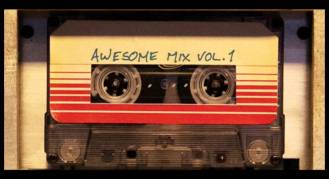
Cassettes, Communion, and Guardians of the Galaxy: Online Worship isn’t the Answer to Everything

Hooked on a feeling, I'm high on believing.

Young people these days are a rum lot! I’ve recently discovered that they’re getting into cassette tapes in a big way. I understood when people got back into vinyl again, that made perfect sense; analogue audio just sounds better than its digital counterpart, and there is something magical about the gentle crackle of a needle amplified by a good set of speakers. For the same reason, as a keen digital photographer, I understand why some of my snap-happy brethren are rediscovering film, even I have no desire to go to the trouble of setting up a darkroom myself.

But tapes? We lived off cassettes in the 1980s; we would make compilations by recording scratchy radio stations, sometimes Radio Luxembourg on Medium Wave, barely audible before sunset and full of fading after it in far-off Belfast. I remember how prone to breaking they were, always getting tangled up on the heads of the tape player, having to be straightened out and wound back on with a pencil, usually damaging the sound quality, even when they didn’t break altogether. Who in their right mind wants to use tapes?

Hooked on a feeling, I'm high on believing.
♪ Hooked on a feeling, I’m high on believing, but just not via Zoom ♫

A clerical colleague, who has the advantage of having teenage children, explained to me that it all started with Guardians of the Galaxy. And I can see why. Rarely has anything been more aptly named than Awesome Mix Vol. 1. My coleague’s son had recently given his girlfriend a mixtape for her birthday – they use that ugly Americanism (ugh!) rather than ‘compilation’, apparently. A question formed in my mind: but surely he could just make her a playlist on Spotify? The answer was so obvious I never even uttered the words. A compilation would always be a physical token of their love – in a sense, a sacrament. An outward and visible sign of an inward and spiritual grace.

Maybe the young people aren’t so rum after all.

Read more

Let’s Worship Outside

The News Letter later asked me to turn this blog into a newspaper article which you can read here.

Worshipping outside in happier times in South Dorset. Photo © Diocese of Salisbury/Gerry Lynch.

The dreadful news that more than a hundred people were infected with coronavirus at a single, legally permitted, church service in Germany earlier this month should make it transparent that we are unlikely any time soon to be returning to church worship as we hitherto understood it.

In this time of fear and death, I feel deeply deprived of connection with God. I have not received communion in more than two months; I have no idea when I might do so again. I cannot even spend time in a church praying in the presence of the reserved sacrament. I cannot kneel in any of my familiar haunts for prayer, nor can I discover new ones. A computer screen in my parents’ box room has proven a distracting and sensory-deprived locus for prayer. In my case, as a very definite extrovert, prayer is very much an externally contextualised physical process as well as an interior mental and psychological one. Prayer involves the placing of the earthly into the loving care of the heavenly, and is thus intimately bound up with place, physicality, community and body.

Worship via videoconference involves deprivation of the senses. It only involves sight and hearing; never smell, taste, or touch. The aural and visual, already overprivileged in technological societies, are mediated through a screen and a speaker, usually with poor audio and video quality. That is not to dismiss its value – certainly some people seem to have reconnected or newly connected with Christian worship via online means during the pandemic. But it can never involve the smell of incense, the taste of sacramental wine, the heat of a ray of sunshine streaming through a window, a hug, or noticing that a much loved elderly parishioner’s gait has suddenly become laboured.

Are there other ways to worship safely in the era of coronavirus?

Read more