
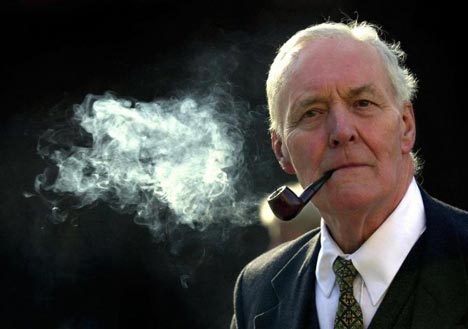
 Tony Benn was a lovely guy. I once got chatting to him on the Circle Line going home from work: I got on at St. James’ Park and said “Hey, you’re Tony Benn!”, and we chatted until he got off at Notting Hill Gate. He was just like that. Great company, totally unspun, absolutely principled. And, even better, he wore tweed jackets and smoked a pipe.
Unfortunately, he was a bloody awful cabinet minister, and the government he last served ultimately tested beyond destruction the post-war consensus, paving the way for Thatcher and all that came with her. He was one of the prime reasons for that. In the mid 1970s Britain was a more economically equal country than it has been before or since; there was never a better time for a young adult from a poor background to come of age. It was rapidly on the way to becoming a more inclusive society of minorities as well. EEC membership was helping British industry discover new markets, and Britain was finally catching up with the rest of Western Europe on living standards after a lost generation.
