Like A Mustard Seed: Sermon Preached at St John’s, Devizes, 13 June 2021 (The Second Sunday after Trinity)

Mustard Seeds. © Eugenio Hansen, OFS and used under Creative Commons 4.0

Readings – 2 Corinthians 5: 6–17; Mark 4: 26–34

“‘With what can we compare the kingdom of God, or what parable will we use for it? It is like a mustard seed…”

Mustard Seeds. © 	Eugenio Hansen, OFS and used under Creative Commons 4.0
Mustard Seeds. © Eugenio Hansen, OFS and used under Creative Commons 4.0

May I speak in the name of God, who is Father, Son, and Holy Spirit. Amen.

I suspect many of you remember a BBC comedy series from a decade ago called Rev. For those of you who don’t know it, it is about the trials and tribulations of an East End vicar, the Reverend Adam Smallbone, and his congregation in a gentrifying but still sometimes troubled parish. His flock isn’t very large, and sometimes their motivations for being in church are frankly mixed, from the lady of a certain age who is, shall we say, often very taken with gentlemen in clerical collars, to the incoming middle-classes who turn up to get their children into the parish primary school, without remotely taking anything that goes on in Church seriously.

A consistent theme is Adam’s sense of his own inadequacy. Adam feels inadequate compared with the vicar of the lively parish down the road, with its in-house rap artist and huge congregation of young people, and inadequate compared with his very clever pal from theological college who has a column in The Guardian and a regular slot on Thought for the Day. Yet every once in a while, an encounter happens that makes Adam realise that he is indeed called by God to be the person he is, moments of grace where only he, precisely because of his transparent flaws, can bring the light of Jesus Christ into a situation where a grander or more self-confident person would never be allowed to enter.

“So if anyone is in Christ, there is a new creation”, says St Paul in today’s Epistle reading, from the Second Letter to the Corinthians. It is natural to feel inadequate when faced with words like that. I don’t know about you, but my faults have remained persistent throughout my journey of faith. Following Jesus Christ as my Lord hasn’t turned me into a heroic crusader against evil who makes sinners repent by the sheer radiance of my goodness. I am as flawed, as self-centred, as inclined to take the path of least resistance, and sometimes as plain annoying as I always have been. 

Yet: “There is a new creation.” This is where context matters, because St Paul wrote these words to a new and immature Church in Corinth, the Eastern Mediterranean’s sin city, a city of sailors on shore leave joining the locals in hard partying and loose living. We might think of it in our terms as Amsterdam multiplied by Ibiza. Paul didn’t write those letters to the Corinthians because they were the example of what a Church should look like, but because they were the most troubled of all the churches he established – sometimes immoral, obsessed with wealth and bling, and rather selfish. And yet St Paul didn’t give up on them. They were at the beginning of a journey that they didn’t even seem to understand: but they had made a start. Great things often have small beginnings, and the people who start them are never perfect. God called the Corinthians to follow Him in His Son Jesus Christ, not because they were the models of sainthood, but because they were the people He needed to fulfil his purposes, there and then.

Read more

Higher State of Consciousness: Sermon Preached at St Mary’s, Devizes on Ascension Day, 13 May 2021

A surreal painting depicts a nude human figure floating inside a transparent sphere, with arms and legs outstretched. The figure hovers above a glowing, honeycomb-like surface radiating yellow light. In the background, a dramatic, fiery red and black sky contrasts with a serene blue and white scene at the top, where a partially visible figure in white appears to be looking down. The overall composition evokes a sense of cosmic or spiritual transcendence.

“So when they had come together, they asked him, ‘Lord, is this the time when you will restore the kingdom to Israel?’”

Readings – Acts 1:1-11; Luke 24:44-53.

May I speak in the name of God who is Father, Son, and Holy Spirit. Amen.

In the summer between my A-Levels and the start of university, that magical time of life when one is at last able to get into nightclubs, that time when drinking second-rate beer out of a plastic beaker at two in the morning seems the most wonderful thing on earth, the big dance track in all the clubs was called “Higher State of Consciousness”. The electronically distorted words “Higher State of Consciousness”, were continually repeated over a pumping bassline, while a sort of Morse-code rhythm screeched over the top at excessive pitch. I think whenever I heard it I was, to be honest, mostly in a fairly low state of consciousness or at least a rather inebriated one.

The Ascension of Christ by Salvador Dali

The reason I’m bringing this up – because I’m sure you’re wondering – is that sometimes people spend a lot of time getting themselves into a tizzy about what happened physically at the Ascension and why that proves that those who disagree with them aren’t real Christians but in fact brain-dead fundamentalists, godless heretics, or some other insult. But the concept of ascension, in popular conception as well as in Christianity, relates more to state than it does to physical place. Heaven is not somewhere above the sky or beyond the Moon’s orbit; but it is somewhere other than here, and higher than here.

Our two readings tonight comprised the only original narrative accounts of the Ascension, both of which are by the same author. The first brings the Gospel of St Luke to a conclusion, the other begins the Acts of the Apostles. The chronology is difficult to reconcile between them; the geography doesn’t feel entirely consistent; the dialogue doesn’t quite match. Especially given that these accounts were written by the same author, it certainly doesn’t seem like St Luke was that worried about what we might think of as accuracy in courtroom witness statement sense.

Read more

For the Were Afraid: Sermon Preached on 4th April 2021 (Easter Day)

Josef Žáček, Resurrection (1988). which hangs in the Gallery of Modern Art in Roudnice, Czechia.

Preached at St John’s, Devizes

Readings – 1 Corinthians 15: 1–11; Mark 16:1–8

“So they went out and fled from the tomb, for terror and amazement had seized them; and they said nothing to anyone, for they were afraid.”

May I speak in the name of God, who is Father, Son, and Holy Spirit. Amen.

Josef Žáček, Resurrection (1988). which hangs in the Gallery of Modern Art in Roudnice, Czechia.

When I was boy, the local radio station my mother always listened to in the morning had a daily feature of the wackiest snippets from the day’s papers. One Easter week, it told the story of a church on the previous Sunday, that I seem to remember was in Devon. When the parishioners arrived for the main Easter Day Eucharist, they were told that their newly installed vicar, the Reverend So-and-so, had died suddenly on the afternoon of Good Friday. Nonetheless, his wife had battled on to make the church bright and full of new life for Easter morning. The show must go on and all that.

The parishioners were distraught, some openly weeping as the service began, with a strangely hollow Gloria and then the readings. At the end of the Gospel, some strange bumping noises began to be heard from the giant, two metre-high, papier maché egg, that some of the churchgoers only at that point noticed was stationed just below the pulpit. Soon, holes began to be punched in the egg from the inside by a pair of furious fists. Suddenly, out jumped the vicar, with a cry of “Surprise!

He said his aim was to allow the parishioners to actually feel the sense of shock that the first disciples felt when they realised that Jesus had actually risen from the dead. The parishioners were, however, deeply unimpressed. I think they must have written some stiff letters to the Bishop of Exeter afterwards.

I can promise you that I shan’t resort to such histrionics at any point in my time with you at St John’s. That Devon vicar from 35 years or so ago clearly made a rather crude error of judgement. Yet, for all its emotionally manipulative crassness, his stunt did get across one easily missed point; the experience of the Resurrection was, at least at first, deeply disturbing and upsetting.

Read more

Clearing the Temple of our Souls: Sermon Preached Digitally for St John with St Mary, Devizes, on Sunday 7 March 2021

Readings – 1 Corinthians 1:18-25, John 2: 13-22

May I speak in the name of God, who is Father, Son, and Holy Spirit. Amen.

I love Giotto’s painting of the scene in the Temple in Jerusalem that forms the centrepiece of today’s Gospel. It has a raw edge that defies any domestication of Christ; Jesus, a cold fury on his face, is whirling the whip above his head, but he looks more than anything like he’s about to punch the moneychanger nearest him in the face. 

The reception of this story by the Church in the present moment fascinates me. The Giotto painting is the source of countless memes, little social media slogans, in the churchy parts of Facebook and Twitter, where people say that Jesus angrily whipping the money changers out of the Temple is the Jesus they emulate. The funny thing is the same people find the idea of the wrath of God absolutely taboo, as I suspect most of us do, dismissing it as primitive and theologically dubious. 

We don’t like the idea of God’s wrath in the abstract, but we like the angry Jesus when his fury is directed at people we disapprove of. After all, we’re not the sort of people who would set up a stall in the cloisters at Salisbury Cathedral to sell animals for sacrifice and exploit continental tourists by offering them a terrible exchange rate for their Euros. It’s OK for God to be angry at people like that, the sort of people who make us feel a bit smug and superior, but we’re quite sure God would never be angry at us. 

We only need to spell that approach out to realise how ludicrous it is, a cheap co-option of God as a sort of magic totem who is always on our side. Please God, we’re more mature and self-aware than that, open to understanding that the Jesus who judges the moneychangers has not only the right, but the duty, to judge us. We must know that the God who knows every hair on our head also knows the darkness that rests in each of our souls. We also know that any representation of a human being without shadow isn’t a human being at all but a cartoon, a caricature, and that anyone claiming to be such a flawless being is a liar. If Jesus Christ, who is God, is correct to be angry at the moneychangers in the Temple, then He must also at times be correct to be angry at us.

Read more

“Like A Thief in the Night”: Sermon Preached for St John’s Devizes Digital Worship on Sunday 15 November 2020 (the 2nd Sunday Before Advent) by Gerry Lynch

Readings – 1 Thessalonians 5:1-11, Matthew 25:14-30

For you yourselves know very well that the day of the Lord will come like a thief in the night=

© Used under fair use -The image is used for identification in the context of critical commentary of the work.

Before I sat down to plan my sermon for this morning, I thought I would want to say something optimistic and cheerful at a time when we were locked down for a second time, and locked out of our church for a second time. Then I looked at the readings for the day and found I had to preach on texts about the Second Coming, and about a worthless slave being thrown into the outer darkness, where there is weeping, and gnashing of teeth. Oh dear, I thought to myself. 

So I had a wee pray about it and I realised that I didn’t want to be cheerful and optimistic at all. I wanted to be hopeful in this new lockdown, which is something quite different. Hope is not optimism; it does not depend on taking a positive spin on the facts; nor is hope good cheer, for hope is the most powerful tool we have for carrying us through the times when we are at our bleakest. Real hope doesn’t come from talking about posies and fluffy bunny rabbits. One of the things that most often renews our hope is when we face the most difficult problems honestly and well. Real hope must be capable of enduring the worst that the world and humankind can throw at it, for the worst will inevitably be thrown at it at some point. Hope outlasts optimism and good cheer, global depressions and planetary pandemics; along with faith and love it will endure unto eternity. Hope will survive the end of the world. 

We associate the Second Coming with the end of the world. We hear and read a lot about the end of the world a lot at the moment, or at least the end of the world we knew on New Year’s Day 2020. At moments we must all have lapsed into depression that this new abnormal will never end, that we will never again share the peace in church, that we’ll never again have a large group of friends round for a drink, that we’ll never lose the terror that we’ll wake up one morning not being able to smell the coffee, with a high temperature and a dry persistent cough. We lock down full of fear as the November days grow rapidly shorter and darker, and fear that the world has indeed ended, and we’re in a sort of hell. Then we learn the news about the vaccine trial and we wonder if we dare hope that there will again come a time when we sing hymns together and find ourselves chatting to a stranger in a pub who becomes a new friend and hug our loved ones without fear.

This morning’s reading from St Paul’s First Letter to the Thessalonians, however, does not write about the end of the world, but the coming of the day of the Lord. This passage is often associated in the popular Christian imagination with the end times thanks to some very shaky theology from as recently as the 19th Century. Later there was a 1970s American film called A Thief in The Night, a second rate B-movie with a bit of Jesus thrown in, which was very influential in fundamentalist Protestant circles. In it, a lady wakes up to find that her husband and millions of other real Christians have been taken to heaven, leaving her and other fake Christians behind with the unbelievers under the jackboot of an oppressive world government run by the UN which wants to force her to have the Mark of the Beast on her forehead and damn her for all eternity! All of this got a high budget, Internet-era, makeover with the Left Behind series of books and films which were, if anything, even worse: a living reminder that while good taste can’t be bought, bad taste can.

Read more

Get Thee Behind Me Satan – Sermon on 30th August 2020 (Twelfth Sunday After Trinity)

Preached at St John’s, Devizes

Readings – Romans 12:9-21, Matthew 16:21-28

But he turned and said to Peter, ‘Get behind me, Satan! You are a stumbling-block to me; for you are setting your mind not on divine things but on human things.’

May I speak in the name of God who is Father, Son, and Holy Spirit.

Der Baader Meinhof ComplexLast week I watched two films that depicted how people convinced they are fighting injustice can descend into barbarism precisely because of their moral certainty. Both looked back on events in the late 1960s and 1970s. The first was Sam Green and Bill Siegel’s insightful documentary on The Weather Underground, the second was Bernd Eichlinger’s emotionally overwhelming dramatization of the story of The Baader Meinhof Complex. On both sides of the Atlantic, young people outraged by the nightly television scenes from Vietnam, with America killing civilians in great numbers, themselves resorted to bombing and killing. None of this produced any of the justice and liberation they sought. In the end, both organisations found the world moved on rapidly and left those in them behind: on the run, or marooned on the edge of society, or imprisoned. The illusion that if only we ourselves ran the world, then everything would be wonderful, is a dangerous one.
First century Palestine was a place of political and religious ferment and frequent outbreaks of religiously-inflected political violence. Utopianism was as prevalent there as it was in the Chicago or West Berlin of 1968. To understand how Jesus calling Peter “Satan” fits into that world, we need to go back to the episode in Matthew’s Gospel that immediately precedes Jesus beginning his public ministry. It’s the bit where Jesus is “led up by the Spirit into the wilderness to be tempted by the devil”. The last of the three temptations Satan puts before Jesus is to offer him all the kingdoms of the world in return for His worship. Jesus refuses and the Devil flees. Jesus’ goal is not power or conquest, nor even to initiate an enlightened political order, but the service of His heavenly Father.

Peter stumbles into being a bit of a devil without realising it, for he places exactly the same temptation before Jesus, to renounce His mission from the Father and seize earthly power. We know that power comes into it for the passage immediately preceding this, the Gospel at last Sunday’s service, is the one where Peter is the first person to correctly identify Jesus as the Messiah. The Messiah was expected to be an extraordinary God-sent leader who would restore The Temple to holiness from the way it had been spiritually despoiled by the Herods, and deliver the Jewish people from Roman Occupation. It was thought the Messiah was going to, if you will, Make Jerusalem Great Again.

Read more

“Out of Our Depth”: Sermon Preached at St John’s, Devizes on Sunday 9 August 2020 (the 9th Sunday After Trinity)

Readings – 1 Kings 9:9-18, Matthew 14:22-33

But when he noticed the strong wind, he became frightened, and beginning to sink, he cried out, ‘Lord, save me!’ Jesus immediately reached out his hand and caught him, saying to him, ‘You of little faith, why did you doubt?’

May I speak in the name of God who is Father, Son, and Holy Spirit.

Have you ever found yourself out of your depth and almost embarrassed that you were driven to ask for God’s help to get you out of the consequences of your own stupidity?

I certainly have!

I suspect I’m not the only one who used the lockdown as an excuse to get fitter. Do you know the start of the hundred and twenty-first psalm? “I will lift up mine eyes unto the hills, from whence cometh my help. My help cometh even from the Lord.” Well, that was my motto of the lockdown; in a small terraced house in Belfast’s inner-city with my parents, it was a case of either turning to the hills that surround the city or turning to drink. If the truth be told, there might have been a bit of both.

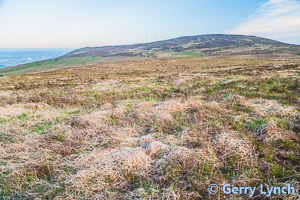
Divis from Wollfhill 20 May 2020 © Gerry Lynch
Divis from Wollfhill, 20 May 2020, © Gerry Lynch.

Still, on the first Saturday of the lockdown I surprised myself by tackling the highest of the Belfast Hills, a four hundred and eighty metre monster called Divis, in one go, six miles walk from home which is near the docklands and sea level. I was very proud of myself. But I hadn’t really got my mountain legs at this point, and I didn’t relish the circuitous walk back down. A quick scan of aerial photos on Google Maps showed that at one point it was barely four hundred metres from a formal path to the tarmacked city streets below, from where it would be an easy three mile stroll back. I knew the hill was steep at this point, as its slopes are visible across the city, but from below it always looked like a manageable scramble across some very pretty, gorse-bedecked, fields. My father, who grew up in the estate immediately below that hill, has long regaled me with stories of a childhood spent playing up on that mountain. When I clambered naughtily over the fence to start my short-cut, I had to admit it looked steeper than it seemed from a distance. Much steeper. But you know, four hundred metres, four football fields, how hard could it be?

Read more