Get Thee Behind Me Satan – Sermon on 30th August 2020 (Twelfth Sunday After Trinity)

Preached at St John’s, Devizes

Readings – Romans 12:9-21, Matthew 16:21-28

But he turned and said to Peter, ‘Get behind me, Satan! You are a stumbling-block to me; for you are setting your mind not on divine things but on human things.’

May I speak in the name of God who is Father, Son, and Holy Spirit.
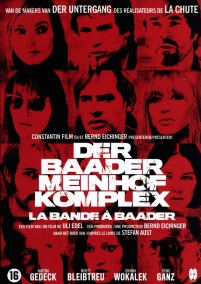
Der Baader Meinhof ComplexLast week I watched two films that depicted how people convinced they are fighting injustice can descend into barbarism precisely because of their moral certainty. Both looked back on events in the late 1960s and 1970s. The first was Sam Green and Bill Siegel’s insightful documentary on The Weather Underground, the second was Bernd Eichlinger’s emotionally overwhelming dramatization of the story of The Baader Meinhof Complex. On both sides of the Atlantic, young people outraged by the nightly television scenes from Vietnam, with America killing civilians in great numbers, themselves resorted to bombing and killing. None of this produced any of the justice and liberation they sought. In the end, both organisations found the world moved on rapidly and left those in them behind: on the run, or marooned on the edge of society, or imprisoned. The illusion that if only we ourselves ran the world, then everything would be wonderful, is a dangerous one.

First century Palestine was a place of political and religious ferment and frequent outbreaks of religiously-inflected political violence. Utopianism was as prevalent there as it was in the Chicago or West Berlin of 1968. To understand how Jesus calling Peter “Satan” fits into that world, we need to go back to the episode in Matthew’s Gospel that immediately precedes Jesus beginning his public ministry. It’s the bit where Jesus is “led up by the Spirit into the wilderness to be tempted by the devil”. The last of the three temptations Satan puts before Jesus is to offer him all the kingdoms of the world in return for His worship. Jesus refuses and the Devil flees. Jesus’ goal is not power or conquest, nor even to initiate an enlightened political order, but the service of His heavenly Father.

Peter stumbles into being a bit of a devil without realising it, for he places exactly the same temptation before Jesus, to renounce His mission from the Father and seize earthly power. We know that power comes into it for the passage immediately preceding this, the Gospel at last Sunday’s service, is the one where Peter is the first person to correctly identify Jesus as the Messiah. The Messiah was expected to be an extraordinary God-sent leader who would restore The Temple to holiness from the way it had been spiritually despoiled by the Herods, and deliver the Jewish people from Roman Occupation. It was thought the Messiah was going to, if you will, Make Jerusalem Great Again.
Read more

“Out of Our Depth”: Sermon Preached at St John’s, Devizes on Sunday 9 August 2020 (the 9th Sunday After Trinity)

Readings – 1 Kings 9:9-18, Matthew 14:22-33

But when he noticed the strong wind, he became frightened, and beginning to sink, he cried out, ‘Lord, save me!’ Jesus immediately reached out his hand and caught him, saying to him, ‘You of little faith, why did you doubt?’

May I speak in the name of God who is Father, Son, and Holy Spirit.

Have you ever found yourself out of your depth and almost embarrassed that you were driven to ask for God’s help to get you out of the consequences of your own stupidity?

I certainly have!

I suspect I’m not the only one who used the lockdown as an excuse to get fitter. Do you know the start of the hundred and twenty-first psalm? “I will lift up mine eyes unto the hills, from whence cometh my help. My help cometh even from the Lord.” Well, that was my motto of the lockdown; in a small terraced house in Belfast’s inner-city with my parents, it was a case of either turning to the hills that surround the city or turning to drink. If the truth be told, there might have been a bit of both.

Divis from Wollfhill 20 May 2020 © Gerry Lynch
Divis from Wollfhill, 20 May 2020, © Gerry Lynch.

Still, on the first Saturday of the lockdown I surprised myself by tackling the highest of the Belfast Hills, a four hundred and eighty metre monster called Divis, in one go, six miles walk from home which is near the docklands and sea level. I was very proud of myself. But I hadn’t really got my mountain legs at this point, and I didn’t relish the circuitous walk back down. A quick scan of aerial photos on Google Maps showed that at one point it was barely four hundred metres from a formal path to the tarmacked city streets below, from where it would be an easy three mile stroll back. I knew the hill was steep at this point, as its slopes are visible across the city, but from below it always looked like a manageable scramble across some very pretty, gorse-bedecked, fields. My father, who grew up in the estate immediately below that hill, has long regaled me with stories of a childhood spent playing up on that mountain. When I clambered naughtily over the fence to start my short-cut, I had to admit it looked steeper than it seemed from a distance. Much steeper. But you know, four hundred metres, four football fields, how hard could it be?

Read more

Cassettes, Communion, and Guardians of the Galaxy: Online Worship isn’t the Answer to Everything

Hooked on a feeling, I'm high on believing.

Young people these days are a rum lot! I’ve recently discovered that they’re getting into cassette tapes in a big way. I understood when people got back into vinyl again, that made perfect sense; analogue audio just sounds better than its digital counterpart, and there is something magical about the gentle crackle of a needle amplified by a good set of speakers. For the same reason, as a keen digital photographer, I understand why some of my snap-happy brethren are rediscovering film, even I have no desire to go to the trouble of setting up a darkroom myself.

But tapes? We lived off cassettes in the 1980s; we would make compilations by recording scratchy radio stations, sometimes Radio Luxembourg on Medium Wave, barely audible before sunset and full of fading after it in far-off Belfast. I remember how prone to breaking they were, always getting tangled up on the heads of the tape player, having to be straightened out and wound back on with a pencil, usually damaging the sound quality, even when they didn’t break altogether. Who in their right mind wants to use tapes?

Hooked on a feeling, I'm high on believing.
♪ Hooked on a feeling, I’m high on believing, but just not via Zoom ♫

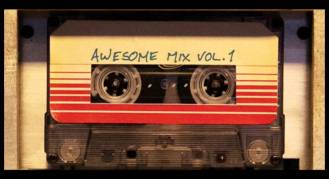
A clerical colleague, who has the advantage of having teenage children, explained to me that it all started with Guardians of the Galaxy. And I can see why. Rarely has anything been more aptly named than Awesome Mix Vol. 1. My coleague’s son had recently given his girlfriend a mixtape for her birthday – they use that ugly Americanism (ugh!) rather than ‘compilation’, apparently. A question formed in my mind: but surely he could just make her a playlist on Spotify? The answer was so obvious I never even uttered the words. A compilation would always be a physical token of their love – in a sense, a sacrament. An outward and visible sign of an inward and spiritual grace.

Maybe the young people aren’t so rum after all.

Read more

Sermon Preached at St John’s Devizes on Sunday 19 July 2020, the 6th Sunday After Trinity

Readings – Romans 8:12–25, Matthew 13:24–30, 36–43

“…in gathering the weeds you would uproot the wheat along with them. Let both of them grow together until the harvest.”

May I speak in the name of God, who is Father, Son, and Holy Spirit. Amen.

It is good to be with you as your curate for the first time this morning. And I hope, for all of you, it is good to be back in Church.

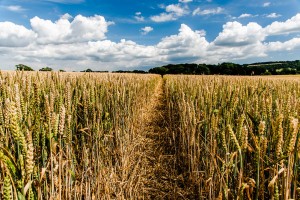
Wiltshire Wheat Fields in mid-July near West Dean © Gerry Lynch
Wiltshire wheat fields in mid-July, © Gerry Lynch, 22 July 2016.

The parable of the wheat and the weeds centres on the idea that God allows both goodness and wickedness to flourish here on earth. It is particularly appropriate at this time, for we’ve seen the best and the worst of human nature over the four months since people last gathered together to pray here in St John’s. We’ve seen medical personnel and care home staff put their lives on the line, and in some cases give their lives, for the common good. We’ve seen the natural world revive as the pressure we human beings put on it eases off just a little, with cleaner air and water, less noise, and wildlife returning to our towns and cities. We’ve seen a great revival of community spirit, with neighbours looking out for the vulnerable, and we’ve also seen a great global effort of medical science taking place across boundaries of nation, religion, race, and system of government.

We’ve also learned a lot about who is genuinely indispensable to society: when most of us were told to stay at home if we possibly could, those who still had to go into work were often those least financially rewarded for their labours. Supermarket workers, staff in meat plants, fruit and vegetable pickers, truck drivers, security guards, home helps, taxi drivers, as well as those working in the NHS and care homes – these were the people who had to go to work right through the worst of the pandemic, and many of them earn wages that make it impossible for them to imagine providing a secure home for their families. These were the people who died in disproportionate numbers.

Read more

Twilight View of the Kyiv Pechersk-Lavra Monastery Complex

The Kyiv Pechersk Lavra monastery complex shot from the Paton Bridge in a golden evening twilight, 9 August 2018

The Kyiv Pechersk Lavra monastery complex shot from the Paton Bridge in a golden evening twilight, 9 August 2018
Kyiv Pechersk-Lavra Complex shot from the Paton Bridge, 9 August 2017, © Gerry Lynch.

Viewed here from the Paton Bridge is the enormous and ancient Pechersk Lavra monastery complex in the Ukrainian capital, Kyiv. This is the crucible in which East Slavic Orthodoxy was formed and is arguably the third most important religious community in the history Christendom behind only Monte Cassino and Mount Athos.

Kyiv Pechersk Lavra (Ukrainian: Києво-Печерська лавра; Russian: Киeво-Печерская лавра), also known as the Kiev Monastery of the Caves, was founded as a cave monastery in 1051, since which time it has usually been a preeminent centre of Orthodox Christianity in Eastern Europe. Together with the Saint Sophia Cathedral a few kilometres away, it is inscribed as a UNESCO World Heritage Site. Among others, the remains of Imperial Prime Minister Peter Stolypin, assassinated at the Opera in the city centre, lie at rest here.

While remaining a major cultural and tourist attraction, the monastery has been active again as a religious community since the 1980s, having been shut down by the Soviet authorities in 1928 and turned into a museum-park. Nowadays, there are now over 100 monks in residence.

Read more

The Case for Socialist Healthcare in One Country

“If China and Covid can’t shake doctrinal globalism, can anything?” My latest piece in The Critic… My friend Murat runs two tailor’s shops in the south of England. Having arrived from Turkey as a sole trader five years ago running a little alteration business in Salisbury, he now employs eight people, has a second premises … Read more

Beginning Public Ministry in a Liminal Time

St Anne's Cathedral, Belfast, reflected in a puddle on Donegall Street, 29 April 2020, © Gerry Lynch

On Saturday last, I should have made a deacon in Salisbury Cathedral, a place I love, the antepenultimate milestone in a journey to fulfil a call to priesthood in the church of God that I began, depending on how one counts it, either six, ten, or twenty-two years ago. I first went to see the Director of Ordinands for the Diocese of Connor and joined the Fellowship of Vocation there in September 1998. I often find it useful to date moments in my life by the pop songs on the radio at the time; the UK Number 1 single then was, with delicious irony, T-Spoon’s Sex on the Beach. That really was a long time ago now.

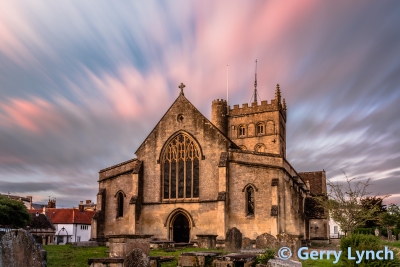
St John the Baptist Church, Devizes, 1 July 2020, © Gerry Lynch

Having been formally licensed as a lay worker in the parish of St John with St Mary, Devizes, by the Bishop of Salisbury via videoconference on Sunday I am, however, a curate if not a cleric, an officially licensed tender of God’s garden of souls at a time when churches have not held public worship for more than three months, when public health regulations have quite correctly banned visiting the army of lonely and isolated people in their own homes. Hundreds of others have had their ordinations similarly delayed, and are experiencing similar uncertainties. For me, a journey towards ordained ministry that often involved being told that I was an awkward person on the edge leads to a public ministry that begins in a virus-ravaged world that sits on the edge of… who knows what?

Wikipedia tells me that in anthropology, liminality (from the Latin word limen, meaning ‘a threshold’) is the quality of ambiguity or disorientation that occurs in the middle stage of a rite of passage, when participants no longer hold their pre-ritual status but have not yet begun the transition to the status they will hold when the rite is complete. Liminality is terribly fashionable in the Church at the moment; I have not always found it to be a pleasant or rewarding place to inhabit. It is, however, the state in which the whole world waits for a new order to emerge, groaning for better but often in trepidation of worse.

Liminal time exists in the cracks in our lives and the cracks in the life of the world that lie between the passing of the old and the coming of the new. Of course, there are other ways of looking at the world, ways that emphasize the continuities rather than the discontinuities. Emphasising the continuities that lie across all breaks in human experience seems to have been the most modish approach of late. Understandings that emphasize continuity bring richness and insight, for each of us always remains himself and all of us always remain human. Like all perspectives, however, these are limited. Just as a photographer will choose his perspective depending on the time of day and year, weather conditions, subject matter, and the like, sometimes we must consciously open ourselves to new viewpoints on ourselves and our world.

Read more

The Blind Eye Turned to Barrow

What’s not newsworthy about fascists, Islamists, grooming and death threats to journalists? My latest piece for The Critic. When we sit at an obvious hinge of history, the tendency of the press is to look in the wrong direction for the events that will define a new era. 106 years ago this month, foreign correspondents … Read more

Orbán, Trianon, and the Rebirth of Nationalism

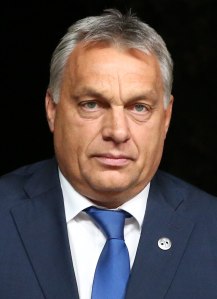
orban
Photo of Viktor Orbán © The Estonian EU Presidency 2017 and used courtesy of CC 2.0.

It is well worth reading Viktor Orbán’s speech on the 100th anniversary of the Treaty of Trianon, which was last Thursday and I didn’t even notice until it passed. Let’s start with this passage towards the end, which needs little comment.

“The world is changing. The changes are tectonic. The United States is no longer alone on the throne of the world, Eurasia is rebuilding with full throttle, the frames of our European Union are crackling, and now it hopes to save itself with a salto mortale. The ground is trembling under the feet of our eastern neighbour. The Balkans is also full of questions to be answered.

“A new order is being born. In our world, in our lives as well, great changes are banging on our gates.”

The Treaty of Trianon was one of the Paris Peace Conference treaties with the defeated Central Powers after World War One, which included the famous Treaty of Versailles, but also the treaties of Neuilly (with Bulgaria), St Germain (with German Austria), and Sevres (with Ottoman Turkey but ripped up by Atatürk by force of arms). Hungary lots two-thirds of its territory, nearly all of which had an ethnic majority of another nationality; but it also lost about three million Hungarians.

Hungary has lost another million in the since 1980 through a collapsed birth rate and high emigration; it is not hard to see the desperate desire for a bout of natalism that young Hungarian women seem reluctant to supply.

“At times they gave soldiers to defend the nation, at other times they gave armies of nation-building craftsmen to the country.”

This is contentious language even within Hungary. But the Hungarian liberal-left cannot simply wish its way out of dealing with the great national disaster that was Trianon. Budapest’s Mayor, Gergely Karácsony, the nearest thing to a credible rival that Orbán possesses, ordered a minute’s silence last Thursday. He spoke of the fate of his mother, trapped in what was now Romania in 1920 with his elderly great-grandparents, after his grandparents fled to the newly shrunken core Hungary. The elders, despite caring for a small child, were put to forced labour. Hungary is full of such stories and such myths, not only of the time after 1920 but the time after 1945.

But the silences are as revealing as the topics for comment, for Horthy’s regency is swept under the carpet, neither glorified nor condemned but simply not discussed; unmentioned too are the five months of murderous madness under the Arrow Cross Party. For others must always be the architects of Hungary’s problems.

Read more