Faith, Gays, and Sandi Toksvig: Sermon Preached at St John’s, Devizes, Sunday 7th August 2022 (The Eighth Sunday after Trinity)

Readings – Hebrews 11: 1–3, 8–16; Luke 12:32–40

“Faith is the assurance of things hoped for, the conviction of things unseen”

“Faith is the assurance of things hoped for, the conviction of things unseen” – so writes the author of the Letter to the Hebrews. Faith and hope are intimately connected – they are the twin foundations for imagining a future that is better than the present.

Smartly dressed man singing and banging a hand drum in Africa
You gotta have faith! Confirmation Day in Sharpeville © Gerry Lynch, 15 September 2019

We live in a society where faith is routinely derided as an unscientific delusion without evidence. Yet doing anything transformative requires us to dream dreams that go well beyond what the evidence will sustain; without faith we can only ever be anchored in a permanent present, unable to take risks because we’re afraid of going into uncharted territory, where there isn’t yet any evidence and we must rely on insight and inspiration.

Perhaps this is part of the reason why our culture seems to be so stagnant, trapped in an endless cycle of movie repeats and music that sounds like it could have been made thirty years ago. Our artists and musicians and writers and journalists are overwhelmed with data about what sells or what generates the clicks. Why take risks when you know what works? Even when the creatives themselves want to try something new out, the executives and editors have all the same data and seem to opt for profits over vision every time.

It seems that the more we know about the present, the less we are able to imagine an alternative to it. Drowning in numbers, we lack the sort of visions that can renew us into the future.

In practice, humanism has displaced Christianity as the official religion of this country. Of course, the Church of England still provides Christian liturgies for all the formal state occasions; but listen to the language of politicians of all parties, or our leading cultural figures, and it is almost always couched in the terms of humanism.

One of our cultural leading lights, Sandi Toksvig, gave the Archbishop of Canterbury a public ticking off this week about the Lambeth Conference. She was herself a humanist, she said, but she was sure that “the sort of message” Jesus wanted to send people was for them to “just be a good person”.

Just be a good person. That’s a charming sentiment – coming from a nursery school teacher, perhaps, or an eight year-old. It is genuinely startling to hear an intelligent person come to mature years and not observe that even good people sometimes do bad things – even when it is obvious what is good and what is not, which is not always the case.

I think that is another part of our present malaise – we tell ourselves that we’re good people, and indeed the official narrative seems to be that people are basically good unless they’ve been subject to some sort of horrific early childhood emotional trauma, or something like that. But we all know that we aren’t always good, indeed that we often hurt the ones we love the most, while that the people whom we love the most are often those who wound us most.

Read more

Crumbling Empires and Eternal Bliss: Sermon Preached at St John’s, Devizes, Sunday 21st November 2021 (Christ the King)

Remnants of a vanished empire: a Soviet red star from 1953 on Kyiv's Paton Bridge.

Readings – Revelation 1:4b-8; Mark 10:17–31

 “My Kingdom is not from of this world.” 

May I speak in the name of God who is Father, Son, and Holy Spirit. Amen.

Some of you know, and some of you don’t, that I am a very keen radio ham, and a particular enthusiast for Morse code, which is still in use by hobbyists around the world on a daily basis. My love affair with radio started when I was an eight year old boy, on discovering that the radio cassette player my parents had given me as a Christmas present had a switch marked “Short Wave”. At first, tuning the dial on this strange waveband was unpropitious, as the adults had all assured me would be the case, revealing only strange bleeps and noises and a few stations in languages I didn’t even recognise.

Remnants of a vanished empire: a Soviet red star from 1953 on Kyiv's Paton Bridge.
Remnants of a vanished empire: a Soviet red star from 1953 on Kyiv’s Paton Bridge, 11 August 2017, © Gerry Lynch.

Within a few hours, however, I had discovered programmes in immaculate English from Sweden, the Netherlands, and Czechoslovakia and things developed from there over the following weeks and months. To a child always fascinated by maps and already at that tender age becoming interested in politics, that cassette player became like a magic carpet to distant lands, so much more remote in those pre-Internet days of the 1980s.

One of the most ubiquitous stations, and certainly the most bizarre, was Radio Tirana, which dominated large parts of the Short Wave spectrum with its creepy and unforgettable theme tune, introducing broadcasts that promoted Albania’s official state ideology in every language from Armenian to Zulu. It seemed to despise equally both what it described as American Imperialists and Soviet Socialist Imperialists, but its real ire was reserved for the oul’ enemy – the imperialists of Yugoslavia.

The undoubted king of the dial, however, was Radio Moscow, which in English alone had not only a North American service, and a World Service aimed mainly at audiences in Africa and South Asia, but for an hour at 8 o’clock every evening the wonderful Britain and Ireland Service. It was presented by gentlemen who were very well-spoken indeed, sounding like they had been educated at Marlborough and Cambridge – because they probably had been. They presented the failures of the Soviet Union as being the inevitable flaws of a system that was still merely Socialist, and that these would ultimately disappear as a perfect political system, a genuine Communism, inevitably emerged.

I discovered all this at Christmas 1985. Within a few years, Czechoslovakia, Yugoslavia, and even the mighty Soviet Union all vanished from our maps. Empires rise and fall. They always have done and always will do, and they are always profoundly flawed entities.

Read more

Stumbling Blocks and Salt: Sermon Preached at St John’s, Devizes, Sunday 26 September 2021 (The Seventeenth Sunday after Trinity)

Readings – James 5.13–20; Mark 9.38–50

“Have salt in yourselves and be at peace with one another.”

There is a striking and rather horrifying picture about our Christian past that occasionally does the rounds on the Internet. It is a photograph of two strangely shaped tombstones, located either side of a high wall. The tombstones are even higher, and from the top of each a hand stretches out to touch the other.

Grave in Roermond © memolands.com gallery
The touching hands between the tombs of Colonel van Gorcum and Lady van Aefferden in the Dutch city of Roermond. © memolands.com gallery and used under Creative Commons Licence 2.0.

The graves are located in the Dutch city of Roermond, and belong to Colonel van Gorcum, a Protestant cavalry officer, and his wife Lady van Aefferden, a Catholic minor noble. They were married in 1842, and after thirty-eight years of presumably happy marriage, the Colonel died and was buried in the Protestant part of the local cemetery, where the dead were divided from one another denominationally by a high wall. His wife therefore refused to be buried in the grand family plot, in the Catholic part of the cemetery, insisting that she would be buried on her own immediately across the wall from him. That is where she was laid to rest eight years later, in 1888, and their graves remain to this day a reminder of the capacity of love to triumph over bigotry.

Love conquers all – even tribalism and stupidity.

Christ presents a dire warning in today’s Gospel about those who place stumbling blocks in the way of faith. The horrid things done due to disagreements between Catholics and Protestants are a huge stumbling block to Christian faith for many, a major contributor to the decline of Christianity in this country and across Europe. Today we pay a heavy price for the sins for the past.

Of course, we’re not like that these days. We’re much more enlightened. Devizes is now absolutely normal in terms of today’s Christianity, certainly in this country, in that the social action of the Church, our commitment to supporting the needy, or the homeless, or people with addiction problems, is carried out absolutely ecumenically. Not only do Conservative Roman Catholics work hand in hand with staunchly Evangelical Protestants, but both work with people at the most theologically liberal end of the Quakers or Anglicans or Methodists, who might see themselves as following a Christian path towards a universal truth rather than understanding Christianity as even presenting a distinct truth at all. All of us seem to have taken on board Jesus’ command to the apostles today about the stranger healing in His name: “Do not stop him; for … whoever is not against us is for us.”

Read more

A country is a home or it’s nothing

My latest piece in The Critic… A cheery-looking chap from the local Lib Dems dropped a Focus leaflet through my door last weekend, the first political leaflet I’ve received since moving here a few months ago. It may surprise you that this isn’t the start of a Lib Dem-bashing article: while I no longer hold … Read more

Orbán, Trianon, and the Rebirth of Nationalism

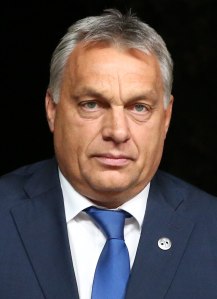
orban
Photo of Viktor Orbán © The Estonian EU Presidency 2017 and used courtesy of CC 2.0.

It is well worth reading Viktor Orbán’s speech on the 100th anniversary of the Treaty of Trianon, which was last Thursday and I didn’t even notice until it passed. Let’s start with this passage towards the end, which needs little comment.

“The world is changing. The changes are tectonic. The United States is no longer alone on the throne of the world, Eurasia is rebuilding with full throttle, the frames of our European Union are crackling, and now it hopes to save itself with a salto mortale. The ground is trembling under the feet of our eastern neighbour. The Balkans is also full of questions to be answered.

“A new order is being born. In our world, in our lives as well, great changes are banging on our gates.”

The Treaty of Trianon was one of the Paris Peace Conference treaties with the defeated Central Powers after World War One, which included the famous Treaty of Versailles, but also the treaties of Neuilly (with Bulgaria), St Germain (with German Austria), and Sevres (with Ottoman Turkey but ripped up by Atatürk by force of arms). Hungary lots two-thirds of its territory, nearly all of which had an ethnic majority of another nationality; but it also lost about three million Hungarians.

Hungary has lost another million in the since 1980 through a collapsed birth rate and high emigration; it is not hard to see the desperate desire for a bout of natalism that young Hungarian women seem reluctant to supply.

“At times they gave soldiers to defend the nation, at other times they gave armies of nation-building craftsmen to the country.”

This is contentious language even within Hungary. But the Hungarian liberal-left cannot simply wish its way out of dealing with the great national disaster that was Trianon. Budapest’s Mayor, Gergely Karácsony, the nearest thing to a credible rival that Orbán possesses, ordered a minute’s silence last Thursday. He spoke of the fate of his mother, trapped in what was now Romania in 1920 with his elderly great-grandparents, after his grandparents fled to the newly shrunken core Hungary. The elders, despite caring for a small child, were put to forced labour. Hungary is full of such stories and such myths, not only of the time after 1920 but the time after 1945.

But the silences are as revealing as the topics for comment, for Horthy’s regency is swept under the carpet, neither glorified nor condemned but simply not discussed; unmentioned too are the five months of murderous madness under the Arrow Cross Party. For others must always be the architects of Hungary’s problems.

Read more

A Tallinn Memorial from the Days before Nationalism

Tallinn Memorial

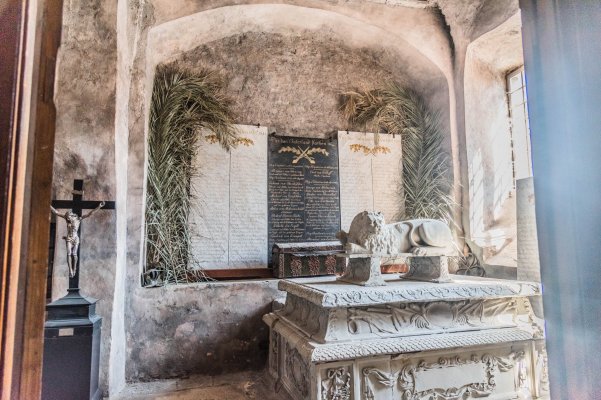
In the Toomkirik, Tallinn’s Lutheran Cathedral, this memorial to those who “für das Vaterland starben [died for the Fatherland], 1812-14”.

In the wars against Napoleon, the ‘Vaterland’ the German-speaking Protestant élite of Estonia died for was the Empire of the Tsars.

200 years ago, nationalism and the nation-state were concepts only beginning to emerge. Due loyalty was assumed to be to one’s sovereign, not one’s ethnic kinsman.

Read more

Meet the Box-Setts: the Demographic that Will Decide Britain’s Future

Originally posted at Slugger O’Toole…

David Box gives his partner Seema Sett the dorky, Mr Bean-ish look, with the back of his tongue poking out of his gob that he knows always makes her smile when she’s had a rough day. The kids are asleep and they’re in bed too, sprawled on top of the duvet. The tablet is streaming one of their favourite series: Babylon 5. Season 2, the episode where the Technomages first appear. Pure nostalgia for their student days. They’re both a bit geekly about sci-fi: maths graduates, what do you expect? Lying prone, she stretches her hand up, strokes his face, says she’s tired but if he wants to turn that bloody thing off, she has something else in mind before they go to sleep.

If past general elections were defined by demographics spoken about for months in advance – Essex Man, Mondeo Man, Worcester Woman – the surprise results of 2017’s snap poll were driven most of all by Mr Box and Ms Sett: the people whom nobody saw coming and nobody much realised existed. This year’s local elections shows that they haven’t gone away.

Middle-class, entering middle-age, and hitherto deeply depoliticised, last year they voted for a Labour Party led by an overt Marxist perhaps to their own surprise and in numbers that still haven’t really seeped into the consciousness of political analysts and pundits a year later: 50% of 35-44 year olds voted for Corbyn’s Labour last June. At the point in their lives when their financial commitments and personal responsibilities are greatest, with kids at school and jumbo mortgages barely starting to be paid off, only 30% opted for Theresa May’s message of Tory stability.

On Epochal Political Shifts

In the late 1970s, it was young, prosperous, skilled, blue-collar workers who were about to deliver a radical change in the balance of political opinion in Britain. Detaching themselves from family loyalties to Labour that had existed for the two generations since poor Britons first won the vote, they flocked to Margaret Thatcher’s message of hard work, self-reliance, and opposition to the choking stranglehold of bureaucracy and unions.

Thirty years later, that vision is looking increasingly hollow to those who were schoolchildren during the Thatcher revolution, from the bottom of the social scale to the top. Those who work in the public sector haven’t seen an inflation-matching pay rise for eight years, which puts downward pressure on wages even for those in the private and third sectors. The house price spiral keeps them trapped on the same step of the housing ladder if they’re lucky enough to have bought; if they rent, costs are spiralling even more rapidly, while security of tenancy has vanished and is usually hemmed in with massive deposits and restrictive clauses that would have been unimaginable in their turn-of-the-millennium house shares. Both last year’s election and this one’s took place during a round of staff cuts in their children’s schools that went unnoticed by the national press, still less by the strategists who ran the Tory election campaigns.

Read more

Dark clouds over the rainbow nation

This article appeared in The Tablet on 13 April 2017. The crisis long bubbling inside the African National Congress now threatens to boil over into widespread violence throughout the country. Faith leaders have a vital part to play in finding a peaceful solution to the growing political problems. A rainbow over a slagheap resultant from … Read more

No Simple Answers for Christians in Politics

I’ve enjoyed the series of posts hosted by Gillan on God and Politics UK, where guest bloggers associated with the three main GB political parties, as well as the Greens and UKIP, say they support their particular party from a Christian perspective. Two final articles are from someone saying he finds it hard to vote, and someone who says voting is a Christian duty.

I was a member of both the Liberal Democrats for many years and was heavily involved in the Alliance Party of Northern Ireland for a long time. I’m not a member of any political party at the moment. Given the events of the past 16 months in Northern Ireland, I doubt I could vote for anyone other than Alliance just now, but I’m living in Wiltshire and I don’t know who to vote for in Great Britain. Not voting at all is certainly an option, although one I’d take only with great reluctance. I might return to how all that fits with being a Christian in a later blog post, but just for now I thought I’d ask a few questions of the philosophy behind the series.

It seems to have been taken as a given by all the posters except Frank Cranmer, who isn’t voting, that it is a good thing that Christians are involved in politics; and that the world would be a better place if more of them were. Indeed, Daniel Stafford argues very directly that Christians should get involved both in the party which most closely reflects their beliefs, and that party’s internal Christian grouping. This view is a common assumption in British Christianity, indeed an unusual case of an assumption that cuts right across Evangelicalism, Roman Catholicism and Liberal Christianity. How valid is it?

Read more