The Case for Socialist Healthcare in One Country

“If China and Covid can’t shake doctrinal globalism, can anything?” My latest piece in The Critic… My friend Murat runs two tailor’s shops in the south of England. Having arrived from Turkey as a sole trader five years ago running a little alteration business in Salisbury, he now employs eight people, has a second premises … Read more

Beginning Public Ministry in a Liminal Time

St Anne's Cathedral, Belfast, reflected in a puddle on Donegall Street, 29 April 2020, © Gerry Lynch

On Saturday last, I should have made a deacon in Salisbury Cathedral, a place I love, the antepenultimate milestone in a journey to fulfil a call to priesthood in the church of God that I began, depending on how one counts it, either six, ten, or twenty-two years ago. I first went to see the Director of Ordinands for the Diocese of Connor and joined the Fellowship of Vocation there in September 1998. I often find it useful to date moments in my life by the pop songs on the radio at the time; the UK Number 1 single then was, with delicious irony, T-Spoon’s Sex on the Beach. That really was a long time ago now.

St John the Baptist Church, Devizes, 1 July 2020, © Gerry Lynch

Having been formally licensed as a lay worker in the parish of St John with St Mary, Devizes, by the Bishop of Salisbury via videoconference on Sunday I am, however, a curate if not a cleric, an officially licensed tender of God’s garden of souls at a time when churches have not held public worship for more than three months, when public health regulations have quite correctly banned visiting the army of lonely and isolated people in their own homes. Hundreds of others have had their ordinations similarly delayed, and are experiencing similar uncertainties. For me, a journey towards ordained ministry that often involved being told that I was an awkward person on the edge leads to a public ministry that begins in a virus-ravaged world that sits on the edge of… who knows what?

Wikipedia tells me that in anthropology, liminality (from the Latin word limen, meaning ‘a threshold’) is the quality of ambiguity or disorientation that occurs in the middle stage of a rite of passage, when participants no longer hold their pre-ritual status but have not yet begun the transition to the status they will hold when the rite is complete. Liminality is terribly fashionable in the Church at the moment; I have not always found it to be a pleasant or rewarding place to inhabit. It is, however, the state in which the whole world waits for a new order to emerge, groaning for better but often in trepidation of worse.

Liminal time exists in the cracks in our lives and the cracks in the life of the world that lie between the passing of the old and the coming of the new. Of course, there are other ways of looking at the world, ways that emphasize the continuities rather than the discontinuities. Emphasising the continuities that lie across all breaks in human experience seems to have been the most modish approach of late. Understandings that emphasize continuity bring richness and insight, for each of us always remains himself and all of us always remain human. Like all perspectives, however, these are limited. Just as a photographer will choose his perspective depending on the time of day and year, weather conditions, subject matter, and the like, sometimes we must consciously open ourselves to new viewpoints on ourselves and our world.

Read more

The Blind Eye Turned to Barrow

What’s not newsworthy about fascists, Islamists, grooming and death threats to journalists? My latest piece for The Critic. When we sit at an obvious hinge of history, the tendency of the press is to look in the wrong direction for the events that will define a new era. 106 years ago this month, foreign correspondents … Read more

Orbán, Trianon, and the Rebirth of Nationalism

orban
Photo of Viktor Orbán © The Estonian EU Presidency 2017 and used courtesy of CC 2.0.

It is well worth reading Viktor Orbán’s speech on the 100th anniversary of the Treaty of Trianon, which was last Thursday and I didn’t even notice until it passed. Let’s start with this passage towards the end, which needs little comment.

“The world is changing. The changes are tectonic. The United States is no longer alone on the throne of the world, Eurasia is rebuilding with full throttle, the frames of our European Union are crackling, and now it hopes to save itself with a salto mortale. The ground is trembling under the feet of our eastern neighbour. The Balkans is also full of questions to be answered.

“A new order is being born. In our world, in our lives as well, great changes are banging on our gates.”

The Treaty of Trianon was one of the Paris Peace Conference treaties with the defeated Central Powers after World War One, which included the famous Treaty of Versailles, but also the treaties of Neuilly (with Bulgaria), St Germain (with German Austria), and Sevres (with Ottoman Turkey but ripped up by Atatürk by force of arms). Hungary lots two-thirds of its territory, nearly all of which had an ethnic majority of another nationality; but it also lost about three million Hungarians.

Hungary has lost another million in the since 1980 through a collapsed birth rate and high emigration; it is not hard to see the desperate desire for a bout of natalism that young Hungarian women seem reluctant to supply.

“At times they gave soldiers to defend the nation, at other times they gave armies of nation-building craftsmen to the country.”

This is contentious language even within Hungary. But the Hungarian liberal-left cannot simply wish its way out of dealing with the great national disaster that was Trianon. Budapest’s Mayor, Gergely Karácsony, the nearest thing to a credible rival that Orbán possesses, ordered a minute’s silence last Thursday. He spoke of the fate of his mother, trapped in what was now Romania in 1920 with his elderly great-grandparents, after his grandparents fled to the newly shrunken core Hungary. The elders, despite caring for a small child, were put to forced labour. Hungary is full of such stories and such myths, not only of the time after 1920 but the time after 1945.

But the silences are as revealing as the topics for comment, for Horthy’s regency is swept under the carpet, neither glorified nor condemned but simply not discussed; unmentioned too are the five months of murderous madness under the Arrow Cross Party. For others must always be the architects of Hungary’s problems.

Read more

Let’s Worship Outside

The News Letter later asked me to turn this blog into a newspaper article which you can read here.

Worshipping outside in happier times in South Dorset. Photo © Diocese of Salisbury/Gerry Lynch.

The dreadful news that more than a hundred people were infected with coronavirus at a single, legally permitted, church service in Germany earlier this month should make it transparent that we are unlikely any time soon to be returning to church worship as we hitherto understood it.

In this time of fear and death, I feel deeply deprived of connection with God. I have not received communion in more than two months; I have no idea when I might do so again. I cannot even spend time in a church praying in the presence of the reserved sacrament. I cannot kneel in any of my familiar haunts for prayer, nor can I discover new ones. A computer screen in my parents’ box room has proven a distracting and sensory-deprived locus for prayer. In my case, as a very definite extrovert, prayer is very much an externally contextualised physical process as well as an interior mental and psychological one. Prayer involves the placing of the earthly into the loving care of the heavenly, and is thus intimately bound up with place, physicality, community and body.

Worship via videoconference involves deprivation of the senses. It only involves sight and hearing; never smell, taste, or touch. The aural and visual, already overprivileged in technological societies, are mediated through a screen and a speaker, usually with poor audio and video quality. That is not to dismiss its value – certainly some people seem to have reconnected or newly connected with Christian worship via online means during the pandemic. But it can never involve the smell of incense, the taste of sacramental wine, the heat of a ray of sunshine streaming through a window, a hug, or noticing that a much loved elderly parishioner’s gait has suddenly become laboured.

Are there other ways to worship safely in the era of coronavirus?

Read more

The Sheldonian Theatre, Oxford

Sheldonian Theatre, Oxford

The Sheldonian Theatre, located in Oxford, England, was built from 1664 to 1669 after a design by Christopher Wren for the University of Oxford. The building is named after Gilbert Sheldon, chancellor of the University at the time and the project’s main financial backer. It is used for music concerts, lectures and University ceremonies, but not for drama until 2015 when the Christ Church Dramatic Society staged a production of The Crucible by Arthur Miller.

Read more

Chapel Address at Evensong, St Stephen’s House, Oxford, 4 November 2019

Chapel Address at Evensong, St Stephen’s House, Oxford, 4 November 2019
Gerry Lynch

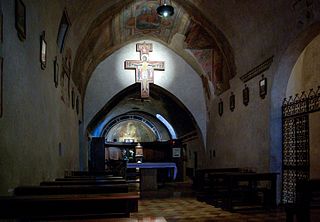
St Stephen's House Chapel, Oxford

“When you talk to God, it’s called prayer. When God talks to you, it’s called insanity.”

That bon mot came to mind as I pondered today’s readings from the first chapters of Daniel and Revelation, two of the most misunderstood and misused books of the Bible, yet also among the most transcendent.

Prophecy has always been a tricky topic in the Church – St Paul admonished the Corinthian Church about it. The soldiers who beat up the blindfolded Jesus demanded he guess which of them had struck him. They were confusing prophecy and fortune-telling. It is still a common mistake, and made as much within the Church, or at last at its fringes, as it is outside it. The YouTube fanatics who drop random texts from Revelation to confidently predict the arrival of doomsday next Wednesday have done tremendous damage to the Church.

The Belfast of my boyhood was thick with these chancers. There was even a BBC children’s TV drama of the early 1980s, set in Belfast, about one of these street corner Jeremiahs, entitled The End of the World Man. Of course the title character was nothing but a hypocrite, setting himself up in self-righteous judgement while using his political connections to facilitate a corrupt land deal to destroy a patch of urban wilderness much loved by our televisual child heroes. If you want to lampoon the Church, these self-proclaimed prophets are an easy way to do it. And they are terribly unbiblical. The end will come like a thief in the night; it is not ours to know when and how it will come; Jesus says this very directly in St Matthew’s Gospel.

Read more

Sermon Preached at St Mary Magdalen, Oxford, 3 November 2019

Sermon Preached at Sung Mass at St Mary Magdalen, Oxford, 3 November 2019 (All Saints’ Day transferred)                                                               Gerry Lynch

St Mary Magdalen, Oxford (C) Gerry Lynch.jpg

After this I looked, and behold, a great multitude which no man could number, from every nation, from all tribes and peoples and tongues, standing before the throne and before the Lamb. (Revelation 7:9)

In the name of the Father, and of the Son, and of the Holy Spirit.

That was a great hymn we started with this morning, wasn’t it, For All The Saints? And there’s more to come later. All the same, the hymn that I’ve always found most appropriate for this season of All Saintstide isn’t in the hymnbook used in this church, the New English Hymnal. At the moment, the New English Hymnal is being revised and I hope they might make space for my favourite All Saintstide hymn in the revision. Can you guess what it is? You’ll all know it. It’s the one that goes:

Oh, when the saints!
Oh, when the saints come marching in!
I want to be in that number, when the saints come marching in!
[Yes, I did break into song from the pulpit… and even had a wee dance.]

Now, the reason for that – that performance – from the trainee preacher from vicar school was to ask you all a question: do you want to be in that number when the saints come marching in? Do you think you have it in you to become a saint? Is saintliness something that we should aspire to? Or does sainthood instead represent an impossibly high standard, and the attempt to achieve it leave us doomed to failure at best, and at worst arrogantly claiming to be far better than we could possibly be, smugly looking down on the rest of humanity from a pedestal so high that it gives everyone else a clear view of our many and obvious faults?

Read more

Weird Travel: The German Soldiers Commemorated in A Country Where They Committed a Genocide

Swakopmund Marinedenkmal.jpgSwakopmund always feels a little odd, like a piece of Germany somehow teleported into Namibia’s remote and thinly populated Atlantic Coast. Even in that context, the presence of the Marinedenkmal in the centre of town feels utterly weird.

The statue memorialises the German marines who died in the suppression of the uprising of the Herero and Nama peoples in what was then German South West Africa in 1904-5. Although the plaque states that they “Mit Gott für Kaiser und Reich Kämpften” (fought with God for Kaiser and Empire), it is widely accepted that the German suppression of the rebellion was the 20th Century’s first major genocide. German troops killed not only indigenous fighters, but non-combatant men, women and children in intentional acts of collective punishment. Others were driven into the desert to die of thirst and exposure, or simply allowed to die of exhaustion. Survivors of the massacre were put into forced labour camps. Around 50% of Nama and 80% of Herero died in the revolt and the three years of collective punishment which followed.

Read more