A Clergyman’s Diary: A Wiltshire Transfiguration

The Wansdyke near Baltic Farm, 10 October 2021. © Gerry Lynch.

Nobody is quite sure when the Wansdyke was built, but the most commonly advanced theory is that it was built by the Romano-British after they were abandoned by the Imperial power to defend their stronghold in what is now Gloucestershire, Somerset, and northern Wiltshire, in the face of Saxon expansion spreading northwards from the English Channel. This would date it to around the end of the 5th Century. Regardless of exactly at which point in the transition from Roman Britain to Anglo-Saxon England it was built, it seems that the much later Anglo-Saxons had lost any idea about its purpose when, despite several centuries of Christianity, they named it Woden’s Dyke, after Odin, the king of the Norse gods, around the 9th Century.

The eastern section, in Wiltshire, has been much less disturbed over the centuries by agriculture and building than those further west, and this section, north of the village of Bishops Cannings, is particularly dramatic when lit by low late afternoon sun from the south in autumn and winter.

On a rainy day in midwinter, with the rain belting down for weeks, it can be a little disappointing, a flat bank of mud surrounded by dirty puddles. Yet the sun can transfigure it into mysterious magnificence in all seasons, always easy on the ankles, even for someone with my short legs and my fat belly. The ground remains springy and fast when in a hot dry spell when the surrounding terrain is drained and hard; and also when it is surrounded by wet muck.

Looking east from Morgan’s Hill towards Tan Hill, the Wansdyke just visible in the bottom of the valley, 10 October 2021. © Gerry Lynch.

It is as much as 4 metres high in places. It is followed by a long-distance footpath for all of this stretch. The view in the distance reaches to Tan Hill, at 294 metres above sea level the joint highest point in Wiltshire.

This is deep England. The countryside is not especially dramatic but rolls with a heart-healing, gentle, beauty. I walk here regularly, with various circuits of 12-18 miles (19-30 km) starting and finishing from my home in Devizes taking in stretches of it. When the light is like this, it makes my soul sing and fills me with gratitude for being alive.

Read more

If You Sell Everything You Have, I’ll Buy You Lunch: Sermon Preached at St John’s, Devizes, Sunday 7th October 2021 (The Nineteenth Sunday after Trinity)

Readings – Hebrews 4:12–16; Mark 10:17–31

“…go, sell what you own, and give the money to the poor … then come, follow me.”

This morning, I’m going to set you all a challenge from the pulpit. Which of you is going to do what Jesus told the rich young man this morning, and sell what you have, and give it to the poor?

The painting by Heinrich Hofmann, entitled Christus und der reiche Jüngling, dating to 1889. Residing at the Riverside Church, New York.
Heinrich Hofmann, Christus und der reiche Jüngling, 1889. Residing at the Riverside Church, New York.

I’m serious. Will somebody here, today, stick up their hand – I don’t want you to interrupt my sermon right now, but will somebody say to me at the south porch after the service, “Yes, Gerry. I’m in. I’ll get the estate agents to put the house on the market tomorrow, I’m giving the car to a young person without much money to whom it would really make a difference, and the family silver is going on eBay this afternoon.”

I’m mean it. If any of you takes up the challenge, I’ll stand you lunch at The Peppermill straight afterwards, along with a decent bottle or two, and you can come and stay with me for a month or two while you work out how you’re going to live your new vocation as a wandering mendicant, living entirely off the charity of others, for the sake of Christ.

Somebody here should give it a go. In this morning’s Gospel, Jesus has promised you treasure in heaven if you do, and in fact he promised you houses, families, and fields in this world as well. Along, it has to be said, with some persecutions. But it will all balance out as a big net positive. So, what are you waiting for?

Oh, by the way, no not me, I can’t do it. I know I’m single and I have no dependants, but I’m the curate and I have to stay here and minister unto you. It wouldn’t be fair, especially to you, for you to lose your wonderful curate who is, of course, entirely irreplaceable. Also, the Diocese would never pass me to go on and apply for my first incumbency.

The apostles reacted much in the manner that most of us do after hearing this challenge to the Rich Young Man, and then Jesus telling them that God’s standards were so high that it was almost impossible to get into heaven. They moaned. And Jesus answered them, that for mortals it was impossible, but for God, all things are possible.

You can’t win heaven. You cannot meet God’s exacting standards. God made us human beings to be flawed. We will, you and I, often make complete messes of things. Acknowledging this is a liberating, life-affirming, idea in a world where our worth is too often measured by our achievements, and our failures are too quickly pounced on by an increasingly angry and unforgiving culture. It is liberating and life-affirming because if you can’t meet God’s standards then you can’t earn God’s love. God loves you anyway, just as you are. He undoubtedly wants you to live your life differently in some ways than you do at present. You could certainly be better than you are – I know I could be. But you are loved by God.

Read more

Doers Not Merely Hearers: Sermon Preached at St John’s, Devizes, Sunday 28th August 2021 (The Thirteenth Sunday after Trinity)

Readings – James 1.17-27; Mark 7.1-8,14,15,21-23 

“…be doers of the word, and not merely hearers…”

In the name of the Father, and of the Son, and of the Holy Spirit. Amen.

 “The Western mind is like a tuning fork calibrated to one frequency: the Christ story. Hit it with the right Christ figure, and it’ll just hum deafeningly in resonance.”

I read this remarkable sentence this week in article by a commentator who is not, as far as I know, a Christian believer, but is someone who understands the profound impact Christianity has had on Western culture.

“The Western mind is like a tuning fork calibrated to one frequency: the Christ story. Hit it with the right Christ figure, and it’ll just hum deafeningly in resonance.”

This sentence referred to the international outpouring of anger that followed the murder of George Floyd in Minneapolis last May: the brutal public execution of a criminal by morally corrupt authorities behaving with terrible cruelty. The resonances with the story of Holy Week are obvious. Perhaps that is why it inspired such fervent proclamation of salvation for the oppressed through rejection of the currently dominant systems of political power which are transparently compromised.

George Floyd solidarity protest in Amsterdam, 1 June 2020. © BAMCorp and used under Creative Commons 2.0

In countries like ours’, the Christian story is woven deeply into every aspect of our mindsets. A few recent decades of triumphalist secularism has not yet undone the work of 1,500 years. Because Western civilisation became the first truly globally dominant one, it is easy for us to presume that the principles Christianity teaches about right and wrong are universal. But it certainly wasn’t part of Græco-Roman culture to exalt the weak or proclaim salvation for the oppressed.

Familiarity can blind us to how strange Christianity is – how wonderfully strange! – how subverting of the way that the powerful, clever, and rich try to invent clever ways of making that seem like the natural order of things is for them to dominate others. Only a very strange religion makes a tortured criminal its symbol of divinity, and puts the instrument of His execution everywhere from the tops of its temples to the jewellery around His followers’ necks.

Read more

Treasure in Clay Jars: Sermon Preached at St John’s, Devizes, Sunday 25 July 2021 (St James’ Day)

Readings – 2 Corinthians 4:7–15; Matthew 20:20–28

“…we have this treasure in clay jars, so that it may be made clear that this extraordinary power belongs to God and does not come from us.”

In the name of the Father, and of the Son, and of the Holy Spirit. Amen.

You are all a terrible bunch of Christians! I mean really, really, deeply flawed followers of Jesus Christ; and in the main you have very mixed motives for coming to church this morning and you should repent – repent – of your sins.

The Scallop Shell symbol of St James. © Chris Light and used under Creative Commons 4.0.

I’m sorry for that start to the sermon, but I’ve always wanted to rain a bit of fire and brimstone from the pulpit and this morning’s readings gave me the perfect opportunity to do so. It was worth it to see the looks on your faces.

Of course, you’re all deeply flawed Christians; I know this partly because I am myself a deeply flawed Christian and a deeply flawed priest and, like you, I need to repent of my sins, on a regular basis. That’s why we call our sins to mind and pray together for God to forgive us them every Sunday in the first part of the Eucharist.

I know how flawed we all are for another reason, too. Over the course of my life, I’ve been privileged to get to know well a few people who had a deserved reputation for being saints; and the better I got to know them, the more I saw that they all had real character flaws and could, just every once in a while, be quite horrid or quite hopeless.

I wanted to put that prelude into your minds before we turned to today’s Gospel reading, which is both hysterically funny, toe-curlingly awful, and very true-t0-life. When I play this scene out in my mind as if it were in a film, the bossy mother is always played by Maureen Lipman. What makes the encounter even more cringe-making is that this episode happened very late in Jesus’ final journey to Jerusalem, immediately after he told the twelve apostles that he was soon about to be handed over to death.

Read more

“Like A Thief in the Night”: Sermon Preached for St John’s Devizes Digital Worship on Sunday 15 November 2020 (the 2nd Sunday Before Advent) by Gerry Lynch

Readings – 1 Thessalonians 5:1-11, Matthew 25:14-30

For you yourselves know very well that the day of the Lord will come like a thief in the night=

© Used under fair use -The image is used for identification in the context of critical commentary of the work.

Before I sat down to plan my sermon for this morning, I thought I would want to say something optimistic and cheerful at a time when we were locked down for a second time, and locked out of our church for a second time. Then I looked at the readings for the day and found I had to preach on texts about the Second Coming, and about a worthless slave being thrown into the outer darkness, where there is weeping, and gnashing of teeth. Oh dear, I thought to myself. 

So I had a wee pray about it and I realised that I didn’t want to be cheerful and optimistic at all. I wanted to be hopeful in this new lockdown, which is something quite different. Hope is not optimism; it does not depend on taking a positive spin on the facts; nor is hope good cheer, for hope is the most powerful tool we have for carrying us through the times when we are at our bleakest. Real hope doesn’t come from talking about posies and fluffy bunny rabbits. One of the things that most often renews our hope is when we face the most difficult problems honestly and well. Real hope must be capable of enduring the worst that the world and humankind can throw at it, for the worst will inevitably be thrown at it at some point. Hope outlasts optimism and good cheer, global depressions and planetary pandemics; along with faith and love it will endure unto eternity. Hope will survive the end of the world. 

We associate the Second Coming with the end of the world. We hear and read a lot about the end of the world a lot at the moment, or at least the end of the world we knew on New Year’s Day 2020. At moments we must all have lapsed into depression that this new abnormal will never end, that we will never again share the peace in church, that we’ll never again have a large group of friends round for a drink, that we’ll never lose the terror that we’ll wake up one morning not being able to smell the coffee, with a high temperature and a dry persistent cough. We lock down full of fear as the November days grow rapidly shorter and darker, and fear that the world has indeed ended, and we’re in a sort of hell. Then we learn the news about the vaccine trial and we wonder if we dare hope that there will again come a time when we sing hymns together and find ourselves chatting to a stranger in a pub who becomes a new friend and hug our loved ones without fear.

This morning’s reading from St Paul’s First Letter to the Thessalonians, however, does not write about the end of the world, but the coming of the day of the Lord. This passage is often associated in the popular Christian imagination with the end times thanks to some very shaky theology from as recently as the 19th Century. Later there was a 1970s American film called A Thief in The Night, a second rate B-movie with a bit of Jesus thrown in, which was very influential in fundamentalist Protestant circles. In it, a lady wakes up to find that her husband and millions of other real Christians have been taken to heaven, leaving her and other fake Christians behind with the unbelievers under the jackboot of an oppressive world government run by the UN which wants to force her to have the Mark of the Beast on her forehead and damn her for all eternity! All of this got a high budget, Internet-era, makeover with the Left Behind series of books and films which were, if anything, even worse: a living reminder that while good taste can’t be bought, bad taste can.

Read more

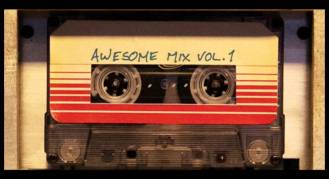
Cassettes, Communion, and Guardians of the Galaxy: Online Worship isn’t the Answer to Everything

Hooked on a feeling, I'm high on believing.

Young people these days are a rum lot! I’ve recently discovered that they’re getting into cassette tapes in a big way. I understood when people got back into vinyl again, that made perfect sense; analogue audio just sounds better than its digital counterpart, and there is something magical about the gentle crackle of a needle amplified by a good set of speakers. For the same reason, as a keen digital photographer, I understand why some of my snap-happy brethren are rediscovering film, even I have no desire to go to the trouble of setting up a darkroom myself.

But tapes? We lived off cassettes in the 1980s; we would make compilations by recording scratchy radio stations, sometimes Radio Luxembourg on Medium Wave, barely audible before sunset and full of fading after it in far-off Belfast. I remember how prone to breaking they were, always getting tangled up on the heads of the tape player, having to be straightened out and wound back on with a pencil, usually damaging the sound quality, even when they didn’t break altogether. Who in their right mind wants to use tapes?

Hooked on a feeling, I'm high on believing.
♪ Hooked on a feeling, I’m high on believing, but just not via Zoom ♫

A clerical colleague, who has the advantage of having teenage children, explained to me that it all started with Guardians of the Galaxy. And I can see why. Rarely has anything been more aptly named than Awesome Mix Vol. 1. My coleague’s son had recently given his girlfriend a mixtape for her birthday – they use that ugly Americanism (ugh!) rather than ‘compilation’, apparently. A question formed in my mind: but surely he could just make her a playlist on Spotify? The answer was so obvious I never even uttered the words. A compilation would always be a physical token of their love – in a sense, a sacrament. An outward and visible sign of an inward and spiritual grace.

Maybe the young people aren’t so rum after all.

Read more

Let’s Worship Outside

The News Letter later asked me to turn this blog into a newspaper article which you can read here.

Worshipping outside in happier times in South Dorset. Photo © Diocese of Salisbury/Gerry Lynch.

The dreadful news that more than a hundred people were infected with coronavirus at a single, legally permitted, church service in Germany earlier this month should make it transparent that we are unlikely any time soon to be returning to church worship as we hitherto understood it.

In this time of fear and death, I feel deeply deprived of connection with God. I have not received communion in more than two months; I have no idea when I might do so again. I cannot even spend time in a church praying in the presence of the reserved sacrament. I cannot kneel in any of my familiar haunts for prayer, nor can I discover new ones. A computer screen in my parents’ box room has proven a distracting and sensory-deprived locus for prayer. In my case, as a very definite extrovert, prayer is very much an externally contextualised physical process as well as an interior mental and psychological one. Prayer involves the placing of the earthly into the loving care of the heavenly, and is thus intimately bound up with place, physicality, community and body.

Worship via videoconference involves deprivation of the senses. It only involves sight and hearing; never smell, taste, or touch. The aural and visual, already overprivileged in technological societies, are mediated through a screen and a speaker, usually with poor audio and video quality. That is not to dismiss its value – certainly some people seem to have reconnected or newly connected with Christian worship via online means during the pandemic. But it can never involve the smell of incense, the taste of sacramental wine, the heat of a ray of sunshine streaming through a window, a hug, or noticing that a much loved elderly parishioner’s gait has suddenly become laboured.

Are there other ways to worship safely in the era of coronavirus?

Read more

Sermon Preached at St Mary Magdalen, Oxford, 3 November 2019

Sermon Preached at Sung Mass at St Mary Magdalen, Oxford, 3 November 2019 (All Saints’ Day transferred)                                                               Gerry Lynch

St Mary Magdalen, Oxford (C) Gerry Lynch.jpg

After this I looked, and behold, a great multitude which no man could number, from every nation, from all tribes and peoples and tongues, standing before the throne and before the Lamb. (Revelation 7:9)

In the name of the Father, and of the Son, and of the Holy Spirit.

That was a great hymn we started with this morning, wasn’t it, For All The Saints? And there’s more to come later. All the same, the hymn that I’ve always found most appropriate for this season of All Saintstide isn’t in the hymnbook used in this church, the New English Hymnal. At the moment, the New English Hymnal is being revised and I hope they might make space for my favourite All Saintstide hymn in the revision. Can you guess what it is? You’ll all know it. It’s the one that goes:

Oh, when the saints!
Oh, when the saints come marching in!
I want to be in that number, when the saints come marching in!
[Yes, I did break into song from the pulpit… and even had a wee dance.]

Now, the reason for that – that performance – from the trainee preacher from vicar school was to ask you all a question: do you want to be in that number when the saints come marching in? Do you think you have it in you to become a saint? Is saintliness something that we should aspire to? Or does sainthood instead represent an impossibly high standard, and the attempt to achieve it leave us doomed to failure at best, and at worst arrogantly claiming to be far better than we could possibly be, smugly looking down on the rest of humanity from a pedestal so high that it gives everyone else a clear view of our many and obvious faults?

Read more

Sermon at Christ the King, Johannesburg, 8 September 2019

Sermon Preached at Christ the King Anglican Church, Mondeor, Johannesburg (Diocese of Christ the King) on Sunday 8 September 2019 (Twelfth Sunday After Trinity)

“If anyone comes to me and does not hate his father and mother, his wife and children, his brothers and sisters – yes, even his own life – he cannot be my disciple”. (Lk 6.26)

May I speak in the name of the Father, the Son, and the Holy Spirit.

Sometimes even the most Bible-based of Christians encounter a passage of Scripture that offends much of what they take as given about the Christian faith. Often it is a saying of Jesus Christ Himself. When that happens, there are two natural reactions: one is to try to minimise the importance of that passage; the other is to try and rationalise away the obvious meaning of the words, to somehow force them to fit a more conventional understanding.

This morning’s Gospel reading contains just such a phrase, and I ask you to avoid either of those temptations, and to allow for the possibility that Jesus Christ will have known exactly how disturbing and uncomfortable these words will have been. They will have been disturbing to the devoted and strong families of both the Jewish and Roman Imperial cultures of his day. Beyond that local context, this passage is offensive and disturbing to people across the vast chasms that separate us from the world that Jesus Christ walked, for these words strike at the heart of the closest human relationships that are most treasured by people in every place and time. God can only have inspired these words as Holy Scripture knowing them to be offensive.

In early 21st Century Christianity, family values have come to be seen as being at the very heart of the faith. I do not for a moment wish to decry strong family values. Those of you who live in homes shaped by them are truly blessed – give thanks to God for your fortune and pray that he will guide you so that this will continue. But there is a strong warning here that we must not make an idol of our families and, indeed, that we must not make an idol of any of our preconceptions of what living as a Christian means. None of us can ever perfectly and completely understand the message of the Christian Gospel – that perfect knowledge belongs to God alone. We Christians are not perfect, and there is a great temptation to pick out the parts of Scripture that are comfortable for ourselves. It is a natural temptation to pretend that we already at least very close to what God wants us to be. Instead, cherish these difficult parts of Scripture, and allow God to provoke you out of your comfort zone, driving you forwards to become ever more like the people he has made you to become.

Read more

Cathedral of St Nicholas the Wonder Worker, Białystok

Saint Nicholas the Wonder Worker is the Orthodox cathedral in Białystok, and the seat of the Bishop of the Białystok-Gdańsk in Polish Autocephalous Orthodox Church. Białystok is the tenth largest city in Poland, and the largest in the north-east, which has a relatively large Orthodox population compared to most of this predominantly Roman Catholic country. … Read more