Building A Country Fit for Pandemic Heroes

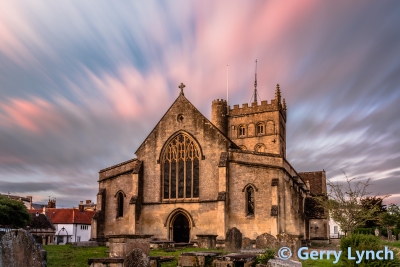
This article first appeared in the February 2021 edition of the parish magazine of St John with St Mary, Devizes.

This time of the year always provides a strange intermezzo in the Church’s liturgical cycle. The long forty days of Christmas seem out of sync with the secular world, perhaps starting to drag a little at the point when they are rescued by the season’s culminating exclamation point of Candlemas. Then we have the briefest of spells of Ordinary Time, its only appearance between December and June, before the privations of Lent begin. In the cycle of the natural seasons, the days are mercifully starting to stretch but are often viciously cold. It is a time of being neither one thing nor the other.

So it is with the pandemic. Having not always managed Covid-19 well, as I write the UK has made a bright start to the vaccination process. At this point, it has vaccinated the fourth highest proportion of its population in the world, behind only three Middle Eastern countries: Israel, the UAE, and Bahrain. I have no idea whether that will remain the case by the time you read this, but the local vaccine rollout in Wiltshire seems to have been extremely impressive, with many of you in the highest priority bands having told me that you have had one or even two jabs already. If the scientists are right, the appalling death rate should start to come down quite rapidly as people are being vaccinated, quite rightly, in order of risk to life, along with our frontline health and social care workers.

The rest of us will have to wait, and so the pandemic is far from over, and healthy people in their thirties and forties, who rarely die of Covid-19 but can end up desperately ill in hospital before fighting it off, are probably still many, many, months from vaccination. The UK is unlikely to reach the fabled herd immunity threshold until late summer or even autumn. We will still be living with the tedious restrictions of distancing and isolation for at least the first half of 2021, although probably in an increasingly attenuated form as time goes on. 
Read more

Touched by an Angel?

Article originally published in the October 2020 issue of the magazine of St John’s, Devizes.

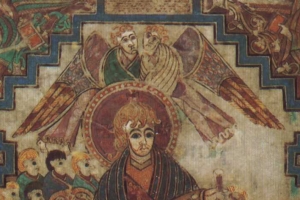
Angels guard Christ from above. Folio 220r from the Book of Kells (illuminated ca. 800).

I started my first day as a curate with a swim. It hadn’t been planned in advance. Waking early on a bright and cloudless midsummer morning, I decided to cycle along the canal to Bishops Cannings. Despite noting with concern how narrow the towpath became as it passed the Marina, I felt invigorated by the deep orange sunshine on my face and cool air in my lungs. Due to be commissioned as a Licensed Lay Worker that afternoon, a milestone on a very long journey to ordained ministry, I felt gloriously and intensely alive.

The next thing I knew, my bike had somehow made a ninety degree turn and toppled down the bank of the canal, plunging vertically like the Titanic, and catapulting me through the air like a rodeo rider being thrown. I felt mud in my hands as I scraped the bottom. I couldn’t manage to heave my old boneshaker back up the bank, so I trudged home on foot, soaked and stinking of carp. Worse still, my mobile phone died – it was my only internet connection as my broadband wasn’t connected yet, and I needed to be able to get on Zoom to be licensed. What an inauspicious start to a momentous day!

I said some lairy things to God as I showered. On that day of all days, couldn’t He have protected me from such ignominy? Yet I later began to wonder if He hadn’t arranged that strange swerve to my own benefit. Let me explain.

Read more

Cassettes, Communion, and Guardians of the Galaxy: Online Worship isn’t the Answer to Everything

Hooked on a feeling, I'm high on believing.

Young people these days are a rum lot! I’ve recently discovered that they’re getting into cassette tapes in a big way. I understood when people got back into vinyl again, that made perfect sense; analogue audio just sounds better than its digital counterpart, and there is something magical about the gentle crackle of a needle amplified by a good set of speakers. For the same reason, as a keen digital photographer, I understand why some of my snap-happy brethren are rediscovering film, even I have no desire to go to the trouble of setting up a darkroom myself.

But tapes? We lived off cassettes in the 1980s; we would make compilations by recording scratchy radio stations, sometimes Radio Luxembourg on Medium Wave, barely audible before sunset and full of fading after it in far-off Belfast. I remember how prone to breaking they were, always getting tangled up on the heads of the tape player, having to be straightened out and wound back on with a pencil, usually damaging the sound quality, even when they didn’t break altogether. Who in their right mind wants to use tapes?

Hooked on a feeling, I'm high on believing.
♪ Hooked on a feeling, I’m high on believing, but just not via Zoom ♫

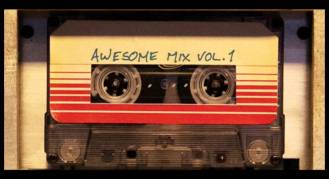
A clerical colleague, who has the advantage of having teenage children, explained to me that it all started with Guardians of the Galaxy. And I can see why. Rarely has anything been more aptly named than Awesome Mix Vol. 1. My coleague’s son had recently given his girlfriend a mixtape for her birthday – they use that ugly Americanism (ugh!) rather than ‘compilation’, apparently. A question formed in my mind: but surely he could just make her a playlist on Spotify? The answer was so obvious I never even uttered the words. A compilation would always be a physical token of their love – in a sense, a sacrament. An outward and visible sign of an inward and spiritual grace.

Maybe the young people aren’t so rum after all.

Read more

Beginning Public Ministry in a Liminal Time

St Anne's Cathedral, Belfast, reflected in a puddle on Donegall Street, 29 April 2020, © Gerry Lynch

On Saturday last, I should have made a deacon in Salisbury Cathedral, a place I love, the antepenultimate milestone in a journey to fulfil a call to priesthood in the church of God that I began, depending on how one counts it, either six, ten, or twenty-two years ago. I first went to see the Director of Ordinands for the Diocese of Connor and joined the Fellowship of Vocation there in September 1998. I often find it useful to date moments in my life by the pop songs on the radio at the time; the UK Number 1 single then was, with delicious irony, T-Spoon’s Sex on the Beach. That really was a long time ago now.

St John the Baptist Church, Devizes, 1 July 2020, © Gerry Lynch

Having been formally licensed as a lay worker in the parish of St John with St Mary, Devizes, by the Bishop of Salisbury via videoconference on Sunday I am, however, a curate if not a cleric, an officially licensed tender of God’s garden of souls at a time when churches have not held public worship for more than three months, when public health regulations have quite correctly banned visiting the army of lonely and isolated people in their own homes. Hundreds of others have had their ordinations similarly delayed, and are experiencing similar uncertainties. For me, a journey towards ordained ministry that often involved being told that I was an awkward person on the edge leads to a public ministry that begins in a virus-ravaged world that sits on the edge of… who knows what?

Wikipedia tells me that in anthropology, liminality (from the Latin word limen, meaning ‘a threshold’) is the quality of ambiguity or disorientation that occurs in the middle stage of a rite of passage, when participants no longer hold their pre-ritual status but have not yet begun the transition to the status they will hold when the rite is complete. Liminality is terribly fashionable in the Church at the moment; I have not always found it to be a pleasant or rewarding place to inhabit. It is, however, the state in which the whole world waits for a new order to emerge, groaning for better but often in trepidation of worse.

Liminal time exists in the cracks in our lives and the cracks in the life of the world that lie between the passing of the old and the coming of the new. Of course, there are other ways of looking at the world, ways that emphasize the continuities rather than the discontinuities. Emphasising the continuities that lie across all breaks in human experience seems to have been the most modish approach of late. Understandings that emphasize continuity bring richness and insight, for each of us always remains himself and all of us always remain human. Like all perspectives, however, these are limited. Just as a photographer will choose his perspective depending on the time of day and year, weather conditions, subject matter, and the like, sometimes we must consciously open ourselves to new viewpoints on ourselves and our world.

Read more

The Mosque of Bohoniki

The Mosque of Bohoniki, South West ElevationThe mosque at Bohoniki is one of the last places of worship of the Lipka Tatar community which still survives as it has since the late 14th Century in what are now the borderlands Poland, Lithuania, and Belarus.

The mosque was built at the turn of the 19th and the 20th centuries, probably in 1873 to replace an earlier mosque destroyed in a fire. During World War II, the mosque was destroyed by the Nazis, who organised a field hospital on the site. After 1945, the mosque underwent several renovations several times. In 2003, the roof was renovated; the tin roof was changed to shingle roof. In 2005 a general renovation was carried out.

It is a simple wooden building built on a rectangular plan with dimensions of 11.49 m × 8.03 m. It has been restored with the help of the Polish and Turkish governments and the European Union.

Bohoniki Mosque - Minbar

This is the minbar, a pulpit in any mosque, where the imam stands to deliver sermons, as well as delivering a wider range of readings and prayers.

Read more

The Bright Field

Late on a summer evening, as I took photos from the summit of Divis (478m above sea level) the highest of the Belfast Hills towards Lough Neagh, suddenly a shaft of sunlight broke through and illuminated the fields on top of Budore Hill, about 4 km away. Clearly visible on Lough Neagh is Ram’s Island, … Read more

Blogging Staggers Day One: Praying With the Lepers

The Bartlemas Chapel – a name that sounds like something out of Dickens, and the chapel felt like something from a disappeared world as well. A few hundred metres down a laneway from the noise and bustle of the Cowley Road lies a former leper chapel, feeling as if it were behind a portal to … Read more

Presbyterians, Salvation, and God

Cross-posted at Slugger O’Toole.

We cremated my friend James on the freakishly warm Friday before St Patrick’s Day, between the two bouts of even freakier snow. We did this after a celebration of the Supper of the Lord Jesus Christ who was his Saviour and the anchor of his life. The daffodils bobbed in the sunshine as we took his coffin through the traffic from the church in the shadow of St Paul’s Cathedral to the crematorium in East Finchley, his terminus ad quem before his voyage to heaven. As an Angus-born and Edinburgh-reared son of the Kirk, he came to mind after this week’s shenanigans at the Presbyterian General Assembly in Belfast.

James lived with MS for thirty years, something unimaginable when he was first diagnosed in the late 1980s. His continued life was a miracle, but it was also a struggle. I never knew the wordsmith, cyclist and cook that his older friends wrote about (movingly here and here). By the time I met him, sixteen years ago, his disease had robbed his legs of the power to walk, left his hands unable to handle a pen or a carving knife, and made his speech slurred and slow.

What he was never robbed of was his indomitable spirit, his twinkly smiling eyes, or his dry humour. Nor did MS prevent him throwing the legendary champagne-soaked parties in his Barbican flat, attended by a mix of characters who had little in common but their friendship with this delightful bon vivant: nonagenarian grand dames from Islington garden square mansions would rub shoulders with middle-aged actors struggling long past any hope of stardom and recently arrived twenty-somethings from Doncaster or Brazil, penniless but sure they’d make their fortune in London.

I never heard him complain about his lot: at most he would sigh wistfully that people should avoid getting MS if they could, not that they can. In that I saw a shadow of the boy, many decades before, whose father died when he was only nine, who then had to grow into a man far too soon and just get on with it.

Read more

God in the West: the New Atheism and Its Discontents

My Address to the Bournemouth William Temple Association, 5th December 2016     

Thank you for inviting me to speak at a meeting of the William Temple Association. Temple has long been a man I have admired. Indeed, he is a man whose prayers I often ask for, particularly when I confront some problem of presenting the Christian faith publicly. His Christianity and the Social Order, about to have its 75th anniversary, posed questions once seemingly answered by the welfare state, but has become extraordinarily fresh and relevant again over the past generation as a result of the changes in work and welfare.

That’s a reminder, at the start of my talk, that history does not move in straight lines nor proceed to any inevitable destinations.

Just ten years ago New Atheism stood at the zenith of its influence. A lot has happened since, and indeed the talk I will give tonight is considerably different than that I might have written this time last year.

It is often said that there is no period in history more difficult to understand than the very recent past. With that in mind, let us strain our imaginations to take ourselves back to the distant days of the mid-2000s, when the world was a very different place.

The God Delusion

Few books have been launched at such a perfectly apposite moment as was Richard Dawkins’ The God Delusion in 2006.

Two scenes dominated the public conception of God in the 2000s: the collapsing twin towers of the World Trade Centre after Al-Qa’eda attacked them; and Bush and Blair praying together before launching a badly planned war against the wrong target. By 2006, that war had gone awry, and Iraq was in the midst of sectarian bloodletting that was killing tens of thousands.

Read more

Sermon Preached at St James’ Church Alderholt on Sunday 3 May 2015 (Easter 5)

Readings – John 15:1-8; Acts 8:26-40.

Pruning doesn’t seem like a very pleasant process for whomever is being pruned. It carries connotations of being taken down to size, perhaps of having one’s wings clipped. Christ says in today’s Gospel that abiding in Him, and bearing fruit for the Father, means that at times we’ll have to undergo the process of being cut back. It’s right here in one of the most loved passages of Scripture.

Currently in the Church, it can also be an idea that is pushed to one side, replaced by a forced confidence that “good” vicars and “faithful” parishioners will have “growing” churches that run a whole range of social projects which never go wrong. They not only feed the hungry and clothe the naked, but get them signing up to adult baptism courses as well.

We shove out of the way the idea that we are a vine that sometimes needs pruned, perhaps because it brings into the open a difficult reality: that following Christ is often painful. It is emotionally painful – for trying to love our enemies or forgive those who have wronged us always hurts, and is so difficult that it often ends in the second hurt of failure. Truly following Christ is often financially painful, or painful in the way that it shatters our ego and self-delusion, and it can be physically painful. As we meet here in peace to celebrate the feast, somewhere in the world, someone is being put to death for their faith in Christ.

Read more