Ecclesiastical History Rocks: 1960s Pentecostalism and Nigerian Anglicans

I spotted this interesting article and follow up letter in the Church Times when exploring its coverage of the 1968 Lambeth Conference. The article notes that the number of Anglicans in “the western part of Nigeria” was declining in favour of Pentecostals. Nigerian Anglicanism had gone through phases of shedding both sects and adherents towards Independency since at least the 1920s. But this was possibly the first report in the press of a new phenomenon which would have significant impacts on Anglicanism across the world.

There was a major Third Wave of new Pentecostal Churches emergent in Africa from the mid-1970s; in Nigeria, the continent’s most populous country, Jesse Zink locates this surge as beginning a little earlier, with an evangelical revival during the civil war of 1967-70. It would be incubated and then enormously multiplied in student groups meeting in the margins of the expanding Nigerian university system of the 1970s. Matthews Ojo understands these African movements as originating in the 1960s Pentecostalist revivals in North America and Britain; but Nigerian Independency long had links with the Anglo-Saxon north, and the influence wasn’t always unidirectional either.

Also of note here is some indirect evidence of Muslim-to-Christian conversion in Nigeria, which is far from unknown but somehow seems to escape everyone’s notice.

Anglicans facing competition from the burgeoning Pentecostal scene in Africa was one of a complex cluster of reasons why the issue of homosexuality became so toxic within world Anglicanism from the mid-1990s onwards.


From the Church Times, 9 August 1968

Fewer Anglicans in W. Nigeria

The number of Anglicans in the western part of Nigeria, West Africa, is declining, to the benefit of other denominations.

This is revealed in the report published giving the results of a research project into the “Role of Religion in Yoruba Society,” conducted by the Institute of African Studies of the University of Ife, Nigeria.

Read more

A Clergyman’s Diary: A Wiltshire Transfiguration

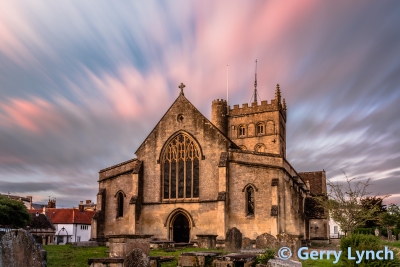
The Wansdyke near Baltic Farm, 10 October 2021. © Gerry Lynch.

Nobody is quite sure when the Wansdyke was built, but the most commonly advanced theory is that it was built by the Romano-British after they were abandoned by the Imperial power to defend their stronghold in what is now Gloucestershire, Somerset, and northern Wiltshire, in the face of Saxon expansion spreading northwards from the English Channel. This would date it to around the end of the 5th Century. Regardless of exactly at which point in the transition from Roman Britain to Anglo-Saxon England it was built, it seems that the much later Anglo-Saxons had lost any idea about its purpose when, despite several centuries of Christianity, they named it Woden’s Dyke, after Odin, the king of the Norse gods, around the 9th Century.

The eastern section, in Wiltshire, has been much less disturbed over the centuries by agriculture and building than those further west, and this section, north of the village of Bishops Cannings, is particularly dramatic when lit by low late afternoon sun from the south in autumn and winter.

On a rainy day in midwinter, with the rain belting down for weeks, it can be a little disappointing, a flat bank of mud surrounded by dirty puddles. Yet the sun can transfigure it into mysterious magnificence in all seasons, always easy on the ankles, even for someone with my short legs and my fat belly. The ground remains springy and fast when in a hot dry spell when the surrounding terrain is drained and hard; and also when it is surrounded by wet muck.

Looking east from Morgan’s Hill towards Tan Hill, the Wansdyke just visible in the bottom of the valley, 10 October 2021. © Gerry Lynch.

It is as much as 4 metres high in places. It is followed by a long-distance footpath for all of this stretch. The view in the distance reaches to Tan Hill, at 294 metres above sea level the joint highest point in Wiltshire.

This is deep England. The countryside is not especially dramatic but rolls with a heart-healing, gentle, beauty. I walk here regularly, with various circuits of 12-18 miles (19-30 km) starting and finishing from my home in Devizes taking in stretches of it. When the light is like this, it makes my soul sing and fills me with gratitude for being alive.

Read more

Stumbling Blocks and Salt: Sermon Preached at St John’s, Devizes, Sunday 26 September 2021 (The Seventeenth Sunday after Trinity)

Readings – James 5.13–20; Mark 9.38–50

“Have salt in yourselves and be at peace with one another.”

There is a striking and rather horrifying picture about our Christian past that occasionally does the rounds on the Internet. It is a photograph of two strangely shaped tombstones, located either side of a high wall. The tombstones are even higher, and from the top of each a hand stretches out to touch the other.

Grave in Roermond © memolands.com gallery
The touching hands between the tombs of Colonel van Gorcum and Lady van Aefferden in the Dutch city of Roermond. © memolands.com gallery and used under Creative Commons Licence 2.0.

The graves are located in the Dutch city of Roermond, and belong to Colonel van Gorcum, a Protestant cavalry officer, and his wife Lady van Aefferden, a Catholic minor noble. They were married in 1842, and after thirty-eight years of presumably happy marriage, the Colonel died and was buried in the Protestant part of the local cemetery, where the dead were divided from one another denominationally by a high wall. His wife therefore refused to be buried in the grand family plot, in the Catholic part of the cemetery, insisting that she would be buried on her own immediately across the wall from him. That is where she was laid to rest eight years later, in 1888, and their graves remain to this day a reminder of the capacity of love to triumph over bigotry.

Love conquers all – even tribalism and stupidity.

Christ presents a dire warning in today’s Gospel about those who place stumbling blocks in the way of faith. The horrid things done due to disagreements between Catholics and Protestants are a huge stumbling block to Christian faith for many, a major contributor to the decline of Christianity in this country and across Europe. Today we pay a heavy price for the sins for the past.

Of course, we’re not like that these days. We’re much more enlightened. Devizes is now absolutely normal in terms of today’s Christianity, certainly in this country, in that the social action of the Church, our commitment to supporting the needy, or the homeless, or people with addiction problems, is carried out absolutely ecumenically. Not only do Conservative Roman Catholics work hand in hand with staunchly Evangelical Protestants, but both work with people at the most theologically liberal end of the Quakers or Anglicans or Methodists, who might see themselves as following a Christian path towards a universal truth rather than understanding Christianity as even presenting a distinct truth at all. All of us seem to have taken on board Jesus’ command to the apostles today about the stranger healing in His name: “Do not stop him; for … whoever is not against us is for us.”

Read more

Treasure in Clay Jars: Sermon Preached at St John’s, Devizes, Sunday 25 July 2021 (St James’ Day)

Readings – 2 Corinthians 4:7–15; Matthew 20:20–28

“…we have this treasure in clay jars, so that it may be made clear that this extraordinary power belongs to God and does not come from us.”

In the name of the Father, and of the Son, and of the Holy Spirit. Amen.

You are all a terrible bunch of Christians! I mean really, really, deeply flawed followers of Jesus Christ; and in the main you have very mixed motives for coming to church this morning and you should repent – repent – of your sins.

The Scallop Shell symbol of St James. © Chris Light and used under Creative Commons 4.0.

I’m sorry for that start to the sermon, but I’ve always wanted to rain a bit of fire and brimstone from the pulpit and this morning’s readings gave me the perfect opportunity to do so. It was worth it to see the looks on your faces.

Of course, you’re all deeply flawed Christians; I know this partly because I am myself a deeply flawed Christian and a deeply flawed priest and, like you, I need to repent of my sins, on a regular basis. That’s why we call our sins to mind and pray together for God to forgive us them every Sunday in the first part of the Eucharist.

I know how flawed we all are for another reason, too. Over the course of my life, I’ve been privileged to get to know well a few people who had a deserved reputation for being saints; and the better I got to know them, the more I saw that they all had real character flaws and could, just every once in a while, be quite horrid or quite hopeless.

I wanted to put that prelude into your minds before we turned to today’s Gospel reading, which is both hysterically funny, toe-curlingly awful, and very true-t0-life. When I play this scene out in my mind as if it were in a film, the bossy mother is always played by Maureen Lipman. What makes the encounter even more cringe-making is that this episode happened very late in Jesus’ final journey to Jerusalem, immediately after he told the twelve apostles that he was soon about to be handed over to death.

Read more

Get Thee Behind Me Satan – Sermon on 30th August 2020 (Twelfth Sunday After Trinity)

Preached at St John’s, Devizes

Readings – Romans 12:9-21, Matthew 16:21-28

But he turned and said to Peter, ‘Get behind me, Satan! You are a stumbling-block to me; for you are setting your mind not on divine things but on human things.’

May I speak in the name of God who is Father, Son, and Holy Spirit.

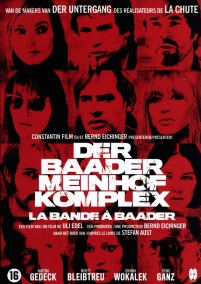
Der Baader Meinhof ComplexLast week I watched two films that depicted how people convinced they are fighting injustice can descend into barbarism precisely because of their moral certainty. Both looked back on events in the late 1960s and 1970s. The first was Sam Green and Bill Siegel’s insightful documentary on The Weather Underground, the second was Bernd Eichlinger’s emotionally overwhelming dramatization of the story of The Baader Meinhof Complex. On both sides of the Atlantic, young people outraged by the nightly television scenes from Vietnam, with America killing civilians in great numbers, themselves resorted to bombing and killing. None of this produced any of the justice and liberation they sought. In the end, both organisations found the world moved on rapidly and left those in them behind: on the run, or marooned on the edge of society, or imprisoned. The illusion that if only we ourselves ran the world, then everything would be wonderful, is a dangerous one.
First century Palestine was a place of political and religious ferment and frequent outbreaks of religiously-inflected political violence. Utopianism was as prevalent there as it was in the Chicago or West Berlin of 1968. To understand how Jesus calling Peter “Satan” fits into that world, we need to go back to the episode in Matthew’s Gospel that immediately precedes Jesus beginning his public ministry. It’s the bit where Jesus is “led up by the Spirit into the wilderness to be tempted by the devil”. The last of the three temptations Satan puts before Jesus is to offer him all the kingdoms of the world in return for His worship. Jesus refuses and the Devil flees. Jesus’ goal is not power or conquest, nor even to initiate an enlightened political order, but the service of His heavenly Father.

Peter stumbles into being a bit of a devil without realising it, for he places exactly the same temptation before Jesus, to renounce His mission from the Father and seize earthly power. We know that power comes into it for the passage immediately preceding this, the Gospel at last Sunday’s service, is the one where Peter is the first person to correctly identify Jesus as the Messiah. The Messiah was expected to be an extraordinary God-sent leader who would restore The Temple to holiness from the way it had been spiritually despoiled by the Herods, and deliver the Jewish people from Roman Occupation. It was thought the Messiah was going to, if you will, Make Jerusalem Great Again.

Read more

Cassettes, Communion, and Guardians of the Galaxy: Online Worship isn’t the Answer to Everything

Hooked on a feeling, I'm high on believing.

Young people these days are a rum lot! I’ve recently discovered that they’re getting into cassette tapes in a big way. I understood when people got back into vinyl again, that made perfect sense; analogue audio just sounds better than its digital counterpart, and there is something magical about the gentle crackle of a needle amplified by a good set of speakers. For the same reason, as a keen digital photographer, I understand why some of my snap-happy brethren are rediscovering film, even I have no desire to go to the trouble of setting up a darkroom myself.

But tapes? We lived off cassettes in the 1980s; we would make compilations by recording scratchy radio stations, sometimes Radio Luxembourg on Medium Wave, barely audible before sunset and full of fading after it in far-off Belfast. I remember how prone to breaking they were, always getting tangled up on the heads of the tape player, having to be straightened out and wound back on with a pencil, usually damaging the sound quality, even when they didn’t break altogether. Who in their right mind wants to use tapes?

Hooked on a feeling, I'm high on believing.
♪ Hooked on a feeling, I’m high on believing, but just not via Zoom ♫

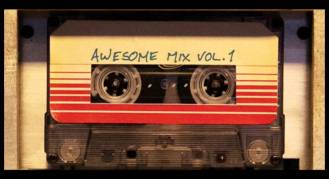
A clerical colleague, who has the advantage of having teenage children, explained to me that it all started with Guardians of the Galaxy. And I can see why. Rarely has anything been more aptly named than Awesome Mix Vol. 1. My coleague’s son had recently given his girlfriend a mixtape for her birthday – they use that ugly Americanism (ugh!) rather than ‘compilation’, apparently. A question formed in my mind: but surely he could just make her a playlist on Spotify? The answer was so obvious I never even uttered the words. A compilation would always be a physical token of their love – in a sense, a sacrament. An outward and visible sign of an inward and spiritual grace.

Maybe the young people aren’t so rum after all.

Read more

Twilight View of the Kyiv Pechersk-Lavra Monastery Complex

The Kyiv Pechersk Lavra monastery complex shot from the Paton Bridge in a golden evening twilight, 9 August 2018

The Kyiv Pechersk Lavra monastery complex shot from the Paton Bridge in a golden evening twilight, 9 August 2018
Kyiv Pechersk-Lavra Complex shot from the Paton Bridge, 9 August 2017, © Gerry Lynch.

Viewed here from the Paton Bridge is the enormous and ancient Pechersk Lavra monastery complex in the Ukrainian capital, Kyiv. This is the crucible in which East Slavic Orthodoxy was formed and is arguably the third most important religious community in the history Christendom behind only Monte Cassino and Mount Athos.

Kyiv Pechersk Lavra (Ukrainian: Києво-Печерська лавра; Russian: Киeво-Печерская лавра), also known as the Kiev Monastery of the Caves, was founded as a cave monastery in 1051, since which time it has usually been a preeminent centre of Orthodox Christianity in Eastern Europe. Together with the Saint Sophia Cathedral a few kilometres away, it is inscribed as a UNESCO World Heritage Site. Among others, the remains of Imperial Prime Minister Peter Stolypin, assassinated at the Opera in the city centre, lie at rest here.

While remaining a major cultural and tourist attraction, the monastery has been active again as a religious community since the 1980s, having been shut down by the Soviet authorities in 1928 and turned into a museum-park. Nowadays, there are now over 100 monks in residence.

Read more

Beginning Public Ministry in a Liminal Time

St Anne's Cathedral, Belfast, reflected in a puddle on Donegall Street, 29 April 2020, © Gerry Lynch

On Saturday last, I should have made a deacon in Salisbury Cathedral, a place I love, the antepenultimate milestone in a journey to fulfil a call to priesthood in the church of God that I began, depending on how one counts it, either six, ten, or twenty-two years ago. I first went to see the Director of Ordinands for the Diocese of Connor and joined the Fellowship of Vocation there in September 1998. I often find it useful to date moments in my life by the pop songs on the radio at the time; the UK Number 1 single then was, with delicious irony, T-Spoon’s Sex on the Beach. That really was a long time ago now.

St John the Baptist Church, Devizes, 1 July 2020, © Gerry Lynch

Having been formally licensed as a lay worker in the parish of St John with St Mary, Devizes, by the Bishop of Salisbury via videoconference on Sunday I am, however, a curate if not a cleric, an officially licensed tender of God’s garden of souls at a time when churches have not held public worship for more than three months, when public health regulations have quite correctly banned visiting the army of lonely and isolated people in their own homes. Hundreds of others have had their ordinations similarly delayed, and are experiencing similar uncertainties. For me, a journey towards ordained ministry that often involved being told that I was an awkward person on the edge leads to a public ministry that begins in a virus-ravaged world that sits on the edge of… who knows what?

Wikipedia tells me that in anthropology, liminality (from the Latin word limen, meaning ‘a threshold’) is the quality of ambiguity or disorientation that occurs in the middle stage of a rite of passage, when participants no longer hold their pre-ritual status but have not yet begun the transition to the status they will hold when the rite is complete. Liminality is terribly fashionable in the Church at the moment; I have not always found it to be a pleasant or rewarding place to inhabit. It is, however, the state in which the whole world waits for a new order to emerge, groaning for better but often in trepidation of worse.

Liminal time exists in the cracks in our lives and the cracks in the life of the world that lie between the passing of the old and the coming of the new. Of course, there are other ways of looking at the world, ways that emphasize the continuities rather than the discontinuities. Emphasising the continuities that lie across all breaks in human experience seems to have been the most modish approach of late. Understandings that emphasize continuity bring richness and insight, for each of us always remains himself and all of us always remain human. Like all perspectives, however, these are limited. Just as a photographer will choose his perspective depending on the time of day and year, weather conditions, subject matter, and the like, sometimes we must consciously open ourselves to new viewpoints on ourselves and our world.

Read more

Let’s Worship Outside

The News Letter later asked me to turn this blog into a newspaper article which you can read here.

Worshipping outside in happier times in South Dorset. Photo © Diocese of Salisbury/Gerry Lynch.

The dreadful news that more than a hundred people were infected with coronavirus at a single, legally permitted, church service in Germany earlier this month should make it transparent that we are unlikely any time soon to be returning to church worship as we hitherto understood it.

In this time of fear and death, I feel deeply deprived of connection with God. I have not received communion in more than two months; I have no idea when I might do so again. I cannot even spend time in a church praying in the presence of the reserved sacrament. I cannot kneel in any of my familiar haunts for prayer, nor can I discover new ones. A computer screen in my parents’ box room has proven a distracting and sensory-deprived locus for prayer. In my case, as a very definite extrovert, prayer is very much an externally contextualised physical process as well as an interior mental and psychological one. Prayer involves the placing of the earthly into the loving care of the heavenly, and is thus intimately bound up with place, physicality, community and body.

Worship via videoconference involves deprivation of the senses. It only involves sight and hearing; never smell, taste, or touch. The aural and visual, already overprivileged in technological societies, are mediated through a screen and a speaker, usually with poor audio and video quality. That is not to dismiss its value – certainly some people seem to have reconnected or newly connected with Christian worship via online means during the pandemic. But it can never involve the smell of incense, the taste of sacramental wine, the heat of a ray of sunshine streaming through a window, a hug, or noticing that a much loved elderly parishioner’s gait has suddenly become laboured.

Are there other ways to worship safely in the era of coronavirus?

Read more