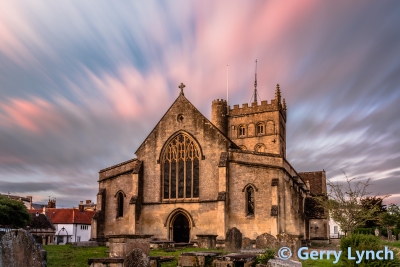
“Waiting”: Sermon Preached at St John’s Devizes on Sunday 6 December 2020 (the 2nd Sunday of Advent)

Readings – 2 Peter 3:8-15a, Mark 1:1-10

The Lord is not slow about his promise, as some think of slowness, but is patient with you

Madonna and Child in an Advent-tide Old St Paul’s, Edinbugh. 14 December 2018. © Gerry Lynch

At the start of the week, I had to order a few items from a major online retailer. I’ll not give it any free advertising by mentioning the name. Suffice to say it’s a firm called after a major river in South America known for, how shall I put it, being very efficient in tax matters. Among the items I procured is the new external mic for the parish’s tablet to improve the quality of our streaming, which I hope those of you watching at home are enjoying, as well as some cabling to improve the internet connection around the curate’s house.

I wanted the cabling to arrive before the Advent course started on Tuesday evening, and I was a bit annoyed that I couldn’t seem to find any delivery options earlier than Wednesday, even though I was willing to spend a few quid extra to do so. It’s absolutely ridiculous, after all, that in the middle of a global pandemic, I can’t have all my consumer desires satisfied within 24 hours.

Or, maybe not.

We have become a culture that has had our capacity to wait eroded by consumer industries that know we’ll spend more with them if they can satisfy our needs instantly. I’m not enough of a hypocrite to stand up here in the pulpit and pretend to you that I don’t love it, either. It is, however, only part of the story. For all of us life involves much waiting, not least when we are very young or very old, and for the most vulnerable among us life is largely a matter of waiting. We usually find ourselves waiting because we are in a situation where we are either dependent on others, or else dependent on circumstance and therefore in a situation where only God can help. Right at this moment, the whole world is in waiting in hopeful agony for the vaccines that seem set to deliver us from the nightmare that has been the year of Our Lord twenty-twenty.

To be human, in this world of matter, space, and time, is to wait. One of the gifts of this season of Advent is that it hallows and allows us to bring before God the waiting that punctuates our lives. After all, the Church has been waiting since the day of Ascension, waiting for the return of the Lord.

Our epistle this morning is from the Second Letter of Peter, which is very much a product of waiting – indeed a text which was written at a time when the waiting had become almost too much to bear. Despite its name, it was almost certainly not written by St Peter; as early as the 3rd Century, Origen regarded its true authorship as a matter of doubt, as did Eusebius who wrote some decades letter. Now, as I am not a scriptural literalist, I don’t think doubts about the letter’s authorship necessarily reduce its value to us. Firstly, I take seriously that all Scripture is God-breathed and written for our instruction, and that the Church was guided by the Holy Spirit in the process by which it decided conclusively on the canon of Scripture. But that does not mean reading the Bible as if it were instructions for a piece of flat-pack furniture. Scripture teaches us as much as anything else through the blind spots and misunderstandings of the people who wrote it, for we are human beings just like them, prone to the same mistakes, and especially prone to co-opting God for our own agendas.

Read more

“Like A Thief in the Night”: Sermon Preached for St John’s Devizes Digital Worship on Sunday 15 November 2020 (the 2nd Sunday Before Advent) by Gerry Lynch

Readings – 1 Thessalonians 5:1-11, Matthew 25:14-30

For you yourselves know very well that the day of the Lord will come like a thief in the night=

© Used under fair use -The image is used for identification in the context of critical commentary of the work.

Before I sat down to plan my sermon for this morning, I thought I would want to say something optimistic and cheerful at a time when we were locked down for a second time, and locked out of our church for a second time. Then I looked at the readings for the day and found I had to preach on texts about the Second Coming, and about a worthless slave being thrown into the outer darkness, where there is weeping, and gnashing of teeth. Oh dear, I thought to myself. 

So I had a wee pray about it and I realised that I didn’t want to be cheerful and optimistic at all. I wanted to be hopeful in this new lockdown, which is something quite different. Hope is not optimism; it does not depend on taking a positive spin on the facts; nor is hope good cheer, for hope is the most powerful tool we have for carrying us through the times when we are at our bleakest. Real hope doesn’t come from talking about posies and fluffy bunny rabbits. One of the things that most often renews our hope is when we face the most difficult problems honestly and well. Real hope must be capable of enduring the worst that the world and humankind can throw at it, for the worst will inevitably be thrown at it at some point. Hope outlasts optimism and good cheer, global depressions and planetary pandemics; along with faith and love it will endure unto eternity. Hope will survive the end of the world. 

We associate the Second Coming with the end of the world. We hear and read a lot about the end of the world a lot at the moment, or at least the end of the world we knew on New Year’s Day 2020. At moments we must all have lapsed into depression that this new abnormal will never end, that we will never again share the peace in church, that we’ll never again have a large group of friends round for a drink, that we’ll never lose the terror that we’ll wake up one morning not being able to smell the coffee, with a high temperature and a dry persistent cough. We lock down full of fear as the November days grow rapidly shorter and darker, and fear that the world has indeed ended, and we’re in a sort of hell. Then we learn the news about the vaccine trial and we wonder if we dare hope that there will again come a time when we sing hymns together and find ourselves chatting to a stranger in a pub who becomes a new friend and hug our loved ones without fear.

This morning’s reading from St Paul’s First Letter to the Thessalonians, however, does not write about the end of the world, but the coming of the day of the Lord. This passage is often associated in the popular Christian imagination with the end times thanks to some very shaky theology from as recently as the 19th Century. Later there was a 1970s American film called A Thief in The Night, a second rate B-movie with a bit of Jesus thrown in, which was very influential in fundamentalist Protestant circles. In it, a lady wakes up to find that her husband and millions of other real Christians have been taken to heaven, leaving her and other fake Christians behind with the unbelievers under the jackboot of an oppressive world government run by the UN which wants to force her to have the Mark of the Beast on her forehead and damn her for all eternity! All of this got a high budget, Internet-era, makeover with the Left Behind series of books and films which were, if anything, even worse: a living reminder that while good taste can’t be bought, bad taste can.

Read more

“Rebuild my Church”: Sermon Preached at St John’s Devizes on Sunday 4 October 2020 (the 17th Sunday After Trinity) by Gerry Lynch

Readings – Philippians 3:4b-14, Matthew 21:33-46

I press on towards the goal for the prize of the heavenly call of God in Christ Jesus.

May I speak in the name of God, who is Father, Son, and Holy Spirit. Amen.

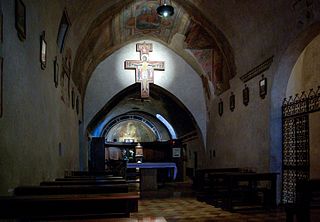
The Church of St Damian, Assisi. Photo credit Berthold Werner.

It is a time of troubles. Plagues, accelerated by the rapid growth in intercontinental trade, spread across the world with dizzying speed. The economic gap between rich and poor is yawning, and many of the young have given up on the ability of the existing order to usher in a just society and are seeking a completely fresh start, consigning the old ways to the dustbin of history with as much aggression as needed. The West and the Islamic world are at loggerheads, with Western powers embroiled in multiple bloody conflicts in the Middle East, which started so long ago that nobody much remembers how or why they started. I am not, of course, talking about the present day but about the first years of the 13th Century, a time when the older townsfolk of Devizes will still have remembered the Church of St John the Baptist being built. There is truly nothing new under the Sun. 

In that tumultuous time, a rich young party animal called Francis, whose feast we commemorate today, was having a life crisis. Set to inherit a family fortune, he had spent his youth hanging out with the troubadours, the wandering bands of minstrels who travelled around during the High Middle Ages making music, singing with them in his beautiful voice and partying with them. An attempt to settle down a little by turning his hand to soldiering had resulted in Francis spending a year as a prisoner of war. After that, his former life of drinking and dancing no longer had any appeal. He wandered the countryside of his native central Italy, half-starved and dressed in rags, begging God to show him a more meaningful way of life. One day, Francis stumbled across a church dedicated to Saint Damian, no older than the then relatively new St John’s, but already falling into disrepair. Amid the crumbling stones, he had a vision of an Icon of Christ Crucified that hung in the church speaking to him. “Rebuild my Church”, it said.

He took up the task with enthusiasm, starting with the physical rebuilding of that Church of St Damian, and going on to work for a spiritual renovation of the whole Christian world. Some of his schemes were perhaps a little overambitious: he once travelled to Cairo, reckoning that if he could only convert the Sultan to Christianity then he could end the wars connected to the Crusades. You will not be surprised to learn that he wasn’t successful.

But that isn’t the point – the point is that he gave things a go. Following Christ isn’t about following a series of step-by-step orders like the instructions for setting up a new mobile phone. As we know, that doesn’t guarantee success anyway. Richard Holloway once described the Christian journey as being less like marching to a heavenly military band and more like joining God in a jazz jam session, listening to the music God is playing and seeking to chime our own personal riffs with His. Christian obedience is about co-operating with God and recognising our own immense value to Him. God is not a cosmic sergeant-major waiting to scream at us angrily if we miss a beat. If God doesn’t pick up on the tune we’re playing, we can always get back into the beat in the next bar. New life can begin at any time. Following Christ is about trying to sense where the Holy Spirit is leading, trying different ideas, accepting that God will not pick up on some of them, because it’s only in a world of chance and risk and serendipity that other little tunes we toot can blossom into symphonies that are more magnificent than anything we could have imagined.

Read more

Touched by an Angel?

Article originally published in the October 2020 issue of the magazine of St John’s, Devizes.

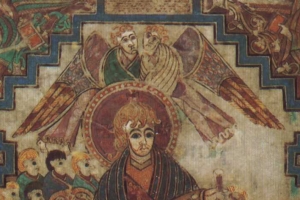
Angels guard Christ from above. Folio 220r from the Book of Kells (illuminated ca. 800).

I started my first day as a curate with a swim. It hadn’t been planned in advance. Waking early on a bright and cloudless midsummer morning, I decided to cycle along the canal to Bishops Cannings. Despite noting with concern how narrow the towpath became as it passed the Marina, I felt invigorated by the deep orange sunshine on my face and cool air in my lungs. Due to be commissioned as a Licensed Lay Worker that afternoon, a milestone on a very long journey to ordained ministry, I felt gloriously and intensely alive.

The next thing I knew, my bike had somehow made a ninety degree turn and toppled down the bank of the canal, plunging vertically like the Titanic, and catapulting me through the air like a rodeo rider being thrown. I felt mud in my hands as I scraped the bottom. I couldn’t manage to heave my old boneshaker back up the bank, so I trudged home on foot, soaked and stinking of carp. Worse still, my mobile phone died – it was my only internet connection as my broadband wasn’t connected yet, and I needed to be able to get on Zoom to be licensed. What an inauspicious start to a momentous day!

I said some lairy things to God as I showered. On that day of all days, couldn’t He have protected me from such ignominy? Yet I later began to wonder if He hadn’t arranged that strange swerve to my own benefit. Let me explain.

Read more

Cassettes, Communion, and Guardians of the Galaxy: Online Worship isn’t the Answer to Everything

Hooked on a feeling, I'm high on believing.

Young people these days are a rum lot! I’ve recently discovered that they’re getting into cassette tapes in a big way. I understood when people got back into vinyl again, that made perfect sense; analogue audio just sounds better than its digital counterpart, and there is something magical about the gentle crackle of a needle amplified by a good set of speakers. For the same reason, as a keen digital photographer, I understand why some of my snap-happy brethren are rediscovering film, even I have no desire to go to the trouble of setting up a darkroom myself.

But tapes? We lived off cassettes in the 1980s; we would make compilations by recording scratchy radio stations, sometimes Radio Luxembourg on Medium Wave, barely audible before sunset and full of fading after it in far-off Belfast. I remember how prone to breaking they were, always getting tangled up on the heads of the tape player, having to be straightened out and wound back on with a pencil, usually damaging the sound quality, even when they didn’t break altogether. Who in their right mind wants to use tapes?

Hooked on a feeling, I'm high on believing.
♪ Hooked on a feeling, I’m high on believing, but just not via Zoom ♫

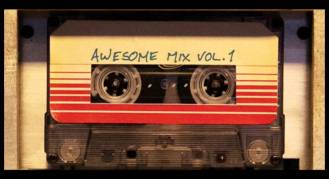
A clerical colleague, who has the advantage of having teenage children, explained to me that it all started with Guardians of the Galaxy. And I can see why. Rarely has anything been more aptly named than Awesome Mix Vol. 1. My coleague’s son had recently given his girlfriend a mixtape for her birthday – they use that ugly Americanism (ugh!) rather than ‘compilation’, apparently. A question formed in my mind: but surely he could just make her a playlist on Spotify? The answer was so obvious I never even uttered the words. A compilation would always be a physical token of their love – in a sense, a sacrament. An outward and visible sign of an inward and spiritual grace.

Maybe the young people aren’t so rum after all.

Read more

Sermon Preached at St John’s Devizes on Sunday 19 July 2020, the 6th Sunday After Trinity

Readings – Romans 8:12–25, Matthew 13:24–30, 36–43

“…in gathering the weeds you would uproot the wheat along with them. Let both of them grow together until the harvest.”

May I speak in the name of God, who is Father, Son, and Holy Spirit. Amen.

It is good to be with you as your curate for the first time this morning. And I hope, for all of you, it is good to be back in Church.

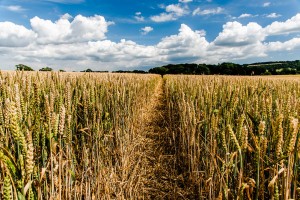
Wiltshire Wheat Fields in mid-July near West Dean © Gerry Lynch
Wiltshire wheat fields in mid-July, © Gerry Lynch, 22 July 2016.

The parable of the wheat and the weeds centres on the idea that God allows both goodness and wickedness to flourish here on earth. It is particularly appropriate at this time, for we’ve seen the best and the worst of human nature over the four months since people last gathered together to pray here in St John’s. We’ve seen medical personnel and care home staff put their lives on the line, and in some cases give their lives, for the common good. We’ve seen the natural world revive as the pressure we human beings put on it eases off just a little, with cleaner air and water, less noise, and wildlife returning to our towns and cities. We’ve seen a great revival of community spirit, with neighbours looking out for the vulnerable, and we’ve also seen a great global effort of medical science taking place across boundaries of nation, religion, race, and system of government.

We’ve also learned a lot about who is genuinely indispensable to society: when most of us were told to stay at home if we possibly could, those who still had to go into work were often those least financially rewarded for their labours. Supermarket workers, staff in meat plants, fruit and vegetable pickers, truck drivers, security guards, home helps, taxi drivers, as well as those working in the NHS and care homes – these were the people who had to go to work right through the worst of the pandemic, and many of them earn wages that make it impossible for them to imagine providing a secure home for their families. These were the people who died in disproportionate numbers.

Read more

Twilight View of the Kyiv Pechersk-Lavra Monastery Complex

The Kyiv Pechersk Lavra monastery complex shot from the Paton Bridge in a golden evening twilight, 9 August 2018

The Kyiv Pechersk Lavra monastery complex shot from the Paton Bridge in a golden evening twilight, 9 August 2018
Kyiv Pechersk-Lavra Complex shot from the Paton Bridge, 9 August 2017, © Gerry Lynch.

Viewed here from the Paton Bridge is the enormous and ancient Pechersk Lavra monastery complex in the Ukrainian capital, Kyiv. This is the crucible in which East Slavic Orthodoxy was formed and is arguably the third most important religious community in the history Christendom behind only Monte Cassino and Mount Athos.

Kyiv Pechersk Lavra (Ukrainian: Києво-Печерська лавра; Russian: Киeво-Печерская лавра), also known as the Kiev Monastery of the Caves, was founded as a cave monastery in 1051, since which time it has usually been a preeminent centre of Orthodox Christianity in Eastern Europe. Together with the Saint Sophia Cathedral a few kilometres away, it is inscribed as a UNESCO World Heritage Site. Among others, the remains of Imperial Prime Minister Peter Stolypin, assassinated at the Opera in the city centre, lie at rest here.

While remaining a major cultural and tourist attraction, the monastery has been active again as a religious community since the 1980s, having been shut down by the Soviet authorities in 1928 and turned into a museum-park. Nowadays, there are now over 100 monks in residence.

Read more

Beginning Public Ministry in a Liminal Time

St Anne's Cathedral, Belfast, reflected in a puddle on Donegall Street, 29 April 2020, © Gerry Lynch

On Saturday last, I should have made a deacon in Salisbury Cathedral, a place I love, the antepenultimate milestone in a journey to fulfil a call to priesthood in the church of God that I began, depending on how one counts it, either six, ten, or twenty-two years ago. I first went to see the Director of Ordinands for the Diocese of Connor and joined the Fellowship of Vocation there in September 1998. I often find it useful to date moments in my life by the pop songs on the radio at the time; the UK Number 1 single then was, with delicious irony, T-Spoon’s Sex on the Beach. That really was a long time ago now.

St John the Baptist Church, Devizes, 1 July 2020, © Gerry Lynch

Having been formally licensed as a lay worker in the parish of St John with St Mary, Devizes, by the Bishop of Salisbury via videoconference on Sunday I am, however, a curate if not a cleric, an officially licensed tender of God’s garden of souls at a time when churches have not held public worship for more than three months, when public health regulations have quite correctly banned visiting the army of lonely and isolated people in their own homes. Hundreds of others have had their ordinations similarly delayed, and are experiencing similar uncertainties. For me, a journey towards ordained ministry that often involved being told that I was an awkward person on the edge leads to a public ministry that begins in a virus-ravaged world that sits on the edge of… who knows what?

Wikipedia tells me that in anthropology, liminality (from the Latin word limen, meaning ‘a threshold’) is the quality of ambiguity or disorientation that occurs in the middle stage of a rite of passage, when participants no longer hold their pre-ritual status but have not yet begun the transition to the status they will hold when the rite is complete. Liminality is terribly fashionable in the Church at the moment; I have not always found it to be a pleasant or rewarding place to inhabit. It is, however, the state in which the whole world waits for a new order to emerge, groaning for better but often in trepidation of worse.

Liminal time exists in the cracks in our lives and the cracks in the life of the world that lie between the passing of the old and the coming of the new. Of course, there are other ways of looking at the world, ways that emphasize the continuities rather than the discontinuities. Emphasising the continuities that lie across all breaks in human experience seems to have been the most modish approach of late. Understandings that emphasize continuity bring richness and insight, for each of us always remains himself and all of us always remain human. Like all perspectives, however, these are limited. Just as a photographer will choose his perspective depending on the time of day and year, weather conditions, subject matter, and the like, sometimes we must consciously open ourselves to new viewpoints on ourselves and our world.

Read more

Let’s Worship Outside

The News Letter later asked me to turn this blog into a newspaper article which you can read here.

Worshipping outside in happier times in South Dorset. Photo © Diocese of Salisbury/Gerry Lynch.

The dreadful news that more than a hundred people were infected with coronavirus at a single, legally permitted, church service in Germany earlier this month should make it transparent that we are unlikely any time soon to be returning to church worship as we hitherto understood it.

In this time of fear and death, I feel deeply deprived of connection with God. I have not received communion in more than two months; I have no idea when I might do so again. I cannot even spend time in a church praying in the presence of the reserved sacrament. I cannot kneel in any of my familiar haunts for prayer, nor can I discover new ones. A computer screen in my parents’ box room has proven a distracting and sensory-deprived locus for prayer. In my case, as a very definite extrovert, prayer is very much an externally contextualised physical process as well as an interior mental and psychological one. Prayer involves the placing of the earthly into the loving care of the heavenly, and is thus intimately bound up with place, physicality, community and body.

Worship via videoconference involves deprivation of the senses. It only involves sight and hearing; never smell, taste, or touch. The aural and visual, already overprivileged in technological societies, are mediated through a screen and a speaker, usually with poor audio and video quality. That is not to dismiss its value – certainly some people seem to have reconnected or newly connected with Christian worship via online means during the pandemic. But it can never involve the smell of incense, the taste of sacramental wine, the heat of a ray of sunshine streaming through a window, a hug, or noticing that a much loved elderly parishioner’s gait has suddenly become laboured.

Are there other ways to worship safely in the era of coronavirus?

Read more

Chapel Address at Evensong, St Stephen’s House, Oxford, 4 November 2019

Chapel Address at Evensong, St Stephen’s House, Oxford, 4 November 2019
Gerry Lynch

St Stephen's House Chapel, Oxford

“When you talk to God, it’s called prayer. When God talks to you, it’s called insanity.”

That bon mot came to mind as I pondered today’s readings from the first chapters of Daniel and Revelation, two of the most misunderstood and misused books of the Bible, yet also among the most transcendent.

Prophecy has always been a tricky topic in the Church – St Paul admonished the Corinthian Church about it. The soldiers who beat up the blindfolded Jesus demanded he guess which of them had struck him. They were confusing prophecy and fortune-telling. It is still a common mistake, and made as much within the Church, or at last at its fringes, as it is outside it. The YouTube fanatics who drop random texts from Revelation to confidently predict the arrival of doomsday next Wednesday have done tremendous damage to the Church.

The Belfast of my boyhood was thick with these chancers. There was even a BBC children’s TV drama of the early 1980s, set in Belfast, about one of these street corner Jeremiahs, entitled The End of the World Man. Of course the title character was nothing but a hypocrite, setting himself up in self-righteous judgement while using his political connections to facilitate a corrupt land deal to destroy a patch of urban wilderness much loved by our televisual child heroes. If you want to lampoon the Church, these self-proclaimed prophets are an easy way to do it. And they are terribly unbiblical. The end will come like a thief in the night; it is not ours to know when and how it will come; Jesus says this very directly in St Matthew’s Gospel.

Read more